
Reborn dolls for dementia care are a purchasing decision with clinical, safety and budget consequences, and the wrong specification can end a doll therapy program within weeks. This guide sets out the criteria care facilities apply, from resident suitability to manufacturer vetting, so you can decide what to buy and what to avoid.
Are Reborn Dolls Good for Dementia Patients, and for Which Residents?
Reborn dolls can comfort some residents with dementia, but the evidence is mixed and responses vary from person to person. This means selection should start with the resident, not the product. Some people with dementia become calmer, more talkative or more engaged when they hold and care for a doll. Others may ignore it or react negatively.
Reported benefits of doll therapy in care settings include reduced agitation, more social interaction and a sense of purpose through nurturing. However, the research base is still limited, with many studies affected by small sample sizes and study design. Treat claims of guaranteed outcomes with caution, whether they come from a vendor or a product brochure.
Residents who may respond well to reborn dolls often include those who had caring roles in the past, seek something to hold, or show restlessness that eases with touch and routine. Care facilities often consider doll therapy for residents with moderate to advanced dementia, although suitability cannot be determined by dementia stage alone.
Ethical concerns also matter. Some clinicians worry that offering a realistic baby doll may feel infantilizing or deceptive, while others argue that comfort and dignity matter more than whether a resident sees the doll as a real baby. Each facility should have a clear policy, and staff should understand how to introduce and use dolls respectfully.
The practical conclusion is simple: a reborn doll should be considered an individual care intervention, assessed for each resident, rather than a standard amenity for the entire unit.
Which Residents Should Not Be Offered a Doll?
The warning sign when offering reborn dolls to people with dementia is distress. A resident who becomes fearful, agitated or convinced that the doll is a real, endangered infant may not be a suitable candidate. In such cases, staff should calmly remove the doll rather than argue with the resident.
Confusion about whether a reborn doll is alive is one of the main risks of highly realistic products. Some residents may check for breathing, worry about feeding, or search for a “missing” baby when the doll is out of sight. If this anxiety outweighs any comfort the doll provides, its use should stop.
Personal history matters as well. Residents who have experienced the loss of a child, stillbirth, infant removal or other trauma connected to babies may find realistic infant imagery distressing. Family members often know details that may not be included in the care record and can help staff assess potential risks.
Other situations that may make doll therapy unsuitable include residents who may throw, hide or chew objects, those with strong possessive behavior that could trigger conflict with other residents, and anyone who may handle the doll in a way that creates a safety risk.
Care teams should also watch for two broader issues. Reborn dolls can become a source of disputes on shared units, and staff may begin treating a doll as a substitute for meaningful human interaction. Neither issue means facilities should avoid doll therapy altogether, but both should be included in the risk assessment before purchasing.
What Does Doll Therapy Look Like in a Care Facility Setting?
Imagine a care unit where a staff member notices that a resident often becomes restless in the late afternoon and previously cared for young children. The team discusses the resident’s history with family members and decides to introduce a reborn doll as part of an individual care plan. This process typically involves four steps: assessment, introduction, observation and review.
Doll therapy is a non-pharmacological approach in which a person with dementia is offered a doll to hold and care for, with the aim of providing comfort and encouraging engagement. When reborn dolls are used in care facilities, they should form part of the resident’s care plan rather than serve as a standalone activity.
Introduction should be gentle and pressure-free. Staff present the doll and allow the resident to respond naturally, without telling them what to believe. Many care teams avoid insisting that the doll is a real baby or contradicting a resident who treats it as one. Instead, they guide conversations toward the resident’s feelings and comfort.
Staff guidance should cover handling, hygiene, overnight storage, what to do if a resident becomes upset, and how to respond if another resident wants the doll. Without clear guidance, dolls may be left unused or handled inconsistently across different shifts.
Regular review is essential but often overlooked. Staff should record observations such as mood, engagement and signs of distress, then decide whether to continue, adjust or stop using the doll.
How Do Reborn Dolls Differ from Standard Therapy Dolls?
Reborn baby dolls are hand-finished to look realistic, which can create a stronger emotional connection for some residents but also increase the risk of misidentification. Simpler therapy dolls offer less realism but are often more durable and affordable. Neither option is automatically better. The right choice depends on the resident’s needs and the care setting.
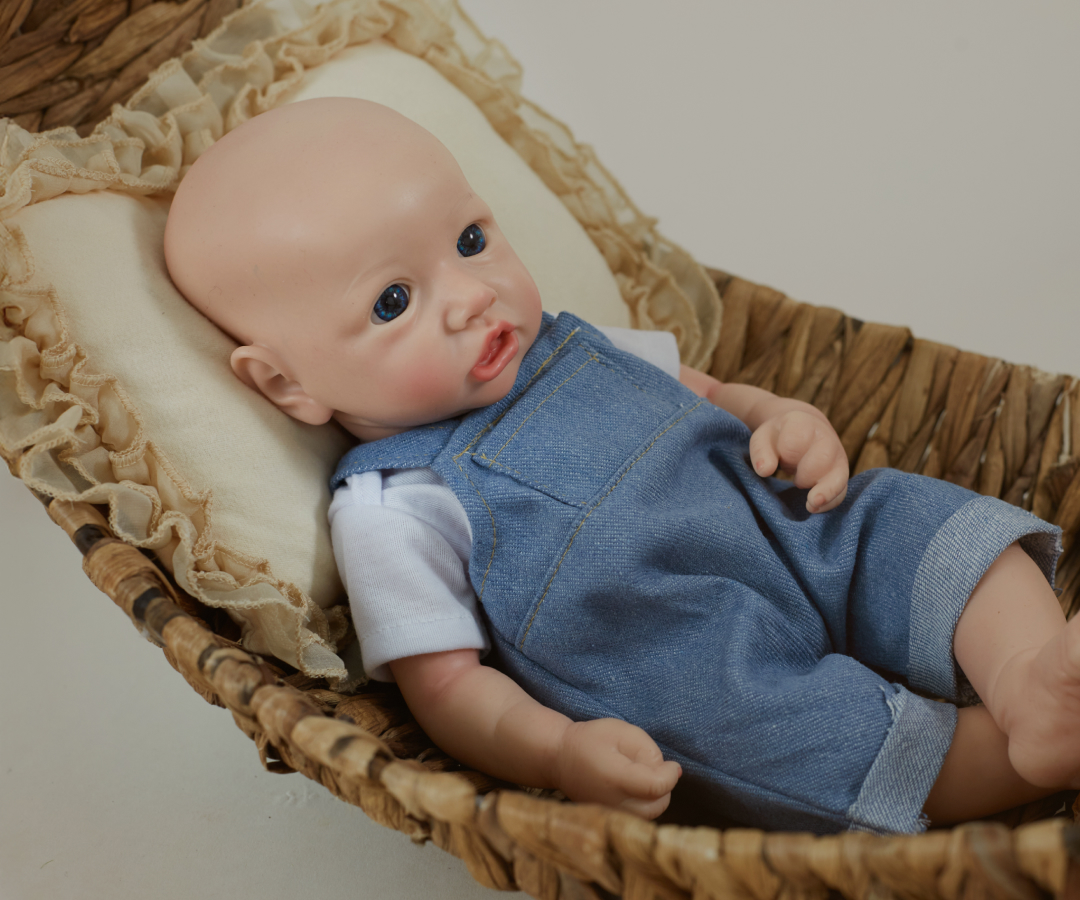
A reborn doll is designed or customized to look as much like a real infant as possible. Features may include detailed skin tones, painted veins, rooted or painted hair, and weighted bodies. Standard therapy dolls are usually less detailed, more uniform in appearance and designed for frequent handling.
Realism can help some residents form an emotional connection with a reborn doll more quickly. However, it can also increase confusion, while delicate finishes may be harder to clean and more vulnerable to damage. Many collector-style reborn dolls are designed primarily for display, rather than the demands of daily institutional use.
Simpler therapy dolls are generally easier to replace, clean and maintain. Their less realistic appearance may also reduce the risk of residents mistaking them for real infants. However, some residents may reject dolls that look too artificial, which can limit engagement.
A practical compromise is a weighted, soft-bodied doll with a moderately realistic face and a durable finish. This design can offer a comforting tactile experience while avoiding some of the highly realistic features that may unsettle certain residents.
How to Choose Reborn Dolls: The Criteria That Decide Fit
Weight, size, posture, face realism, softness and washability are the main specification choices, each with a trade-off between lifelike feel and practicality. Decide which of these matter for your residents before comparing suppliers.
Weight. A weighted doll feels more like a baby and can be soothing, but it is harder for frail residents to hold for long.
Size. Newborn-length dolls suit most laps and arms. Larger dolls strain wrists and are harder to store.
Posture. Curled, flexible limbs hold more naturally. Stiff limbs feel less convincing and may be uncomfortable to cradle.
Softness. Cloth bodies are more comfortable and forgiving than hard vinyl torsos, though they absorb moisture.
Washability. Surfaces that tolerate cleaning agents matter more in a facility than in a home.
Weight, Size and Body Construction
Many facilities favor a modest weight and a soft cloth body with limited vinyl parts, such as head and limbs. That construction supports the head naturally and reduces hard edges. Check how the head joins the body, since a loose neck can cause anxiety about “hurting” the baby.
Ask whether the filling is enclosed and whether seams are strong enough to survive repeated hugging, dropping and cleaning. A split seam exposing beads or stuffing is a safety and hygiene problem.
Realism Level and Skin Tone Representation
Moderate realism often works better than maximum realism. Overly detailed features, open eyes with a fixed stare or visible veining can unsettle some residents. Closed or softly painted eyes tend to read as a sleeping baby, which many staff find easier to manage.
Skin tone matters for dignity and recognition. Residents may respond more readily to a doll that reflects their own cultural background or family, so ask suppliers what tones and features they offer instead of defaulting to one standard look.
What Safety and Infection Control Standards Should a Doll Meet?
Check material safety documentation, small-part and fastening risks, and whether the doll can be cleaned between residents under your infection control policy. If a supplier cannot answer those three points clearly, move on.
Start with materials. Ask what the vinyl or silicone, paints, fabrics and fillings are made from, and request test documentation. Toy safety frameworks such as EN 71 in Europe and ASTM F963 in the United States are commonly cited for children’s products, though they were written for children, not for older adults with cognitive impairment. They are a useful baseline, not a complete answer.
Next, consider small parts. Residents with dementia may mouth, pull or chew objects. Eyes, hair, clothing fastenings, magnets and any internal weights should be secure and non-detachable. Avoid dolls with button eyes, loose accessories or pacifiers that can be swallowed.
Finally, infection control. Dolls become shared or at least frequently touched objects. Decide whether each doll is assigned to one resident for life, or cleaned and reissued. Your infection control lead should approve the cleaning method, and the doll must tolerate it without degrading.
Avoid battery-powered or electronic components unless you have a clear reason and a sealed, secure compartment. Those components add risk without clear benefit.
What Makes the Best Reborn Dolls for Nursing Homes in Daily Use?
Durable, wipe-clean or machine-washable construction with secure, non-detachable features outlasts delicate collector-style finishes. In practice, the best reborn dolls for nursing homes are the ones that survive months of handling and still look and feel acceptable.
Compare the two approaches directly. A collector-style doll has fine hand-painted detail, rooted hair and delicate fabrics, and looks excellent on day one. A care-oriented doll has sturdier paint, a simpler face, embedded or embroidered features and fabrics that can be laundered.
For daily use, the care-oriented build usually wins. Rooted mohair or fine hair tangles and sheds, and painted detail can wear or react to cleaning products. Embroidered or sculpted hair and sealed finishes tend to last longer.
Clothing deserves attention as well. Simple outfits with soft fastenings, or outfits sewn in place, reduce choking risk and loss. Some facilities keep one or two spare sets so a soiled outfit can be changed without leaving the doll bare.
If a resident is deeply attached to a specific doll, a collector-grade piece may still be justified, but treat that as an exception and plan for its fragility.
How to Evaluate a Reborn Doll Manufacturer Before Ordering
Work through the evaluation in order. Each step narrows the field and exposes weaknesses before money changes hands.
- Request material and safety documentation for the exact model, not a generic statement.
- Order a sample and test it against your cleaning protocol and handling expectations.
- Ask about minimum order quantity (MOQ), since a small pilot may fall below a manufacturer’s usual threshold.
- Confirm lead time, including how long a repeat order takes.
- Check customization options, such as skin tone, weight, hair and sealed features.
- Clarify after-sales terms, including replacements for defective units and return conditions.
The sample step deserves the most time. Wash it, squeeze it, pull at seams and eyes, and have a clinical lead and a care assistant handle it. Their reactions are more informative than a catalog.
Be careful with sellers that focus on collectors. A Reborn Doll Factory or workshop that builds display pieces may not be set up for institutional specifications, and may not offer consistent repeat production. A manufacturer willing to discuss care use, document materials and accept modest trial orders is more likely to fit your needs.
Keep written records of what was promised. If a bulk order differs from the approved sample, you want evidence.
What Should You Budget Beyond the Purchase Price?
What does a doll program really cost? More than the doll. The purchase price is usually the smallest recurring item once you account for replacement, cleaning, outfits, training and review.
Replacement cycles come first. Dolls in daily use wear out, and some will be lost, damaged or contaminated. Build a replacement allowance into the budget rather than treating each failure as a surprise.
Cleaning supplies and laundry come next. Approved disinfectant wipes, laundry capacity and drying time all take staff effort. If a doll cannot be cleaned quickly, it will either go unclean or sit unused.
Spare outfits and accessories matter more than they seem. Keeping a second outfit for each doll avoids awkward moments when clothing needs washing.
Then there is staff time. Training, care plan updates, observation notes and family conversations all take hours, and those hours have a cost even if they sit within existing wages.
Finally, include program review. If you plan to assess outcomes, someone needs time to collect and discuss the notes. Skipping review saves money in the short term and loses the evidence you need for any later decision.
Freight, import duties and lead time on reorders should be added when buying from overseas.
Starting Small: How a Facility Might Pilot and Review a Doll Program
Consider a generic example. A residential unit selects four residents whose care histories and current behaviors suggest they might benefit. The team writes a short protocol covering introduction, hygiene, storage and what counts as a reason to stop.
The unit orders a small number of dolls, ideally from a manufacturer that accepted a small MOQ and supplied samples beforehand. Each resident is offered a doll individually, with family informed and consent or best-interest decisions recorded according to local rules.
Staff then record brief observations on a consistent form: mood before and after, engagement, any signs of distress, and any incidents involving other residents. Over several weeks, patterns usually appear. One resident settles quickly, another is indifferent, a third becomes anxious and the doll is withdrawn.
At review, the team looks at both outcomes and practicalities. Did the dolls survive cleaning? Did staff find the protocol workable? Were there conflicts over the dolls? Were families comfortable?
The lesson is that a pilot tests the product, the process and the people. Expansion should follow evidence from all three, and a decision not to expand is a legitimate outcome, not a failure.
Conclusion
Choose the resident first, the specification second and the manufacturer third, and treat the first order as a pilot rather than a commitment.

Owen is de tweede generatie oprichter van Sueban Group, een fabrikant van reborn dolls gevestigd in Guangdong, China. Met meer dan 20 jaar familie-erfgoed in de productie, leidt Owen de B2B-activiteiten van het bedrijf en bedient hij groothandels, merken en institutionele kopers in meer dan 20 landen.
Ontmoet Owen
 English
 Deutsch
 Français
 Español
 Italiano
 Nederlands