
A Practical Sourcing Guide for Retailers, Distributors and Brands
A reborn doll’s cost and market fit are shaped long before final assembly. Material choice affects appearance, finishing labor, shipping weight, care requirements, and production processes. For B2B buyers, the best choice depends on the target customer, retail price, order volume, and destination market—not simply which material sounds most premium.
At a Glance
Vinyl is often suitable for value-conscious and volume-oriented product lines.
Silicone is often chosen for its soft feel and detailed surface realism, although performance varies by formulation and design.
Hybrid construction can balance tactile realism, cost, and weight.
Hair, painting, accessories, and packaging can significantly affect the final quotation.
Clear product specifications and landed-cost comparisons help prevent sourcing disputes.
Silicone, Vinyl, and Hybrid Reborn Dolls: The Short Answer
Reborn dolls commonly use vinyl, silicone, or a combination of materials for the head, limbs, and body. Other components may include a cloth torso, weighting materials, hair, eyes, pigments, clothing, and packaging. Each component affects the product’s appearance, handling, cost, and production requirements.
For B2B buyers, the right material depends on the sales channel, target price, desired level of realism, order quantity, and shipping destination.
1. Understand the Main Material Options
Vinyl
Vinyl is widely used for reborn doll heads and limbs. These parts are commonly formed as hollow molded components, which can help keep finished dolls lighter than comparable full-silicone designs. Vinyl dolls can feature detailed painting and either rooted or painted hair, depending on the specification.
Vinyl can suit retailers and distributors who prioritize unit economics, manageable shipping weight, and repeatable production. Actual durability and finish quality depend on the formulation, part thickness, paint process, storage conditions, and handling.
Silicone
Silicone is often selected for its soft, skin-like feel and ability to reproduce fine surface details. Full-silicone dolls may require specialized molds, silicone-compatible pigments, and substantial hand-finishing. Hardness, tear resistance, and surface behavior vary with the formulation and design.
Thin areas such as fingers, toes, and neck edges may need particular attention during design and quality checks. Buyers should confirm the material specification and care instructions for the exact model rather than assuming all silicone dolls perform in the same way.
Hybrid Construction
Hybrid dolls combine materials—for example, a silicone head with a cloth body or vinyl limbs. This approach can provide a softer or more detailed feel in selected areas while controlling cost and weight compared with a full-silicone construction.
For brands developing different product tiers, hybrid construction may offer a balance between realism and production costs.
Cloth Bodies
A cloth torso is commonly made from cotton or a cotton-polyester blend and filled with fiberfill or other specified materials. It can reduce weight and provide a soft feel.
Buyers should check seam quality, stuffing consistency, weighting placement, and the way the head and limbs attach to the body. These details influence the finished doll’s feel, shape, and overall quality.


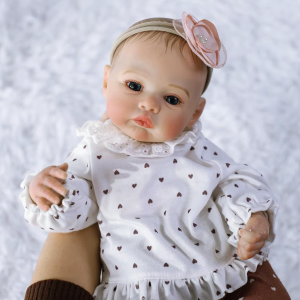
2. What Drives the Final Cost of a Reborn Doll?
Material is an important cost driver, but it is not the only one. Two dolls made from the same base material can have different prices because of finishing work, accessories, and packaging.
Hair method
Rooted hair generally requires more labor than painted hair. Rooting density, hair material, and styling requirements also affect production time and cost.
Painting and skin details
Layered skin tones, mottling, veining, blushing, and other details can increase hand-finishing time. The level of detail should match the intended retail price and customer expectations.
Construction
Full-silicone bodies, hybrid designs, weighting, and specialized internal structures can change material and labor costs.
Accessories and packaging
Clothing sets, bottles, pacifiers, certificates, labels, inserts, and branded boxes should be itemized in the quotation. Custom accessories and packaging may also have their own minimum order quantities.
Order quantity and tooling
Mold or tooling costs may be one-time development expenses, while production costs recur with each order. The allocation depends on the project and supplier terms.
When comparing quotations, ask suppliers to specify what is included. A lower unit price may reflect a simpler finish, a different hair method, fewer accessories, or packaging that is not included.
3. Consider Freight and Landed Cost
The factory price is only one part of the total cost. Finished weight, carton dimensions, order quantity, shipping method, and destination all affect freight.
Silicone dolls can be heavier than comparable vinyl-and-cloth products, so the difference may be significant for some shipments. Buyers should compare the complete shipping cost rather than focusing only on the factory unit price.
For a realistic comparison, calculate the landed cost, which may include:
Product cost
Packaging costs
International freight
Cargo insurance, if applicable
Customs clearance
Import duties and taxes
Destination handling and delivery charges
Confirm which party pays each item under the agreed Incoterm. Do not assume a quotation includes import duties or door delivery unless it explicitly states so.
For DDP shipments, ask the supplier or freight provider to confirm the destination address, included charges, delivery limitations, and exclusions in writing. The final cost should be confirmed against the actual shipment details.
4. How Are Reborn Dolls Made?
Production methods vary according to the material, design, and factory equipment. Vinyl and silicone dolls follow different manufacturing routes, and both require careful finishing and quality checks.
Vinyl Production Route
Step 1: Molding
Vinyl parts are formed in molds using the process and equipment specified by the factory.
Step 2: Trimming and Preparation
Excess material and surface imperfections are addressed before finishing.
Step 3: Painting
Color layers and details are applied and cured according to the paint system and manufacturing process.
Step 4: Hair and Eyes
Hair is rooted or painted, and eyes are fitted where applicable.
Step 5: Assembly and Weighting
The head, limbs, and body are assembled. Weighting and internal components are checked according to the product specification.
Step 6: Final Inspection and Packing
The finished doll is checked against the approved sample and specification before packing.
Silicone Production Route
Step 1: Design and Mold Preparation
The approved design is translated into a mold and production specification.
Step 2: Casting and Curing
Silicone components are prepared and cured using the selected material system.
Step 3: Demolding and Trimming
Parts are removed from the mold, and seam lines are carefully finished.
Step 4: Surface Finishing and Painting
The surface is finished as specified, using compatible pigments and processes.
Step 5: Assembly and Inspection
Components are assembled, detailed, and checked before packaging.
The exact process varies by factory, material, and design. For a custom reborn doll, buyers should approve the design, material specification, finish level, and prototype before mass production begins.
5. Silicone vs. Vinyl Reborn Dolls: Which Should You Choose?
Silicone and vinyl serve different product positions. Neither material is automatically the better choice. The decision should reflect the target customer, desired product experience, retail price, and order requirements.
| Consideration | Silicone | Vinyl |
|---|---|---|
| Typical positioning | Premium realism and a soft tactile feel | Value-conscious and volume-oriented product lines |
| Surface feel | Softness varies by formulation and hardness | Generally firmer; hollow molded parts are common |
| Finishing | Often requires silicone-compatible pigments and careful surface finishing | Paint system and curing depend on the vinyl specification |
| Weight and freight | Can be heavier, especially in full-body designs | Often lighter when using hollow parts and a cloth torso |
| Care and handling | Follow model-specific care guidance; thin areas may need care | Performance depends on formulation, finish, heat, and storage |
| Main cost factors | Material, casting, specialized finishing, and hand labor | Tooling, finish level, hair method, and production volume |
When Vinyl May Be the Better Choice
Vinyl may suit volume-oriented retail, gift shops, distributors, and price-sensitive product ranges. It can provide a practical balance between production cost and shipping weight, particularly when the product uses hollow molded parts and a cloth torso.
For buyers planning repeat orders, the availability of established molds and consistent production specifications can also be important.
When Silicone May Be the Better Choice
Silicone may suit premium product lines where a soft feel and detailed surface appearance are central to the customer experience.
However, buyers should evaluate the exact silicone formulation, finishing quality, care requirements, and production costs before deciding whether the material fits their target market.
How to Specify the Right Material
Before requesting quotations, define the product requirements rather than relying on general descriptions such as “realistic,” “soft,” or “high quality.”
A useful specification should identify:
Material and construction
Doll size and approximate weight
Skin tone and painting details
Rooted or painted hair
Eye type and other facial features
Body construction and weighting
Accessories and packaging
Target quantity and delivery schedule
This helps suppliers assess the project and prepare more comparable quotations.
6. Write a Clear Product Specification
A clear product specification allows different suppliers to quote the same product and reduces the risk of misunderstandings during development.
Material and construction: Specify vinyl, silicone, hybrid construction, or a cloth torso. Identify which parts use each material.
Dimensions and weight: Provide the finished length, approximate weight, and any important size tolerances.
Finish: Describe the skin tone, paint details, hair method, rooting density, eye type, and other visual features.
Accessories and packaging: List clothing, bottles, pacifiers, certificates, labels, inserts, and retail box requirements.
Intended market and user: Clarify whether the product is an adult collectible or a children’s toy. State the target age group and destination country.
Quantity and schedule: Specify the prototype quantity, initial production volume, expected repeat orders, and target delivery date.
Quality requirements: Define the approved reference sample, acceptable tolerances, inspection criteria, and packaging standards.
If the doll is intended for children, identify the target age group and destination market early. Applicable toy-safety standards and documentation depend on the product, claims, materials, and market. Confirm requirements for the exact model with a qualified compliance specialist or testing laboratory before sale.
7. Common Reborn Doll Sourcing Mistakes to Avoid
1. Using vague product descriptions
Words such as “realistic” or “soft” are not enough to define a product. Specify the material, finish, construction, and required details.
2. Comparing incomplete quotations
One supplier may include accessories and branded packaging, while another quotes only the doll. Ask for an itemized quotation before comparing prices.
3. Confusing development costs with unit costs
Prototype and mold fees may be separate from mass-production costs. Confirm which fees are one-time charges and which apply to each unit.
4. Approving production too early
Before mass production begins, confirm the final sample, finish, dimensions, accessories, and packaging.
5. Assuming all models share the same compliance documents
Documentation for one model does not automatically cover another design or every destination market. Confirm the documents applicable to the exact product.
6. Ignoring the full shipping cost
Compare freight, customs clearance, duties, taxes, and destination handling—not just the factory price.

Veelgestelde vragen
Are silicone reborn dolls always better than vinyl dolls?
Not necessarily. Silicone is often chosen for its soft feel and surface detail, while vinyl can be more suitable for buyers prioritizing cost, weight, and volume. The better choice depends on the target customer and product specification.
What affects the price of a reborn doll most?
Material, size, hair method, paint detail, construction, accessories, packaging, order quantity, and tooling requirements can all affect the quotation. Ask for an itemized quote to compare like with like.
Should I request a sample before placing a bulk order?
For a new model or custom project, reviewing and approving a sample is a practical way to confirm appearance, materials, finish, and packaging expectations before mass production.
Does the factory price include shipping and import duties?
Not always. Check the Incoterm and request a written breakdown of product cost, freight, customs clearance, duties, taxes, and delivery charges. For DDP, confirm the specific destination and any exclusions.
What information should I send a manufacturer for a quotation?
Share reference images or drawings, dimensions, material preference, finish details, accessories, packaging needs, order quantity, destination market, and target delivery schedule. For an original design, ask the manufacturer to review feasibility before finalizing the development quotation.
Conclusion: Choose Materials Around Your Business Model
Vinyl, silicone, and hybrid construction each serve different product and price positions. Start with the intended customer and sales channel, then translate those needs into a clear specification covering material, finish, accessories, packaging, quality checks, and destination requirements.
For repeat-volume lines, vinyl may offer a practical balance of cost and shipping weight. For premium lines where tactile realism is central, silicone may justify the higher material and finishing investment. Hybrid designs can offer a middle path.
In every case, compare complete specifications and landed costs—not just the material name or factory unit price.
Discuss Your Reborn Doll Project with Sueban Group
If you are a retailer, distributor, or brand developing a reborn doll range, prepare your target size, material preference, order quantity, finish requirements, and destination market. These details help the team assess suitable existing models or review a custom OEM project.
Contact Sueban Group to discuss product options, customization requirements, and a quotation based on your project specifications.

Owen is de tweede generatie oprichter van Sueban Group, een fabrikant van reborn dolls gevestigd in Guangdong, China. Met meer dan 20 jaar familie-erfgoed in de productie, leidt Owen de B2B-activiteiten van het bedrijf en bedient hij groothandels, merken en institutionele kopers in meer dan 20 landen.
Ontmoet Owen
 English
 Deutsch
 Français
 Español
 Italiano
 Nederlands