
How to Buy Wholesale Reborn Dolls for Your Baby Store: A Retailer’s Guide
Reborn dolls are hand-finished, lifelike baby dolls that occupy a distinctive place in the toy and gift market. They are a niche, higher-ticket, collector-driven category, closer to a specialty gift line than to everyday products such as rattles or plush toys. For retailers, success depends on choosing the right products, finding a reliable supplier or manufacturer, and understanding the requirements of the target market.
This guide explains how to assess demand, compare materials, choose wholesale sourcing channels, evaluate manufacturers, check product compliance and manage the risks of a first bulk order.
Is a Reborn Doll Range a Good Fit for a Baby Store?
It can be, but only if your store already serves gift buyers and collectors. A reborn baby doll sells on realism and emotional appeal, not on the everyday needs that bring parents through the door. If most of your customers are expectant parents buying essentials, a reborn doll range may attract limited interest.
The economics explain why. A single reborn doll usually carries a much higher retail price than a typical toy, so a few sales can contribute meaningful revenue. However, turnover may be slower, and each piece ties up cash as stock. A shop that sells everyday baby products in high volumes thinks in terms of unit turnover; a reborn doll range requires closer attention to sell-through per piece.
Brand fit is the second test. Shoppers who pay more for a lifelike reborn doll expect staff who can explain its finish, weight, materials and care requirements. They also expect a display that protects the product from unnecessary handling. Without that attention, the dolls may look out of place rather than like a considered specialty range.
Three questions can help you decide:
Do you already sell gifts, keepsakes or collectible products?
Do you have floor or glass-case space that can be secured?
Can you hold stock for several months without putting pressure on cash flow?
If you answer yes to all three, a small trial range may be worth testing. If you are unsure about demand, start with an online listing or a limited selection before committing valuable shelf space.
One important consideration applies before any buying decision: depending on how a reborn doll is designed, marketed and intended to be used, it may be regulated as a children’s toy. This can bring specific testing, documentation and labeling obligations.
Who Buys Reborn Dolls, and What Does That Mean for Your Product Mix?
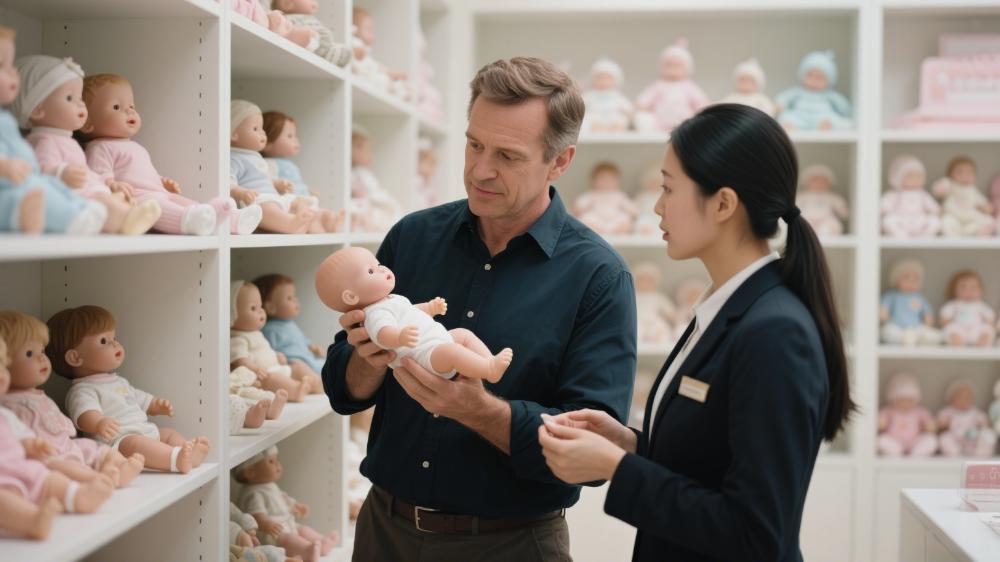
A shopper walks in asking for a newborn doll that looks realistic as a gift for a family member. Another customer spends several minutes examining the hair, skin details and proportions of the same display piece. Both may be interested in reborn dolls, but their expectations and budgets can be very different.
In practice, buyers often fall into three broad groups.
Collectors
Collectors pay close attention to detail, including paint layering, hair application, proportions, facial expression and limb construction. They may accept higher prices but are less likely to be satisfied with a doll that looks mass-produced.
A small selection of carefully finished models may serve this group better than a large collection of similar designs.
Gift Buyers
Gift buyers usually want a recognizable baby-doll appearance at a price that feels reasonable for a present. They care about presentation, packaging, clothing and included accessories, as well as clear care instructions.
Mid-range models with an attractive, ready-to-give presentation can be a practical starting point for this segment.
Comfort and Memorial Buyers
Some customers purchase reborn dolls for emotional comfort, companionship or memorial purposes. These purchases require sensitivity and respectful communication.
Staff should avoid making medical or therapeutic claims about what a doll can achieve. Instead, focus on the product’s appearance, craftsmanship and intended use.
The practical consequence is a balanced range: a small premium tier for collectors, a core mid-priced tier for gift buyers and selected simpler models for customers looking for a comforting keepsake. Track actual enquiries and sales before expanding any category.
Silicone, Vinyl or Cloth Body: Which Build Should You Stock?
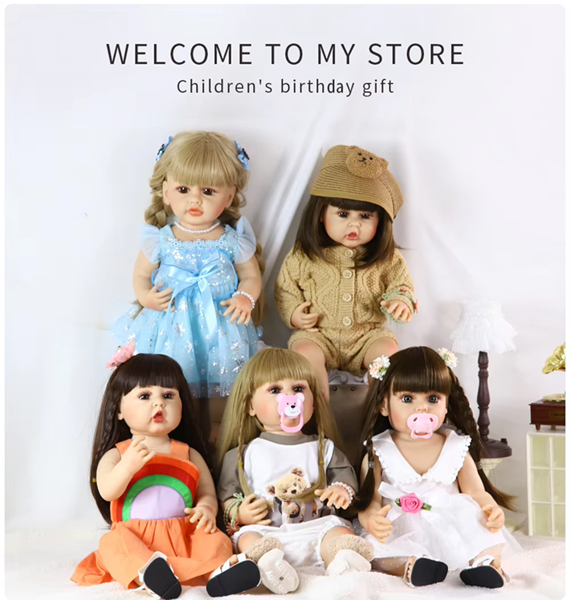
Full-silicone dolls offer a soft, flexible feel and detailed surface finish. However, they usually come at a higher purchase price and require more careful handling. Vinyl-limb dolls with a cloth body are generally lighter and more affordable, making them easier to position in an entry-level or gift range. Full-vinyl dolls offer another option for retailers looking for a balance between detail, structure and price.
The main construction types are:
Full silicone: The head, arms, legs and body are made from silicone. The material is soft and flexible and can reproduce detailed skin textures.
Vinyl limbs with a cloth body: The head and limbs are made from vinyl, while the torso is soft fabric filled with suitable stuffing or weighting material.
Full vinyl: The head, arms, legs and torso are made from vinyl, with construction and articulation varying by model.
For many baby stores, vinyl-limb dolls with cloth bodies make a practical starting range. They offer accessible price points, lighter shipping weight and straightforward display handling.
Full-silicone models can form a smaller premium tier when customer demand supports the higher investment. Full-vinyl models can help fill price gaps between entry-level and premium products.
Weight, Feel and Display Durability
Heavier, softer constructions may feel more lifelike, but their surfaces can require more careful handling. Silicone can attract dust and lint and may be affected by dye transfer from unsuitable fabrics or surfaces. Painted details, such as veins and blush, can also show signs of repeated handling.
Cloth-bodied dolls are generally easier to handle, although painted vinyl limbs can still become scratched or scuffed.
A practical display strategy is to keep one dedicated display piece per style, store the remaining stock in its original packaging and protect premium models behind glass or a clear cover. Ask the supplier for model-specific cleaning and storage instructions. An unsuitable cleaning product can damage a finish that was intended to be sold as new.
How Material Choice Affects Wholesale Costs
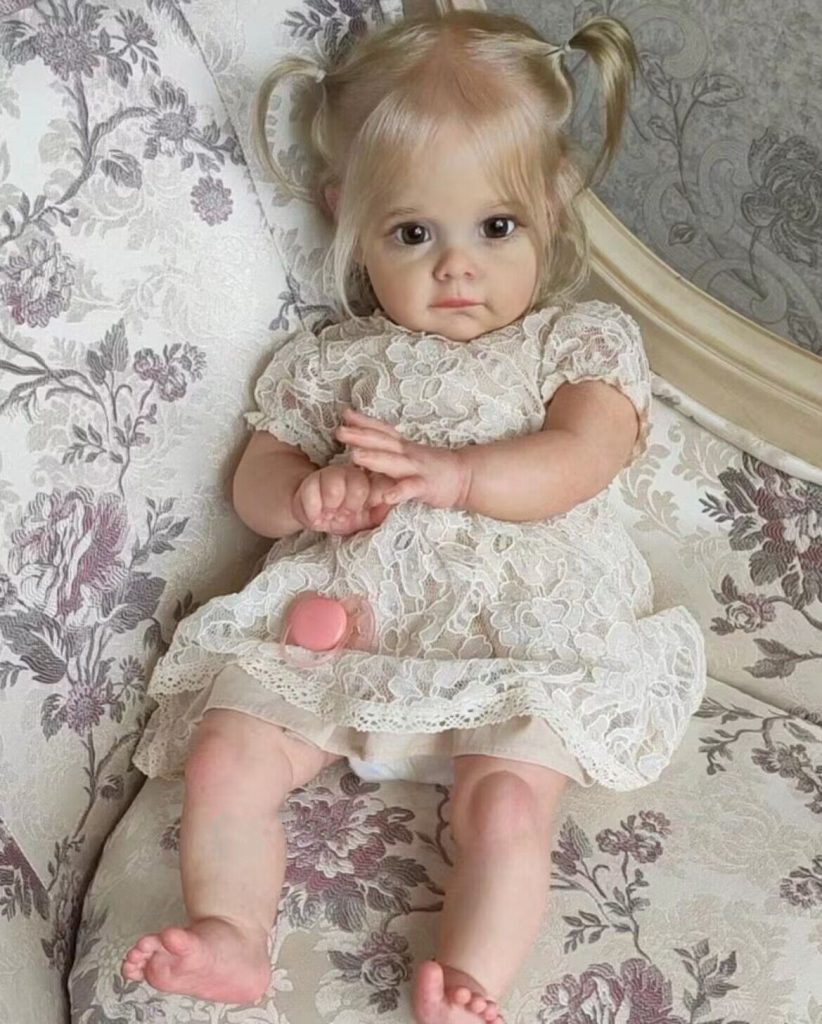
Material selection affects more than the unit price. It can influence freight, packaging, storage, handling and the retail price customers are willing to pay.
Full silicone: Usually requires a higher purchasing budget and careful packaging. It is better suited to a premium range where customers value material feel and realism.
Vinyl: Offers more flexibility across retail price levels and can be suitable for a broader range of gift and play-oriented products.
Vinyl limbs with a cloth body: Often provides a more accessible starting point for retailers testing the category.
Before comparing supplier quotations, make sure you are comparing similar sizes, constructions, accessories and packaging specifications. A lower unit price does not necessarily mean a lower landed cost.
How Do Wholesale Reborn Dolls for Retail Differ From Artist-Made Pieces?
Factory production and individual artist production solve different problems for a retailer.
Wholesale manufacturing provides repeatable stock, defined minimum order quantities and production schedules that can support seasonal planning. Artist-made pieces offer individual character and craftsmanship, but usually come with lower availability and higher unit costs.
The difference becomes clear when a design sells.
If a catalog model performs well, a manufacturer may be able to reproduce the same sculpt and specifications for replenishment. Your product photography, display and pricing can remain more consistent.
An artist-made doll may be unique. Once it sells, you may not be able to reorder the same piece, and another creation may differ in paint, hair, proportions or finishing.
Documentation is another consideration. Established manufacturers may have more structured processes for packaging specifications, batch records, material information and product testing. Individual artists may not provide the same documentation, which can create difficulties when you need to demonstrate product compliance.
Artist-made pieces can suit specialist collectible stores, while wholesale manufacturing is generally more practical for retailers who need repeatable inventory.
For most baby stores, a sensible approach is to build the core range around established wholesale designs and consider a few artist pieces as showcase products if your customer base is strongly collector-oriented.
Where to Buy Reborn Dolls in Bulk: Factories, Distributors or Kit Suppliers?
Three main sourcing channels are available to retailers. They differ in purchase cost, minimum commitment, product control and the amount of work required from your team.
Direct Manufacturers
Buying directly from a manufacturer can provide access to factory-level pricing, established catalog models, bambole reborn personalizzate and private-label packaging.
This route is particularly useful when you want to develop a consistent product range or build a longer-term supply relationship.
However, direct purchasing may involve higher MOQs, longer production lead times and more responsibility for freight, customs clearance, documentation and quality inspection.
Before choosing a factory, check:
Experience producing the specific material and construction you need.
Whether existing models can be mixed within one order.
Whether the MOQ applies per design, material or total quantity.
Availability of model-specific test reports and material information.
Ability to provide custom clothing, accessories and branded packaging.
Production capacity and after-sales support.
A manufacturer should be able to explain its production process and the documentation available for the models you intend to purchase.
Distributors
Distributors usually hold products from several manufacturers and sell them in smaller quantities.
This can reduce the initial purchasing commitment and allow retailers to test different styles without placing a large factory order.
The trade-off is a higher unit cost and potentially less control over product specifications. Popular designs may also become unavailable or be discontinued.
For a retailer entering the category for the first time, the flexibility may justify the additional markup.
Kit Suppliers
A reborn doll kit is an unfinished product, often consisting of an unpainted vinyl head and limbs that require painting, assembly and finishing.
Kits are more suitable for artists, workshops or businesses with in-house finishing capabilities.
For a retailer looking for ready-to-sell finished products, kits introduce additional labor, equipment requirements and quality-control responsibilities.
Choose a Supplier That Matches Your Capacity
Consider how much inspection, import paperwork, inventory management and quality control your team can handle.
If your priority is a low-risk first test, a distributor may be the easier option. If you have established demand and can manage larger shipments, direct manufacturing may offer better long-term purchasing economics.
Should You Order Custom Reborn Dolls or Stay With Catalog Designs?
Stay with catalog designs until you have identified a style that sells consistently. Once demand is established, consider customizing that design rather than developing several new products at once.
A catalog doll is an existing product that you can inspect and evaluate before placing a larger order. Production specifications are already established, and replenishment is generally easier to plan.
Custom development introduces additional decisions, such as sculpt approval, paint references, sample production, mold development and packaging design. It can also involve higher MOQs and longer lead times.
The word “custom” can describe several different levels of work:
Private-label customization: Branded boxes, labels, certificates and packaging.
Existing-model customization: Adjustments to skin tone, eye color, hairstyle, clothing or accessories.
New product development: A new sculpt, mold, facial design or construction.
For most small retailers, private-label packaging or modest changes to an existing design are more manageable than developing an entirely new doll.
There are exceptions. If your customers consistently request specific skin tones, sizes or features that are missing from the catalog, a small customization may be justified earlier.
A sensible approach is to sell existing models first, track which designs generate the most interest and repeat purchases, and then request a quotation for a focused custom variation.
Before paying for development, agree on sample costs, approval stages, revision limits, mold ownership and production specifications in writing.
What Safety and Compliance Rules Apply to Reborn Dolls in Your Market?
Product compliance should be checked before an order is placed, not after the shipment arrives.
A common mistake is assuming that a reborn doll is automatically exempt from toy regulations because a supplier describes it as a collectible. A “not a toy” or “14+” label does not automatically determine the product’s legal classification.
Regulators may consider the product’s design, intended users, marketing, packaging and reasonably foreseeable use.
The following are important market considerations.
United States
Children’s toys are subject to applicable Consumer Product Safety Commission (CPSC) requirements.
ASTM F963 is incorporated into the federal toy safety framework under 16 CFR Part 1250. Toys designed or intended primarily for children aged 12 or younger generally require testing by a CPSC-accepted third-party laboratory and a Children’s Product Certificate (CPC) issued by the responsible manufacturer or importer.
Other requirements may also apply depending on the materials and product construction, including restrictions on lead and certain phthalates.
Do not assume that an ASTM test report or CPC for a similar-looking doll automatically covers the model you are purchasing. Check the exact product, applicable test sections and manufacturing details.
European Union
Toys placed on the EU market must comply with the applicable toy safety legislation.
Under the current transitional framework, the Toy Safety Directive 2009/48/EC remains applicable until the new Toy Safety Regulation (EU) 2025/2509 begins applying on 1 August 2030.
Applicable conformity requirements include a safety assessment, technical documentation, an EU Declaration of Conformity and CE marking. Relevant harmonised EN 71 standards may apply depending on the product and its materials.
The new regulation has entered into force, but its main application date is in 2030. Retailers and importers planning long-term product ranges should monitor the transition.
United Kingdom
For Great Britain (England, Scotland and Wales), toys are regulated under the Toys (Safety) Regulations 2011.
Businesses placing toys on the GB market must ensure that the applicable safety requirements, conformity assessment and documentation are in place.
As of 2026, Great Britain recognises both CE and UKCA marking for toys, subject to the applicable conformity assessment route and requirements.
Northern Ireland follows a separate framework under the relevant EU-aligned rules. Businesses selling across Great Britain and Northern Ireland should check the applicable requirements for each destination.
What Should Retailers Request From Suppliers?
Before confirming an order, ask for:
Current test reports for the exact model.
Material information covering silicone, vinyl, paint and filling materials.
The manufacturer’s legal name and relevant production details.
Applicable declarations of conformity and certification documentation.
Product labels, warnings and age guidance.
Confirmation of which market and regulatory requirements the documents cover.
A generic certificate for another model is not sufficient evidence of compliance.
The manufacturer, importer and distributor may have different legal responsibilities. If you are importing products directly, confirm your own obligations with the relevant market authority or a qualified product compliance professional.
What Should You Check Before Placing a First Bulk Order?
A supplier quotation is only one part of the purchasing decision. Work through the following checks before committing to a larger shipment.
1. Request Samples of the Exact Models
Order samples of the designs you intend to stock rather than relying only on showroom photos.
Check the doll’s weight, proportions, surface finish, paint quality, hair application, joints and accessories. Compare the physical sample with the supplier’s product images.
2. Verify Product Documentation
Match the available test reports and compliance documents to the exact model, materials, manufacturer and intended market.
Ask for written material specifications if these are not included in the existing documentation.
3. Evaluate Manufacturing Consistency
A good sample does not automatically guarantee that every unit in a bulk shipment will look the same.
Ask how the factory controls painting, hair rooting, assembly and final inspection. Find out whether production specifications are retained for repeat orders.
4. Inspect Packaging
Check how the doll is positioned and secured inside the box.
Painted details, limbs and accessories should be protected during transportation. Confirm that the packaging includes the labels, warnings and product information required for your market.
5. Confirm Defect and Damage Policies
Get the supplier’s after-sales policy in writing.
Clarify what qualifies as a manufacturing defect, what evidence is required for a claim, who pays for return shipping and whether replacements or credit notes are available.
6. Agree on MOQ and Production Lead Time
Ask whether the MOQ applies per style, per material or across a mixed order.
Also distinguish between existing catalog models and custom products. Existing models may have shorter production schedules, while new designs can require sample approval and mold development before bulk production begins.
7. Review Payment Terms
Confirm the deposit, balance payment schedule and accepted payment methods.
For a first order, avoid transferring the full amount to an unverified supplier. Check the company’s legal identity, bank details and pro forma invoice before making payment.
8. Confirm Shipping and Import Responsibilities
Agree on the shipping method and Incoterm, such as EXW, FOB or DDP.
Confirm who arranges freight, export documentation, customs clearance, import duties and insurance. Calculate the expected landed cost rather than comparing suppliers only by unit price.
A small trial shipment is usually a better first commitment than ordering the supplier’s full available range. Document the specifications and agreed responsibilities before production begins.
How to Start a Reborn Doll Section Inside an Existing Baby Shop
Consider a baby store with a spare glass cabinet near the checkout area.
The owner starts with a small selection of catalog designs in one construction type, choosing models with verified documentation for the intended market. The number of units is limited to what the cabinet can display and the store can comfortably finance.
Each doll is displayed with a short product card explaining its materials, care requirements and intended age category. Premium models are protected behind glass, while the remaining stock stays in its original packaging.
Staff handle the dolls only when customers request a closer look, reducing unnecessary contact with painted surfaces and delicate finishes.
The owner then tracks which designs attract questions, which generate actual sales and which customers request again. Slow-moving models are not automatically reordered.
The lesson is simple: treat the first section as a market test rather than a full-scale launch. A small, secured and clearly presented range helps you understand customer demand before committing more space and capital.
Which Reborn Baby Dolls Are Best to Sell, and How Should You Price Them?
The most realistic doll in a catalog is not automatically the best choice for every retailer. Likewise, simply doubling the supplier’s invoice price is not a reliable pricing strategy.
Look for products with:
Consistent paint and finishing quality.
Natural-looking proportions and facial details.
Reliable hair application and assembly.
Clear care instructions and suitable packaging.
Repeatable quality across production batches.
Documentation appropriate for the intended market.
A doll that looks excellent in one sample but inconsistent in the next shipment can create complaints and returns. Product consistency matters as much as visual appeal.

Calculate Your Landed Cost Before Setting Retail Prices
Your landed cost should include more than the supplier’s unit price.
Consider:
Product purchase price.
International freight and insurance.
Import duties and applicable taxes.
Customs clearance and handling charges.
Additional packaging or labeling costs.
An allowance for returns, defects and display damage.
Once you understand the total cost, set your retail price according to the target customer, local competition and desired gross margin.
If the resulting price is too high for your market, consider a different size or construction rather than reducing your quality-control or after-sales allowance.
A balanced assortment usually works better than stocking only the most expensive models. Different price levels allow customers to choose according to their budgets and expectations.
Conclusion
Building a successful reborn doll range requires more than finding attractive products at a competitive wholesale price.
Start by understanding your customer base, choosing the right material and deciding whether a manufacturer or distributor better suits your purchasing capacity. Then verify the applicable compliance requirements, inspect samples and calculate landed costs before placing your first bulk order.
Most importantly, let actual sales determine how quickly you expand.
When one design consistently attracts customers and generates repeat demand, that is the right time to deepen inventory, negotiate better wholesale terms or explore customization.
If you are planning to introduce reborn dolls into your retail range, working with an experienced manufacturer can help you compare existing models, materials, customization options and production requirements before making a larger commitment. Request product specifications and wholesale information based on your preferred sizes, materials and estimated quantities before finalizing your sourcing plan.

Owen è il fondatore di seconda generazione di Sueban Group, un produttore di bambole reborn con sede a Guangdong, Cina. Con oltre 20 anni di eredità manifatturiera familiare, Owen guida le operazioni B2B dell'azienda servendo grossisti, marchi e acquirenti istituzionali in oltre 20 paesi.
Incontra Owen
 English
 Deutsch
 Français
 Español
 Italiano
 Nederlands