
Two reborn dolls can look nearly identical in a listing photo and feel like completely different objects the moment you pick them up. The difference almost always comes down to body construction. This guide breaks down full silicone and cloth body builds the way an experienced reborn artist or retailer evaluates them — by construction method, realism, durability, handling, and true cost of ownership.
If you are weighing a full silicone vs cloth body doll decision, the right answer depends entirely on how you plan to use the doll. Let’s settle the core distinction first, then work through every factor that matters.
What “Full Silicone” and “Cloth Body” Actually Mean
These are not competing features on the same doll. They are two fundamentally different ways of building a body. Understanding that upfront prevents most of the confusion collectors run into.
Full Silicone (Full-Body Silicone) Explained
A full silicone reborn doll is molded as a largely one-piece body — head, torso, and limbs — from a single material. There is no fabric torso and no assembled vinyl joints. The anatomy reads as seamless because it essentially is.
Quality pieces use platinum-cure silicone, which is more stable, less prone to yellowing, and safer against oils than cheaper tin-cure silicone. Tin-cure tends to degrade faster and can develop a tacky surface over time. Serious artists and studios work almost exclusively in platinum-cure for this reason.
Weight is a defining trait. A newborn-size full silicone reborn doll typically runs 4–7 lbs because silicone is dense throughout. The heft is uniform rather than floppy, and the surface has a soft, skin-like give under pressure.
Cloth Body (Fabric Torso) Explained
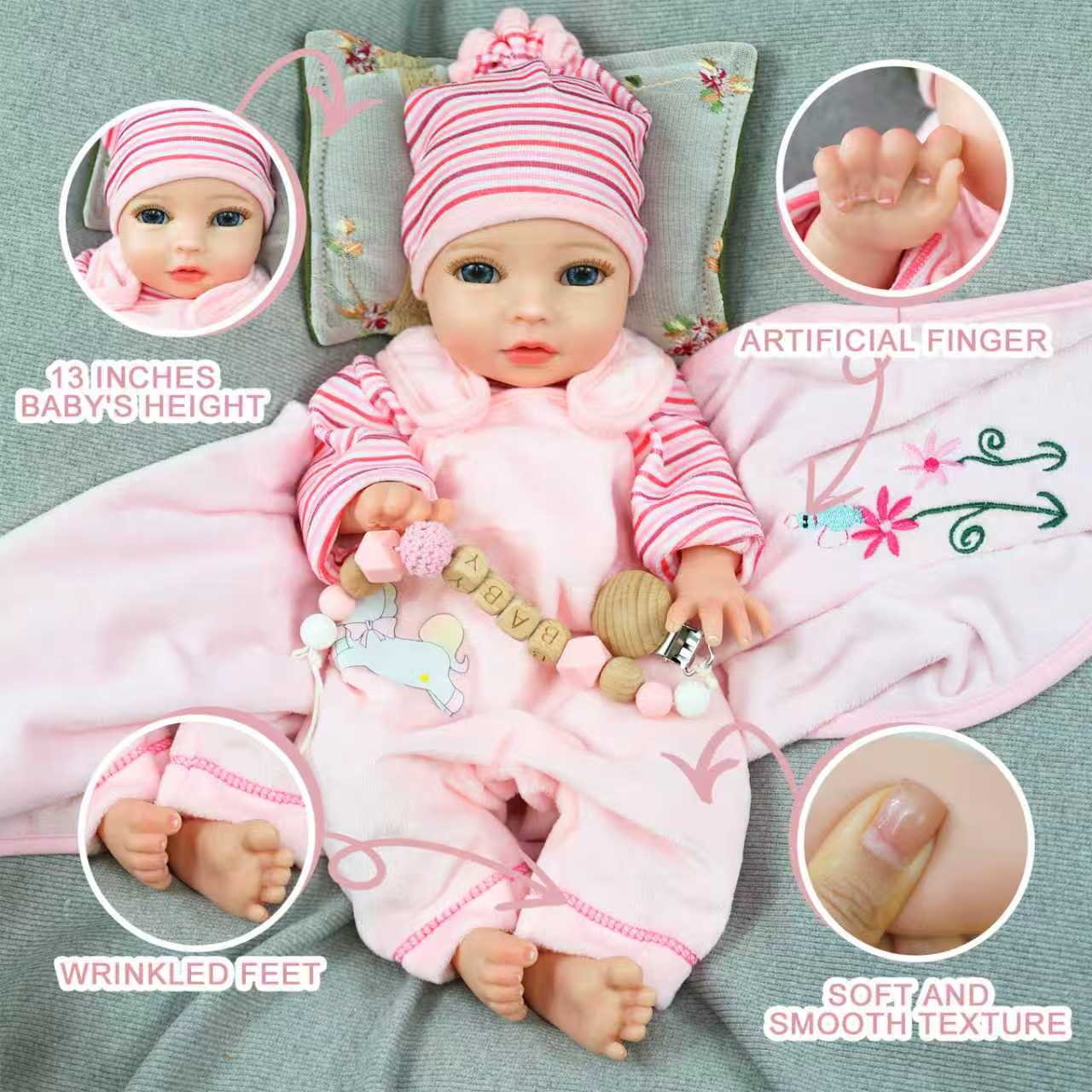
The cloth body baby doll is the classic reborn construction. It pairs a vinyl head and vinyl limbs with a soft fabric torso, stitched and stuffed to create a cuddle-friendly core. This is what most people picture when they think “reborn.”
Inside the torso, artists use weighted fill — glass beads, poly-pellets, or fine sand — strategically placed so the doll settles into your arms like a real infant. The fabric torso flexes and folds, giving that signature floppy, jointed feel that rigid materials can’t replicate.
Where Vinyl Fits Into the Conversation
Here is the point that trips up new buyers: the overwhelming majority of reborn dolls on the market are vinyl-limbed cloth bodies, not silicone. So when someone asks what material are reborn dolls made of, the honest default answer is vinyl limbs plus a fabric torso.
The reborn doll silicone vs vinyl question is really a question about two different production approaches. Vinyl reborns are painted, sealed, and assembled onto cloth bodies. Silicone dolls are cast and have color often blended into the material or painted and sealed on the surface. Both are legitimate; they simply serve different collector priorities.
Full Silicone vs Cloth Body at a Glance
Before the deep dive, here’s the scannable summary most buyers want first.
Quick Comparison Table
Attribute | Full Silicone | Cloth Body (Vinyl Limbs) |
Realism (close inspection) | Highest — seamless, translucent skin | High — excellent paintwork, visible seams possible |
Weight / heft | 4–7 lbs, uniform and dense | Adjustable, floppy newborn feel |
Durabilidad | 10+ years; edges and heat are weak points | Long-lasting; seams and stuffing may need repair |
Cleaning | Washable, water-immersion tolerant | Spot-clean only on torso |
Price range | $800–$3,000+ | $150–$600 typical |
Best use case | Display, hyperreal photography, bathing | Cuddling, budget, traditional aesthetic |
Realism and Sensory Feel
Realism splits into two categories: how a doll looks and how it feels in hand. The two materials win on different fronts.
Skin Texture and Translucency
Silicone’s biggest advantage is light behavior. The material diffuses light the way real skin does, so capillary detail, subtle blush, and translucency near the ears and fingers read convincingly even under close inspection or macro photography.
Vinyl relies on layered surface paint and sealer. Skilled artists achieve stunning depth, but the effect sits on top of the material rather than within it. Under strong light, vinyl can look slightly more opaque than a full silicone reborn doll.
Weight and Cuddle Factor
This is where cloth bodies shine. Weighted stuffing mimics the relaxed, floppy heft of a sleeping newborn — the body conforms to your arm and shifts naturally. Many collectors describe it as emotionally convincing in a way silicone isn’t.
Silicone feels dense and uniform. It’s heavier and more solid, which reads as lifelike when posed but less like a limp, cuddly infant. For holding and rocking, the silicone vs cloth doll durability trade-off often becomes a feel trade-off too.
Anatomical Detail
Molded silicone captures creases, nail beds, and skin folds as continuous surfaces with no assembly seams. Cloth body dolls assemble separate vinyl limbs onto the torso, so transitions at the shoulders and hips are hidden by fabric and clothing rather than sculpted through.
Durability and Longevity Compared
Neither material is fragile, but they fail in completely different ways. Knowing the failure modes is the key to a real cloth body doll durability comparison.
How Full Silicone Holds Up
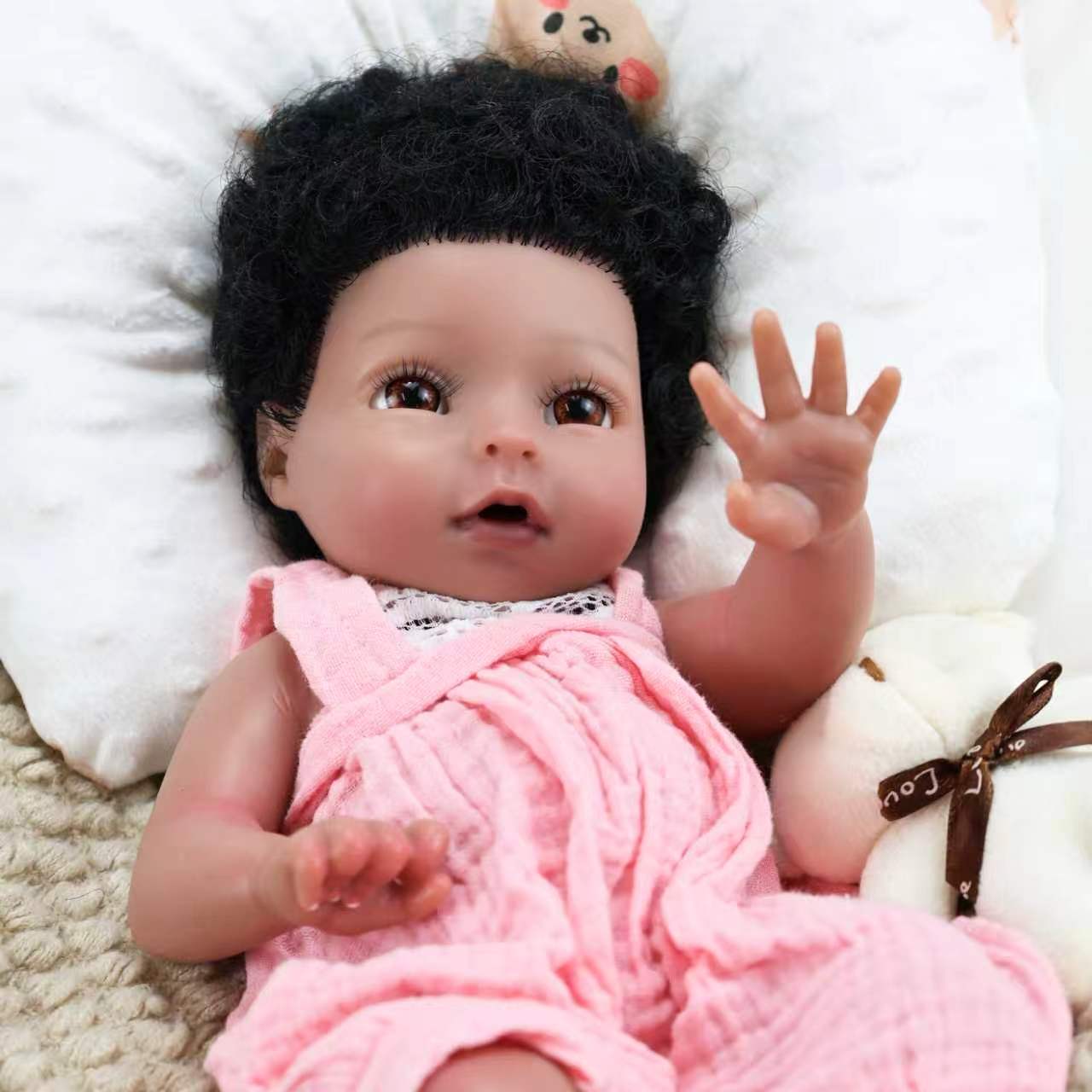
Platinum-cure silicone is tear-resistant across broad surfaces and handles gentle flexing well. With proper care, a quality full body silicone reborn doll can last well over 10 years without significant degradation.
Its vulnerabilities are specific: thin edges (fingers, toes, ear rims) can nick or tear if stressed, and prolonged sun or heat exposure can cause surface changes or accelerate aging. Dye transfer from dark clothing is also a real concern, since silicone can absorb pigment permanently.
How Cloth Bodies Hold Up
A cloth body baby doll is highly repairable, which is its durability superpower. Seams can be re-stitched, stuffing can be refreshed, and a worn torso can be replaced entirely while keeping the original vinyl head and limbs.
Over time, stuffing settles and the body may go limp or lumpy; fabric can stain and absorb odors. The vinyl components themselves are robust, resisting tears far better than silicone’s delicate edges.
Common Failure Points to Watch
- Full silicone:torn fingertips, ear-rim nicks, heat warping, permanent dye stains, surface tackiness (common in tin-cure).
- Cloth body:seam splits, settled or clumped stuffing, fabric staining, loose limb attachment, vinyl scuffs from abrasion.
Poseability, Display, and Handling
If you photograph, retail, or transport dolls regularly, handling characteristics matter as much as realism.
Positioning and Display Stability
Cloth bodies flex, so you can sit, curl, and nestle them into props and beds naturally. The trade-off is they don’t hold a pose without support.
Full silicone limbs are more rigid and hold their molded position, which photographers love for consistent, repeatable shots. The density also means a silicone doll sits upright more convincingly, though it won’t slump into a crib the way a weighted cloth torso will.
Transport and Storage Considerations
Silicone’s weight makes it harder to ship and more expensive to pack safely; edges need cushioning to prevent tears. Store it flat, away from direct sun and heat, and keep it clear of dark fabrics that can transfer dye.
Cloth bodies travel more forgivingly and tolerate wider temperature swings, but protect the fabric torso from moisture and store with the stuffing supported so it doesn’t compress unevenly.
Cleaning and Maintenance
Maintenance routines differ sharply. Getting this right directly affects lifespan.
Cleaning a Full Silicone Body
Here’s how to clean silicone body doll surfaces safely:
- Use lukewarm water and a small amount of mild, fragrance-free soap.
- Silicone tolerates water immersion, so you can gently bathe the doll — but dry thoroughly, especially in crevices.
- Never use solvents, alcohol, or harsh cleaners; they can break down the surface.
- If the skin loses its matte finish or feels tacky, re-mattify with a cornstarch-based powder or a product designed for silicone to restore a natural, non-shiny surface.
Cleaning and Caring for a Cloth Body
The fabric torso is the limitation. It cannot be fully submerged without risking the weighted fill and causing mildew. Spot-clean only, and keep moisture away from the internal stuffing.
Clean vinyl limbs and head gently with a damp cloth and mild soap, avoiding the painted areas with anything abrasive. If the torso loses shape, an artist can open a seam to refresh or redistribute the weighted filling.
Hair Care: Mohair vs Synthetic
The reborn doll mohair vs synthetic hair choice applies to both body types. Mohair (typically Angora goat) gives the most realistic fine, wispy newborn look and is the premium standard, but it’s delicate and can felt or shed if handled roughly or washed aggressively.
Synthetic hair is more durable and easier to clean, but rarely matches mohair’s realism at close range. For either, use cool water, minimal product, and let hair air-dry; avoid heat styling on rooted hair, which can loosen the rooting.
Cost, Value, and Market Positioning
Price is where the two categories diverge most dramatically, and it reflects material cost, labor, and artist skill.
Typical Price Ranges
Cloth body vinyl reborns commonly sell in the $150–$600 range, with artist-sculpted, limited-edition pieces running higher. Full silicone dolls typically start around $800 and climb past $3,000 depending on size, artist reputation, and detail level. These are industry-typical ranges, not fixed rules.
The gap comes from silicone’s higher material cost, more complex molding, and the specialized skill required to finish a seamless body convincingly.
Resale and Collector Demand
Full silicone pieces from recognized artists tend to hold value well and attract hyperrealism-focused collectors. Vinyl cloth body reborns have a broader, more active resale market because of their accessibility and cuddle appeal.
Condition drives resale more than category. A well-maintained cloth body doll from a sought-after artist can outperform a neglected silicone piece with tacky surfaces or torn edges.
How to Choose the Right Body Type
Match the material to your actual goal, not to a generic “which is best” ranking.
Choose Full Silicone If…
- Realism under close inspection is your top priority.
- You want bathing capability and water play realism.
- You shoot hyperreal photography and need consistent, repeatable poses.
- You value translucency and seamless anatomy over cuddle feel.
Choose a Cloth Body If…
- Cuddle realism — that floppy, weighted newborn feel — matters most.
- You want a more accessible budget and broader selection.
- You prefer the traditional reborn aesthetic and repairability.
- You want a doll that’s easier to dress, hold, and transport.
Best Materials to Ask About Before Buying
For silicone, always confirm it’s platinum-cure, not tin-cure. For vinyl dolls, ask about the blank manufacturer — collectors looking for the best vinyl for reborn dolls often seek reputable, well-known sculpt lines known for quality vinyl and detailed sculpting.
Quality signals to verify: sealed, heat-set paint; even matte finish; secure rooting; properly weighted and balanced body; and clear disclosure of materials. A transparent artist who answers these questions directly is itself a trust signal.
Common Mistakes to Avoid
- Assuming silicone is indestructible.Its edges tear and it’s heat- and dye-sensitive. Handle with care.
- Over-washing a cloth torso.Submerging the fabric body invites mildew and ruins the weighted fill.
- Buying tin-cure as if it were premium.Confirm platinum-cure before paying silicone prices.
- Ignoring heat and sun exposure.Both materials suffer, but silicone especially degrades near windows, heaters, or hot cars.
- Dressing in dark, non-colorfast clothing.Dye transfer onto silicone is often permanent.
Preguntas Frecuentes
Is a full silicone doll better than a cloth body doll?
Neither is universally better. Full silicone wins on close-up realism, translucency, and bathing capability. Cloth body dolls win on cuddle feel, price, and repairability. The “better” choice depends on whether you prioritize display realism or holding realism.
Can you bathe a full silicone reborn doll?
Yes. Platinum-cure silicone tolerates water immersion, so gentle bathing with mild soap is fine — one of its signature advantages. Dry it thoroughly, avoid solvents, and re-mattify the surface if it loses its natural finish. Cloth body dolls cannot be fully bathed because of the fabric torso.
Why are full silicone dolls so much more expensive?
Silicone costs more as a raw material, the molding process is more complex, and finishing a seamless, convincing body demands specialized skill. Combined with lower production volumes, these factors push prices into the $800–$3,000+ range versus $150–$600 for many vinyl cloth body reborns.
Do cloth body reborn dolls feel more realistic to hold?
For most people, yes. Weighted stuffing recreates the floppy, shifting heft of a real newborn, while silicone feels denser and more uniform. If the in-arms experience is your priority, a weighted cloth body usually feels more lifelike to cuddle.
Which lasts longer, silicone or vinyl and cloth?
Both can last well over a decade with proper care. Silicone is vulnerable at thin edges and to heat, while cloth bodies are highly repairable — seams restitched and stuffing refreshed. Vinyl limbs resist tearing better than silicone edges, so a cloth body doll can often be maintained indefinitely through repair.
Final Verdict: Matching Material to Purpose
Stop asking which material is objectively best and start asking what the doll is for. That single reframe resolves the full silicone vs cloth body doll debate cleanly.
For hyperreal display, photography, and bathing realism, choose a full silicone reborn doll and commit to careful handling and heat protection. For the emotional, cuddle-ready experience of holding a newborn — and for budget flexibility — a weighted vinyl cloth body delivers more value and warmth.
If you want both worlds, many collectors own one of each: a silicone piece for display and a cloth body for holding. Whatever you choose, verify the materials (platinum-cure silicone, reputable vinyl, quality mohair), inspect the finish, and buy from an artist who answers your construction questions without hesitation. That transparency is the surest sign you’re getting what you pay for.

Owen es el fundador de segunda generación de Sueban Group, un fabricante de muñecas reborn con sede en Guangdong, China. Con más de 20 años de herencia familiar en manufactura, Owen lidera las operaciones B2B de la empresa, atendiendo a mayoristas, marcas y compradores institucionales en más de 20 países.
Conoce a Owen
 English
  Deutsch
  Français
  Español
  Italiano
  Nederlands