
The difference between a full silicone and a cloth body reborn doll comes down to one structural fact: a full silicone doll is a single-piece casting with an internal jointed armature, while a cloth body doll pairs a cast head and limbs with a fabric, weighted torso. Everything a wholesale buyer cares about — unit cost, weight feel, pose retention, shipping risk, repair path — follows from that split.
Search interest in this comparison has shifted decisively toward commercial intent. Buyers are no longer just asking “which is more realistic?” They want to know whether a full silicone reborn doll is worth it at wholesale, what a cloth body reborn doll weight actually feels like in hand, and how each format behaves on a photograph, in transit, and after two years of handling. This guide answers those questions from the factory floor outward.
Key Takeaways
- Full silicone dolls are cast as one continuous body around a jointed armature; cloth body dolls use a stuffed, weighted fabric torso with separately attached head and limbs.
- Full silicone wins on seam-free silhouette, pose control, and water tolerance. Cloth body wins on price, weight tunability, repairability, and freight economics.
- Full silicone production is bottlenecked by mold count and pour stations, not headcount — which is why lead times stretch in ways cloth body orders do not.
- Neither format is inherently premium. Painting and rooting skill determine collector perception more than substrate does.
- Specify construction against buyer behavior — display, photography, gifting, or handling — rather than against category prestige.
Why the Format Decision Drives Everything Downstream
This is not a styling choice. Choosing between full silicone and cloth body construction locks in mold investment, labor routing, final weight, articulation range, photography behavior, carton size, and repair policy before a single unit is poured.
For a reborn doll factory, the consequence is capacity-related. Full silicone bodies consume mold time and skilled pour labor; cloth body torso assembly consumes sewing and weighting labor that can be scheduled in parallel with casting. Those two production models have different scaling curves, different scrap rates, and different minimum order economics.
For a studio or distributor, the consequence is positioning. A catalogue that stocks only one format is either leaving the display-collector tier unserved or overpricing its entry tier. Most mature wholesale catalogues carry both.
Definitions: What “Full Silicone” and “Cloth Body” Actually Mean
Full silicone reborn dolls are cast as a continuous body — head, torso, arms and legs poured from the same platinum-cure silicone, usually over a jointed internal armature. There is no fabric component in the body itself.
Cloth body reborn dolls use a fabric torso, typically stuffed and weighted with glass beads, poly pellets, or a combination, with the head and limbs attached separately. The head may be vinyl, silicone, or a silicone-vinyl blend; the limbs may match or differ from the head material.
The terminology needs precision here. “Full silicone” is a construction claim, not a quality claim. A thin-walled casting with visible flash and a stiff armature is a full silicone doll, and it is a worse product than a cleanly assembled cloth body doll with excellent paint work. Buyers who treat the phrase as a quality guarantee get burned on inbound inspection.
How Each Doll Is Manufactured — Factory-Level Differences
Full silicone production
A full body mold must be split, sealed, poured, de-molded, and trimmed. Every step carries failure modes: air entrapment in the torso cavity, seam lines along the mold parting, flash at the extremities. Platinum-cure silicone needs a controlled cure window, and demolding too early distorts the casting while demolding late can tear it at thin sections.
The critical economic fact is that a single flawed pour scraps the entire body — head, torso, and all four limbs in one loss. Skilled pour operators reduce, but never eliminate, that scrap rate.
Cloth body production
Cloth body assembly parallelizes. Heads and limbs come off molds that can be batch-cast and stockpiled; torso assembly is sewing, stuffing, and weighting work that can run independently of the casting line. A defective limb is replaced; the torso survives.
That structure gives cloth body production a shorter, more predictable critical path. For a Reborn Doll Factory quoting wholesale, it translates into tighter lead-time commitments and more flexible order quantities.
Where the bottleneck lands
Full silicone capacity is genuinely constrained by mold count and pour stations. Adding headcount does not add output past the point where curing and mold availability cap the line. That is the mechanism behind long full silicone lead times at peak season — and why buyers should ask for a mold schedule, not just a ship date.
Realism and Collectibility: Where Full Silicone Genuinely Wins
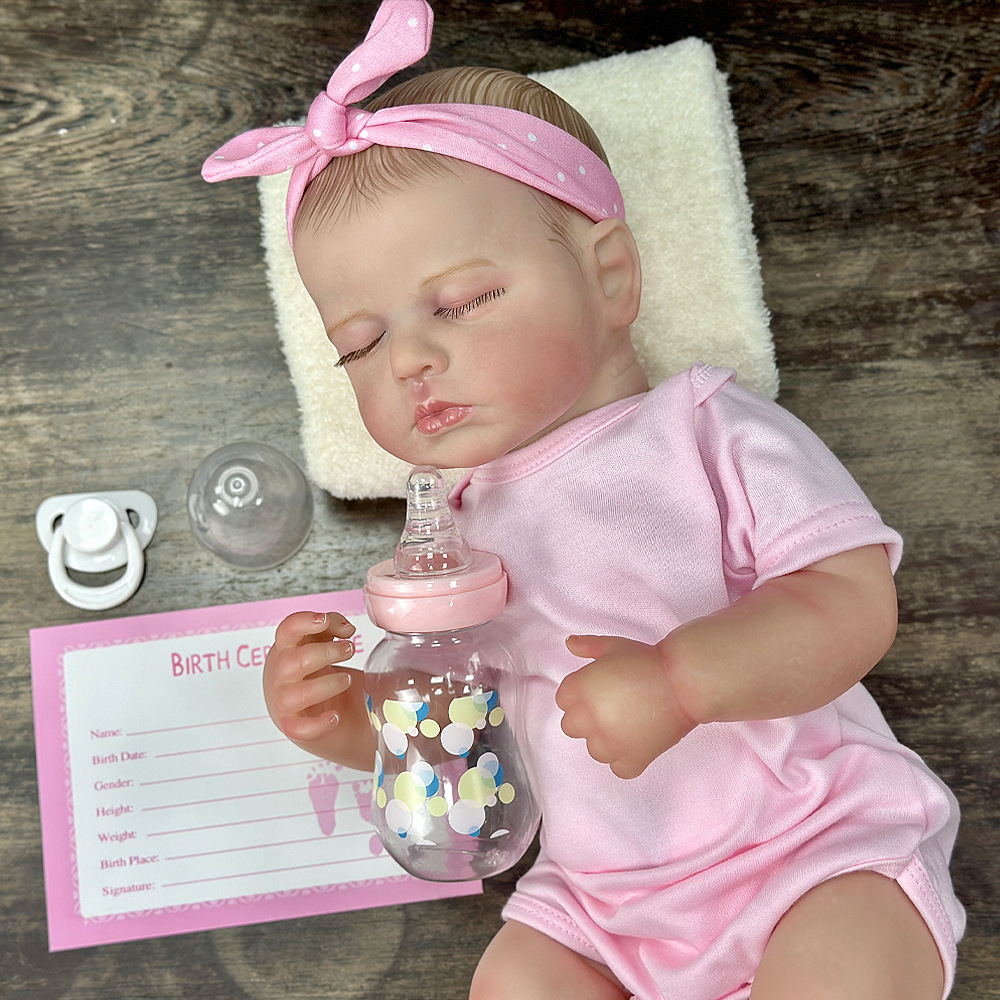
A full silicone body holds a seam-free silhouette that a vinyl-and-cloth build cannot match. Under raking light — the kind used in auction photography — there is no fabric edge where torso meets limb, and no junction where the shoulder cap meets the chest.
That absence of visible joints is the primary reason full silicone reborn dolls dominate the high-end collectible tier and photograph better for listings. The camera finds junctions that the eye forgives.
Full silicone also tolerates heat and moisture. A doll that will be handled repeatedly, dressed and undressed, or photographed under studio lights for hours has no fabric torso to degrade, sag, or absorb.
The honest caveat, and the one most marketing copy omits: at the top end, realism is driven by painting and rooting skill as much as by substrate. A flawlessly painted cloth body doll routinely outperforms a mediocre full silicone one in collector assessment, because collectors read skin tone depth, mottling, capillary detail, and hairline direction before they register body construction.
Weight, Balance and Handling
Cloth body reborn doll weight lives almost entirely in the torso, where the weighting medium sits. That produces a concentrated, low-center mass that many collectors describe as convincing newborn “dead weight” — the head lolls, the limbs feel light relative to the body.
Full silicone weight distributes through cast material thickness plus internal weighting. The result is a more uniform, denser heft. The doll holds poses because the armature carries the load, but it reads as firm rather than heavy.
The practical consequence for buyers is control. A cloth body doll can be weighted precisely to a target number — a factory can hit a stated gram weight with known tolerance by adjusting bead and pellet fill. A full silicone doll is weighted only within the limits the casting allows. If your market expects a specific in-hand weight, cloth body gives you the dial.
Pros and Cons at a Glance
Factor | Full Silicone | Cloth Body |
Seam-free silhouette | Yes — continuous casting | No — limb/torso junction visible |
Pose retention | High, armature-driven | Limited by fabric torso |
Weight feel | Dense, uniform | Concentrated, low-center |
Weight tunability | Constrained by casting | Precisely adjustable |
Water tolerance | High | Low — fabric torso is the weak point |
Unit cost | High | Moderate |
Scrap risk | Whole-unit loss | Component-level loss |
Repair | Difficult, specialist | Generally replaceable components |
Freight | Heavier, rigid packing required | Lighter, more forgiving |
Volume scaling | Capped by mold count | Predictable, parallel |
Cost Structure and Wholesale Pricing Logic
Full silicone cost is front-loaded. Mold investment, per-unit pour labor, controlled cure time, and a meaningful scrap rate all sit on the unit. Cloth body cost spreads across casting, sewing, and weighting with far lower scrap exposure.
Wholesale buyers should request the cost breakdown, not just the price. A full silicone vs cloth body dolls comparison that only looks at landed unit price is comparing unlike products.
Three cost questions separate a real full silicone quote from a compromised one:
- What is the casting wall thickness?Thinner walls cut silicone volume and cost, and they tear sooner at joints and extremities.
- Is the armature included and what is its specification?A quote that omits the skeleton is pricing a floppy doll, not a poseable one.
- How many paint layers, and what rooting method?These are the largest labor variables in either format and the first things cut to hit a target price.
Where volume matters, cloth body dolls scale more predictably. Where margin per unit matters, full silicone rewards a brand that can justify the premium through photography, provenance, and limited-edition positioning. The premium is earned at the paint and photo stage, not asserted on the spec sheet.
Durability, Maintenance and Longevity
Platinum-cure silicone resists tearing but attracts lint and dust aggressively. It cleans with mild soap and water, and it is sensitive to certain oils, solvents, and some silicone-based dressings — prolonged contact can degrade the surface. Silicone can also yellow under some long-term storage conditions, particularly with UV exposure and certain packaging materials in contact with the surface.
Cloth body dolls demand care at the torso. Spot cleaning only; saturation risks the weighting medium and the stuffing structure. The head and limbs frequently outlast the body by years, which is simultaneously a longevity weakness and a repair advantage — the torso can be rebuilt while the visible, painted parts remain untouched.
For a collector or distributor holding inventory, neither format is maintenance-free. Both want dust-free, temperature-stable storage, and both want to avoid long-term compression that deforms a casting or flattens a stuffed torso.
Buyer Segments: Matching Construction to Demand
Display collectors seeking realism and poseability gravitate to full silicone. They are buying silhouette and articulation, and they will pay for it.
First-time buyers, gift purchasers, and households where the doll is handled often tend toward cloth body — lower cost of entry, easier care, and a familiar, soft feel in the arms.
Photographers, prop houses, and content creators typically specify full silicone for pose control under studio heat, where a fabric torso would show every handled crease.
Wholesale buyers should map catalogue slots to buyer segments before committing volume: an opening assortment aimed at gift and first-time buyers should weight two-thirds cloth body, while a display-led assortment inverts that ratio. Stocking the wrong mix is the most common inventory error in this category, and it is expensive because both formats carry long production tails.

The Hybrid Almost Every Catalogue Actually Sells
Between the two pure formats sits a third construction that outsells both at mid-tier price points: a silicone or silicone-vinyl head and limbs on a cloth body torso. It photographs nearly as well as full silicone in head-and-shoulder crops, which is where most listing images are composed anyway, while retaining cloth body freight economics and repairability.
The catch is that hybrids demand honest labelling. If a listing presents the doll as “full silicone” because the limbs are silicone, buyers who receive it will feel the fabric torso within seconds and the return will follow. The defensible phrasing is specific — silicone limbs, cloth body — and it protects margin in a category where chargebacks are common.
For a manufacturer quoting wholesale, hybrids also smooth the production schedule. Silicone heads and limbs consume mold time without committing an entire body casting, so peak-season capacity can be allocated between full silicone runs and hybrid component batches rather than being held hostage to a single product line.
Lead Times, Order Quantity and Scheduling Reality
Buyers comparing quotes should compare schedules in the same units. Cloth body lines quote from stock components and assemble to order; full silicone lines quote from mold occupancy. Those are not interchangeable promises, and a supplier who offers both formats with identical lead times is either holding inventory or overstating capacity.
Stage | Full Silicone | Cloth Body |
Sampling and approval | Longer — mold and cure iteration | Shorter — component substitution is fast |
Pre-production | Mold scheduling, armature sourcing | Fabric, fill, weighting media procurement |
Bulk run | Poured in mold cycles; output capped per station | Parallel casting plus sewing and stuffing |
Paint and rooting | Shared bottleneck with cloth body formats | Shared bottleneck |
Peak-season behavior | Extends sharply; mold queue dominates | Extends moderately; labor is additive |
The paint and rooting stage is the great equalizer. Whichever body you choose, the hours that determine collector perception are spent at the airbrush and the rooting needle, and that capacity does not expand quickly. A buyer who negotiates hard on casting cost while ignoring paint-stage scheduling has optimized the wrong line item.
Minimum order quantities follow the same logic. Cloth body orders can be split across sizes and skin tones with modest penalty because components are shared. Full silicone orders are more rigid per sculpt, since each body size requires its own mold, and re-tooling a size mid-order resets the schedule.
Freight, Packing and Inbound Risk
A full silicone doll cannot be compressed, folded, or nested. It ships in a rigid carton with molded or die-cut foam supporting the torso, head, and extremities separately, and that support structure is part of the unit cost. Dimensional weight, not actual weight, often sets the freight bill, so carton geometry deserves as much negotiation attention as the doll itself.
Heat is the specific hazard. A sealed container crossing tropical latitudes can reach temperatures that soften thin-wall castings and encourage deformation where a limb rests against packing material. Buyers shipping full silicone by sea should specify foam cradles at the extremities, avoid packing direct against the carton wall, and be explicit about container placement.
Cloth body dolls travel better per dollar. The torso tolerates moderate compression, limbs are individually wrapped, and a punctured carton is less likely to become a total loss. The failure mode to watch is weighting media migration — if the fill is not compartmentalized, glass beads settle to one end during transit and the doll arrives with a lopsided distribution that no amount of dressing will hide.
Inbound Inspection Checklist
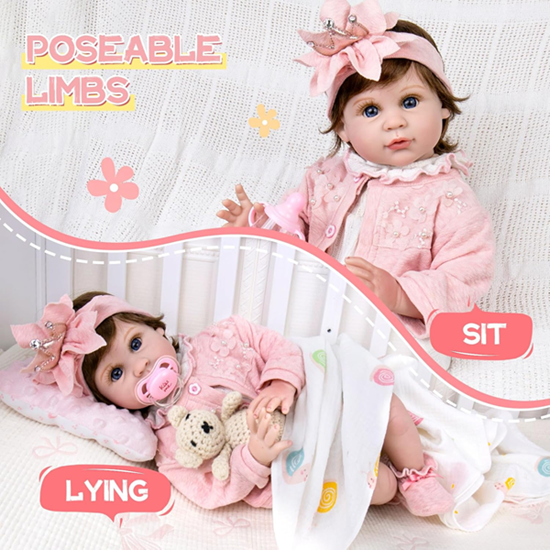
Inspection criteria differ by format, and using one checklist for both is how defects reach retail shelves.
- Wall thickness, sampled at heels, elbows, and neck flange.Thin sections are where tears begin, and they are measurable with a simple gauge.
- Flash and seam lines.Run a fingertip along the mold parting line and around the fingers and toes; any catch indicates trimming labor was cut.
- Armature protrusion.Flex every joint to full range and feel for wire ends approaching the surface. This is the single most common structural failure in full silicone bodies.
- Weight verification.Weigh a random sample from each carton against the stated specification rather than trusting the packing list.
- Paint rub test.Light firm pressure with a dry white cloth at high-contact points — inner elbows, knees, nose, and fingertips.
- Rooting pull test.A single gentle tug on a few strands; shed hair at inbound means shed hair at retail.
- Odour check.A pronounced vinegar note on silicone suggests incomplete cure, which predicts surface tackiness and premature wear.
- Fill distribution.For cloth body units, palpate the torso for settled beads and confirm the weighting is where the specification says it should be.
Care Guidance to Ship With the Doll
Returns in this category are frequently caused by care misunderstanding rather than manufacturing defect, so end-customer instructions belong in the box.
For full silicone, the essentials are: clean with mild soap and lukewarm water, dry fully before dressing, avoid solvent-based cleansers and prolonged contact with oils, keep out of direct sunlight for extended periods, and store uncompressed in a dust cover. Mention that some surface tackiness is normal and resolves with a light application of the matting powder supplied.
For cloth body, the essentials are: spot clean only, never submerge, never machine wash, dry immediately if dampened, and support the torso when lifting so the weighting does not shift. Note that dark garments can transfer dye to vinyl and silicone over time — a dress-the-doll-in-white-first caution saves a great many complaints.
Questions That Separate a Real Quote From a Compromised One
A supplier’s answers reveal more than their price sheet. Ask what the wall thickness specification is and whether it is measured or estimated. Ask for the armature drawing and its joint count. Ask how many paint layers are standard and how many are optional. Ask what the recorded scrap rate was over the last two production runs. Ask which stage is the current constraint on their line.
A capable reborn doll manufacturer answers these without hesitation, because the numbers are tracked. Hesitation on scrap rate or wall thickness is the clearest signal that the quote was assembled for a target price rather than from a production plan. Buyers who ask these five questions before placing a deposit routinely avoid the whole class of defects that inspection later cannot fix.
Frequently Asked Questions
Is a full silicone reborn doll worth the wholesale premium?
It is worth it where the sale depends on silhouette, poseability, or photography under lighting that exposes joints. It is not worth it where the doll will be handled constantly by children, gifted casually, or sold to a market that reads paint quality before body construction. The premium is a positioning decision, not a quality guarantee.
Can a cloth body reborn doll hit an exact target weight?
Yes, within a tolerance the factory can state and hold, because the weighting medium is adjustable at assembly. Specify the target gram weight and the acceptable band in the purchase order, and require weighing of a sample per carton at inspection. A full silicone doll cannot be dialled the same way — its mass is set by casting and internal weighting.
Which format costs less to ship?
Cloth body, consistently, and the gap is larger than the weight difference alone suggests. Dimensional weight and rigid packing structure drive the full silicone freight bill, while cloth body cartons can be sized tighter and stacked more efficiently.
Can a cloth body doll be repaired that a full silicone one cannot?
Partly. Torsos, limbs, and heads can generally be replaced or re-weighted on a cloth body doll, restoring function while keeping the painted parts. Full silicone repair means patching silicone, which is specialist work and rarely invisible. A tear at a thin section or a failed armature is often terminal for the unit.
Do full silicone dolls always include an armature?
No, and this is where quotes diverge quietly. An armature-free full silicone doll is a floppy casting that will not hold a pose; it is cheaper to produce and materially less capable. Confirm the skeleton specification in writing before comparing prices.
The Decision in One Line
Choose full silicone when the sale is earned by silhouette, articulation, and studio photography, and accept the mold-constrained schedule and specialist repair path that come with it. Choose cloth body when the sale is earned by price, precise weight, and handling durability, and accept the visible junction. Most catalogues need both, plus the hybrid that sits between them — priced honestly and labelled specifically.
Conclusion: Choosing the Right Reborn Doll for Your Market
Choosing between full silicone and cloth body reborn dolls depends on your target customers, price positioning, and intended use. Full silicone dolls offer a continuous body design and greater poseability, while cloth body dolls provide a more accessible price point, adjustable weighting, and easier component replacement. Hybrid designs offer another option for buyers seeking a balance between realism and cost.
For retailers, distributors, and brands, understanding these differences helps build a product range that meets customer expectations and supports long-term business growth. Before making a purchasing decision, compare material specifications, finishing quality, production lead times, packaging, and shipping requirements.
If you are planning to expand your reborn doll collection or develop a custom design, working with an experienced reborn doll manufacturer can help you identify suitable products and specifications for your market.

Owen is the second-generation founder of Sueban Group, a reborn doll manufacturer based in Guangdong, China. With over 20 years of family manufacturing heritage, Owen leads the company's B2B operations serving wholesalers, brands, and institutional buyers across 20+ countries.
Meet Owen →
 English
 Deutsch
 Français
 Español
 Italiano
 Nederlands