
The short answer: silicone wins on realism, weight, and exclusivity; vinyl wins on price, durability, and ease of handling. If you are deciding between a silicone vs vinyl reborn doll, that single trade-off explains almost every other difference — how each doll is made, how it feels in your arms, how it ages, what it resells for, and which buyers should own it.
This guide is written for collectors, reborn artists, and the trade buyers who source at volume. We work in Reborn Doll OEM/ODM, so we see both materials leave the same workshop floor — and we see which one comes back for repair.
What Actually Separates Silicone from Vinyl Reborn Dolls
Two substrates, two entirely different chemistries. Silicone reborn baby dolls are cast from platinum-cure silicone — usually a two-part liquid silicone rubber (LSR) or room-temperature-vulcanizing (RTV) system that cures by addition reaction. Vinyl reborn dolls are made from PVC plastisol, a paste of PVC resin dispersed in plasticizers, which gels and fuses when heated in a mold.
That chemistry forces a manufacturing fork in the road. Silicone is poured into a mold and demolded as a solid, finished skin. Vinyl is slush-cast or rotationally molded: plastisol coats the mold interior, excess is drained, and the shell is fused. Vinyl bodies are hollow. Silicone bodies — in full-body builds — are solid.
Everything downstream follows from that. Solid silicone carries weight, jiggle, and compression. Hollow vinyl carries rigidity and light weight. One is a sculpture you handle like flesh; the other is a shell you dress and pose.
Why this comparison matters now: collectors have become sharply price-aware, demand for custom reborn dolls keeps climbing, and manufacturers compete on finish quality rather than novelty alone.
The 60-second version: silicone delivers realism, feel, and exclusivity. Vinyl delivers affordability, durability, and beginner-friendly handling.
How Reborn Dolls Are Made: Silicone vs Vinyl Production Methods
Silicone workflow: sculpt the original in clay, produce a master mold, cast in platinum-cure silicone, then hand-paint the skin in translucent layers. Rooting hair — one to three hairs per needle insertion — and armature integration for poseability come last. Most of the value sits in finishing labor, not material cost.
Vinyl workflow: sculpt, then mold, then slush cast or rotationally mold the shell. Paint is applied and heat-set so it bonds into the vinyl rather than sitting on top. Parts are sealed, weighted, and assembled onto a cloth or vinyl body.
Where labor concentrates is the strategic difference. Silicone is finishing-intensive — a single artist may spend dozens of hours on paint, rooting, and detail work. Vinyl is mold- and volume-intensive: once a mold exists, a Reborn Doll Factory can produce identical shells at scale, then distribute painting across a team.
Unit economics follow the same line. Vinyl amortizes tooling across high volume and reaches a low cost per unit. Silicone carries a higher material cost, a shorter mold life, and a much slower production rate per doll.
For time-to-market, vinyl usually ships new sculpts faster because the casting step is quicker and more forgiving to schedule around.
Material Properties Compared: Feel, Weight, and Realism
Drape is the first real test. Squeeze a silicone arm and it compresses, resists, and rebounds like tissue. Squeeze vinyl and you feel a firm shell with a little give — closer to a soft plastic toy than a limb. This is the tactile gap that drives the is silicone better than vinyl reborn doll question in every collector forum.
Finish behaves differently too. Vinyl has a natural sheen that reads as plastic under direct light, so painters apply matting agents and sealers to knock it down. Well-formulated platinum silicone comes out of the mold reading skin-like, and matte finishes are more about individual paint style than about hiding the substrate.
Heat retention matters more than newcomers expect. Silicone holds body warmth for a while after contact; vinyl warms and cools quickly. That thermal behavior is a large part of the “warm baby” illusion experienced collectors describe.
Finally, transparency and undertone layering. Silicone rewards advanced technique — veins, mottling, and blushing can be layered into translucent depth. Vinyl painting is still expressive, but the substrate reflects light less forgivingly, so subtle undertones require more disciplined layering.
Property | Silicone | Vinyl |
Compression / drape | Flesh-like, rebounds | Firm, limited give |
Weight feel | Heavier, solid body | Lighter, hollow shell |
Surface finish | Skin-like out of mold | Often needs matt sealer |
Heat retention | Holds warmth | Warms and cools fast |
Damage tolerance | Susceptible to tearing | Resists handling wear |
Silicone Reborn Baby Dolls: Pros, Cons, and Who They’re For
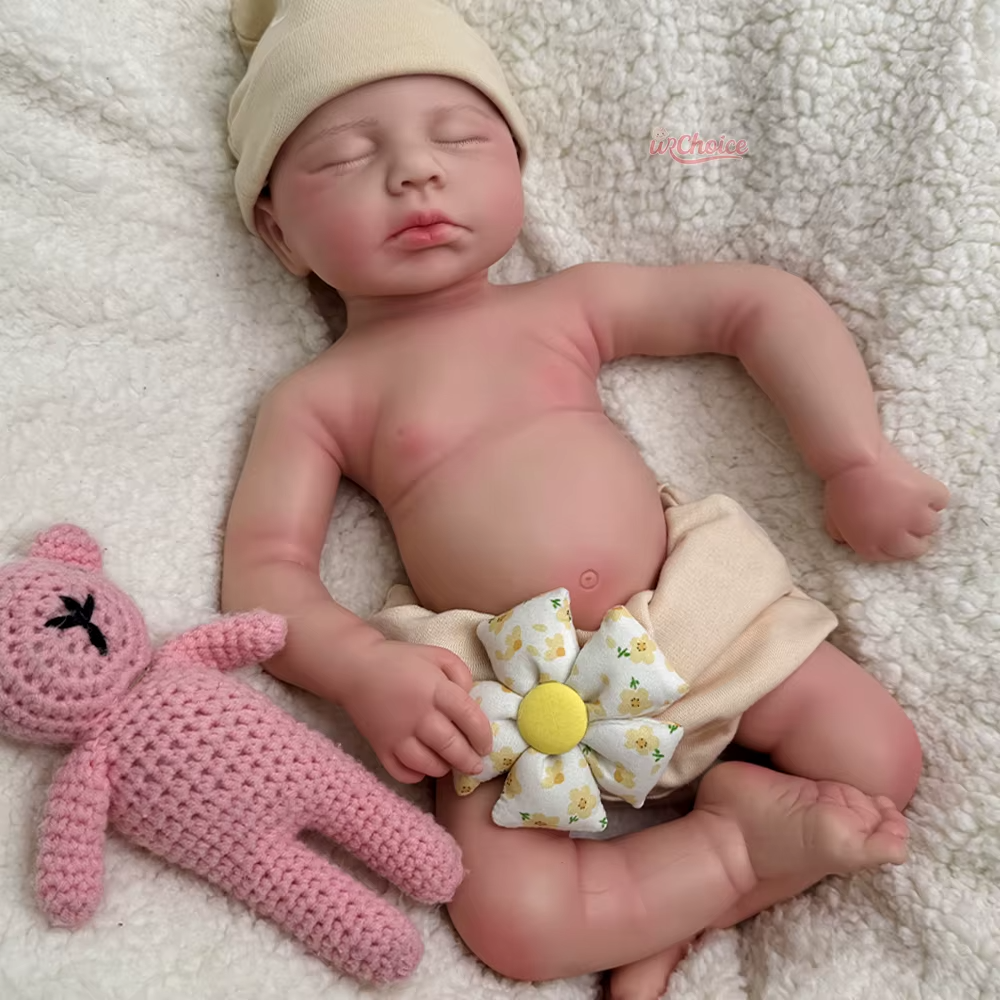
Advantages: unmatched tactile realism, genuine poseability when armatures are integrated, premium brand positioning, and stronger resale retention on scarce sculpts. A full-body silicone doll is the closest thing in the market to holding a real infant’s weight.
Limitations are real. The price floor is high because labor, not material, dominates. Silicone can tear at stress points — armpits, crotch, neck, and around the neck flange. Seams and repairs demand matched material and real skill, which is why the pool of qualified artists is smaller than the vinyl side of the trade.
Care is gentler than most first-time owners assume. Powder the surface periodically to manage tack and dust, avoid alcohol and solvent-based cleaners entirely, keep the piece out of prolonged direct sun, and handle rooted hair by the crown rather than individual strands. Store it lying flat rather than hung.
Pros | Cons |
Flesh-like compression and drape | High entry price |
Holds warmth like a real body | Tear risk at stress points |
Poseable with internal armature | Repairs need expert matching |
Strong premium resale retention | Fewer qualified artists |
Best-fit buyer: experienced collectors, portrait and commission clients, and display-focused owners who handle occasionally and carefully.
Vinyl Reborn Dolls: Pros, Cons, and Beginner Suitability
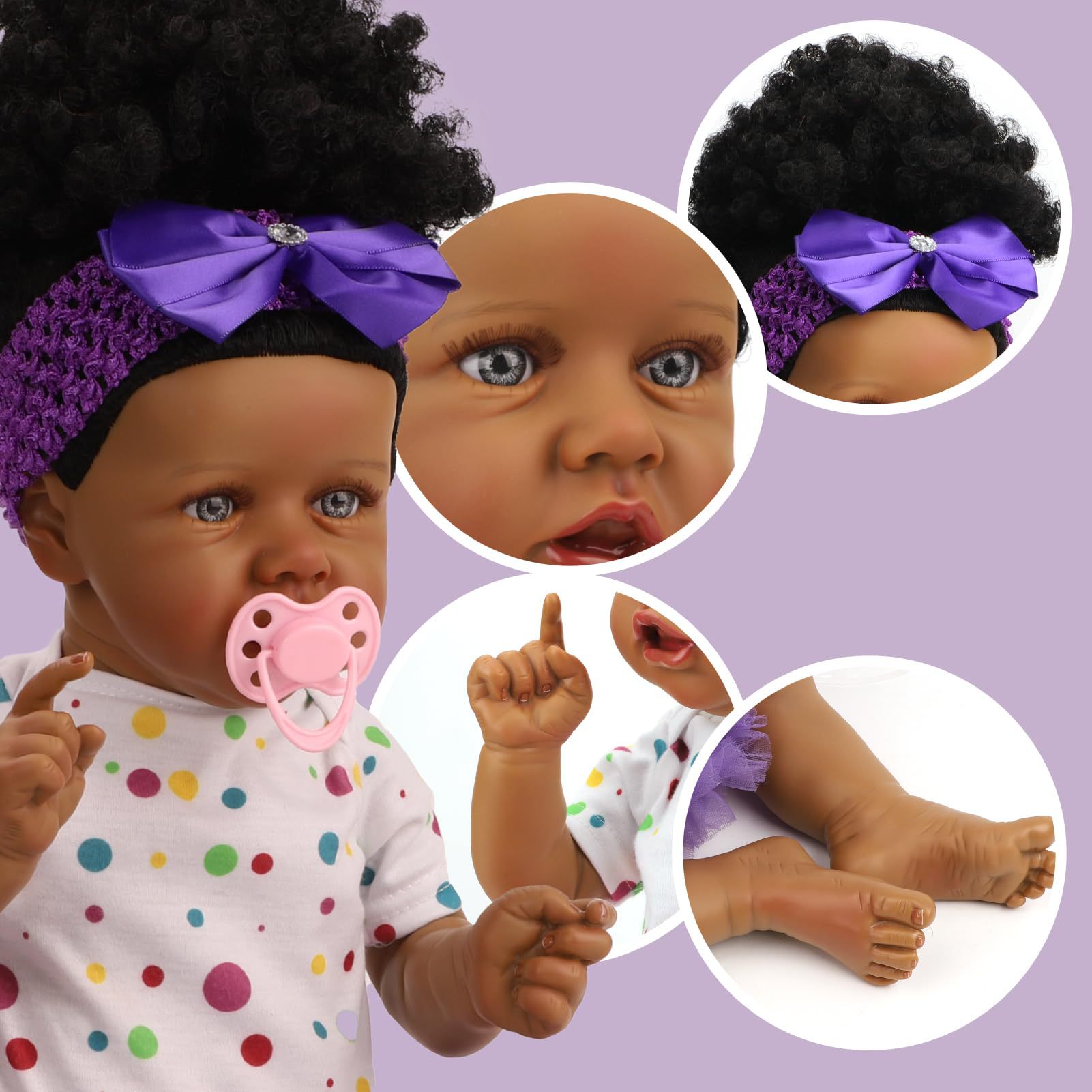
Advantages: a much lower entry price, a body that survives handling and shipping without drama, surfaces that wipe clean easily, and by far the widest availability of sculpts and kits. If you damage a vinyl doll’s paint, it can usually be touched up or stripped and repainted.
The trade-offs are tactile and aesthetic. Vinyl reads firmer and slightly rigid. Surface sheen can creep back after handling, so re-matt is part of long-term ownership. Fewer vinyl pieces are genuinely one-of-a-kind, since a single mold can yield many shells. Plasticizer and softening-agent content also varies between suppliers, which shows up in how a shell ages.
This is exactly why vinyl reborn dolls for beginners dominate first purchases and gifting. A new collector can learn the hobby, an artist can learn painting and rooting, and a parent can buy a doll that survives daily handling — none of which works comfortably at silicone price points.
Pros | Cons |
Accessible price point | Firmer, less lifelike drape |
Durable in handling and transit | Sheen returns over time |
Easy to clean and repaint | Fewer one-of-a-kind pieces |
Widest sculpt selection | Plasticizer varies by supplier |
Best-fit buyer: new collectors, gift buyers, and artists learning to paint and root.
Cost, Value, and Resale: What You Actually Pay For
Price is driven by four variables, not one. Material sets the floor. Rooting adds significant labor. Painting depth — undertones, mottling, capillaries — separates competent work from exceptional work. Artist reputation multiplies all three. A hand-reborn vinyl piece by a recognized artist can cost more than an entry-level silicone produced by an unknown hobbyist.
Hidden costs cut both ways. Silicone owners should budget for periodic re-powdering and, eventually, possible seam repair. Vinyl owners should expect re-matt and paint touch-ups over a long ownership period, especially if the doll is handled often.
Custom reborn dolls and commissions are priced on sculpt licensing, artist hours, and specification complexity — hair type, eye options, rooting pattern, armature. Material is often the smallest line item on those invoices.
Resale follows scarcity and provenance more than the material label. A limited-edition silicone by a known artist appreciates. So does a rare retired vinyl sculpt. A mass-produced shell, silicone or vinyl, does not — regardless of what the listing claims.
The Collector’s Decision Framework: How to Choose
Work through these in order. Skipping to realism first is how buyers end up with a doll they’re afraid to touch.
- Use case.Handling, photography, display, or gifting? Heavy handling points to vinyl. Display and portrait work point to silicone.
- Budget ceiling.Set it before browsing. Silicone has a hard price floor; there is no reliable workaround.
- Ownership length.A keepsake for years favors silicone. A piece likely to be passed on, traded, or gifted favors vinyl.
- Realism threshold.Be honest about whether your hands will notice the difference. Many display-only owners never will.
- Artist availability.Silicone commissions can carry long turnaround. Vinyl kits are ready to paint immediately.
- Care appetite.Are you willing to powder, avoid solvents, and handle a fragile high-realism piece?
Five-question self-check: Will I handle it weekly? Is my ceiling fixed? Do I want to commission a specific artist? Am I buying for a child? Will I be upset if this needs a repair? Two or more “handling” or “child” answers mean vinyl. Three or more “commission,” “display,” or “keepsake” answers mean silicone.
Common Mistakes Buyers and Sellers Make
Assuming all silicone is platinum-cure. It isn’t. Tin-cure silicone is cheaper and gradually degrades, and some listings blur the distinction. Ask directly which cure system was used and for cure documentation.
Overlooking vinyl’s plasticizer behavior. Shells stored in warm, poorly ventilated conditions can soften or develop surface tack over time. Cool, dry, out-of-sun storage matters.
Buying from photos alone. Stills hide sheen, seam quality, and paint thickness. Request a short handling video before committing on any high-value piece.
Undervaluing artist provenance — and confusing factory-produced kits with hand-reborn work. These are different products with different pricing logic. A kit is a blank; a reborn is a completed artwork with hours of documented labor.
Shipping without a written care sheet and clear return terms. On customs, both sides should agree in writing on storage, handling limits, and what constitutes damage versus
…damage versus ordinary handling wear.
Care Routines Diverge Because the Two Materials Fail Differently
Silicone and vinyl do not age the same way, so the upkeep is not a matter of degree — it is a different job. Silicone rarely cracks. It goes tacky, attracts lint, and eventually tears where the wall is thinnest. Vinyl rarely tears. It hardens or softens, yellows, and sheds its matte finish.
The silicone routine, in practice: dust with a soft brush, re-powder every two to four weeks on a handled piece, wash sparingly with a mild fragrance-free soap and lukewarm water, pat dry with a lint-free cloth, and never let alcohol, acetone, or solvent wipes touch the surface — they strip the paint layers permanently. Store it lying flat in cloth, with no weight pressing on the neck flange or armpits. Brush rooted hair with a soft-tipped tool and reinforce before tugging; silicone hair is punched into a solid substrate and cannot be re-glued from the inside the way vinyl hair can.
One storage rule surprises nearly everyone: keep silicone and vinyl from resting against each other for long periods. Plasticizer migrates out of PVC and into silicone, where it does not belong, leaving permanent tack and localized swelling. Shelf-mates matter. Cloth bags or dividers between pieces solve it.
The vinyl routine is lighter but has its own traps. Wipe with a damp cloth and mild soap — but never soak a cloth-bodied doll. Water inside the body cavity is how you get mildew, rusted weighting inserts, and a smell that does not come out. Heat is the real enemy: above roughly 60 °C, a plastisol shell can warp and lose shape, which means attics, garages, trunks, and hot cars are disqualifying storage. Plan on re-matt with a matte sealer every year or two if the piece is handled, applied in thin coats and fully cured between passes. And keep it out of direct sun; UV drives yellowing on vinyl far faster than on platinum silicone.
How Each Material Ages Over a Decade
Aging behavior | Silicone | Vinyl |
Primary failure mode | Tack, dust pickup, tearing | Hardening, tack, yellowing |
Dimensional stability | High, minimal shrinkage | Drifts as plasticizer migrates |
Color drift | Low on platinum cure | Noticeable with UV exposure |
Repairability | Requires matched silicone and skill | Touching up, stripping, repainting |
Heat sensitivity | Tolerates warmth well | Deforms in high heat |
The practical read: a vinyl doll left in a hot room for two summers may come out warped or greasy. A silicone doll left in the same room will be fine — but drop it once and you may be looking at a seam repair.
Shipping, Handling, and Insurance
Transit is where most expensive dolls are damaged, and the two materials need different protection. Silicone ships best cradled in foam with no load on the stress points — armpits, crotch, and neck flange — and with clothing loose rather than compressing the surface. Vinyl’s risk is thermal, not structural, so packing should insulate against temperature swings on a long haul as much as it absorbs shock.
For both: photograph the piece immediately before boxing, record a timestamped handling video, declare the full value rather than the sale price, and agree in writing on what counts as transit damage versus prior wear. Most disputes we see are not about broken dolls. They are about whose definition of “as described” applied.
Sourcing at Volume: What Trade Buyers Should Specify
If you are buying kits, blanks, or finished pieces at scale, the specification sheet matters more than the sales photos. Five lines worth demanding on every quote:
- Cure system.Platinum-cure silicone with documentation — not a verbal assurance. Tin-cure is cheaper and degrades faster over years.
- Silicone skin feel sits in a narrow range of Shore hardness. Too soft reads as jelly; too hard kills the illusion entirely. Ask for the number, not the adjective.
- Plasticizer declaration.For vinyl, specify phthalate-free plasticizers such as DOTP or DINCH, and request a REACH SVHC statement if you ship into the EU.
- Age grading and labeling.If a product is marketed to children it falls under regimes such as EN 71 in the EU and ASTM F963 plus CPSIA in the US. Collectible pieces sold to adults carry different obligations. Do not let a listing blur the two — customs and regulators do not.
- Mold life and reorder lead time.Silicone molds retire faster and production is slower per unit. Know your replenishment window before you commit to a launch date.
Finished-product consistency is the other half. Two shells from the same sculpt should match on skin tone, matte level, and rooting density. Batch-to-batch drift is the most common complaint from retail buyers, and it shows up first in the painted layers, not the casting.
Häufig gestellte Fragen
Can you root hair on a vinyl doll?
Yes, and it is the standard method. Holes are punched with a rooting needle, hair is inserted, then secured from inside the hollow shell. Silicone rooting is harder: the substrate is solid, so each plug must be sealed into the silicone itself, and mistakes are not reversible. That single difference accounts for a large share of the price gap on rooted pieces.
Can the doll be bathed?
A full-body silicone doll can be gently washed and dried; the material tolerates water. A vinyl doll with a cloth body cannot be soaked — clean the head and limbs only, and keep moisture out of the torso.
Does an armature make a doll more fragile?
It adds poseability and it adds pressure points. Armature wire is fine in vinyl and workable in silicone, but repeated bending at one joint concentrates stress exactly where silicone is most likely to fail. Pose less, vary the pose more.
Which holds value better?
Scarcity and provenance outweigh the material label in both directions. A limited silicone from a known artist appreciates; so does a retired vinyl sculpt in clean condition. A mass-produced shell depreciates whether it is soft or hollow.
The Bottom Line
Choose vinyl when the doll has to survive real life — children, frequent handling, gifting, learning to paint and root. Choose silicone when the doll is the point: display, portrait work, commissions, the weight of it in your arms. Neither is the “better” material. They are answers to two different questions, and the buyers who end up disappointed are the ones who answered the wrong one.
If you are sourcing rather than collecting, the decision flips: you are not choosing one material, you are choosing which lines to carry. Most successful catalogs run both — vinyl at the volume end to bring buyers in, silicone at the top end to establish finish quality — and let the production floor, not the marketing copy, define the difference.

Owen ist der Gründer der Sueban Group in zweiter Generation, einem Hersteller von Reborn-Puppen mit Sitz in Guangdong, China. Mit über 20 Jahren familiärer Fertigungstradition leitet Owen die B2B-Geschäfte des Unternehmens, die Großhändler, Marken und institutionelle Käufer in über 20 Ländern beliefern.
Triff Owen
 English
  Deutsch
  Français
  Español
  Italiano
  Nederlands