
What B2B Buyers Actually Need to Decide Before Sourcing
Buying reborn dolls at wholesale volume is not the same as buying one doll for personal use. A collector asks “does it look real?” A brand or distributor has to work through a longer list of questions at once:
- Will this SKU sell to my customer — a collector, a gift shopper, or a therapy/care buyer?
- Can the supplier document compliance for the markets I sell into?
- Is the finish level consistent enough to reorder the same product next season?
- Does the factory support OEM, ODM, or private label so the product carries my brand, not theirs?
Get these four points right, and the rest of your reborn doll sourcing process becomes routine. Get them wrong, and serious problems often surface only after a container has shipped.
The reborn doll category is consolidating around qualified suppliers
Demand for reborn doll products has grown faster than the supply of reliable factories. Alibaba.com recorded a 45.3% year‑over‑year increase in reborn doll buyer demand, with 6,981 active buyers in a 12‑month window. That growth has pushed the market toward consolidation: buyers increasingly filter for suppliers who can show safety certifications and consistent quality, because the cost of a bad batch — returns, customs holds, damaged seller ratings — is far higher than the cost of paying a little more per unit.
For newer brands entering the reborn doll wholesale space, this is actually good news. It means differentiation is available to anyone willing to do the compliance work that less serious sellers skip.
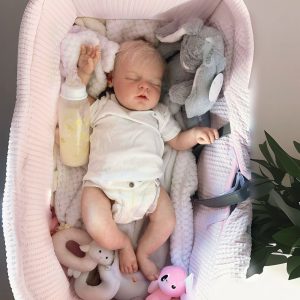
Step 1 — Choose the Material First, Because Everything Else Follows
Material determines your price band, your customer segment, and how the doll must be stored and handled. Decide this before you look at faces or outfits.
Material | Typical retail price | How it feels | Best-fit customer | The trade-off |
100–180+ | Soft, skin-like, holds warmth | Premium collectors, therapeutic buyers | Higher cost; surface can get tacky in humidity and needs powder care | |
Soft vinyl (PVC) | 35–55 | Firmer, crisp paint detail | General retail, gifts, entry collectors | Less realistic; low-grade stock can carry an odor |
Weighted cloth body | 15–35 | Soft, “floppy,” realistic weight | Children, therapeutic use, budget segment | Least realistic; limited customization |
Retail ranges based on Amazon.com price analysis; B2B wholesale pricing typically runs 40–60% below retail depending on order volume.[^2]
A useful rule of thumb from the manufacturing side: full‑silicone reborn dolls command a 3–4x premium over vinyl, so it is not a substitute for vinyl in the same SKU slot — it is a different tier of product entirely.[^2] Brands that try to sell silicone at vinyl margins usually either compromise on material quality or lose money.
What most successful catalogues do: run three tiers at once — a silicone flagship SKU that carries the margin, a vinyl core SKU that carries the volume, and a cloth entry SKU that tests new markets cheaply. That product spread protects you if buyer behavior shifts.
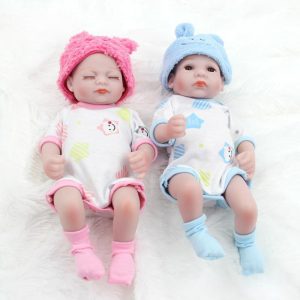
Silicone vs. vinyl: the question your buyers will ask you
Your retail customers will ask “which reborn doll material is better?” The honest answer is neither — they suit different needs. Platinum silicone feels closest to real skin and is the material of choice for therapeutic and premium collector buyers, but it is more delicate and attracts dust. Vinyl is the industry workhorse: durable, easy to clean, and the best surface for detailed, hand‑painted realism. If your market is gift and general retail, vinyl should be your default; if it is high‑end collectors or care settings, lead with silicone.
Step 2 — Confirm Safety Compliance Before You Discuss Price
This key step often separates a genuine reborn doll manufacturer from a reseller. For US and EU markets, compliance is not optional — importing without proper documentation can lead to customs seizures and legal exposure. Ask every prospective supplier for:
- ASTM F963— the US toy safety specification
- CPC (Children’s Product Certificate)— mandatory for US retail; confirms testing by a CPSC-accepted lab
- EN71— required for inventory sold into the European market
- Phthalate and lead-free lab reports— proving the material is non-toxic and skin-safe
A supplier who can produce these quickly is almost always a genuine factory or a factory-backed partner. A supplier who stalls, sends a generic certificate with no product name, or answers vaguely is telling you something useful — believe it. Counterfeit and low-grade-material products are a known problem in this category, which is precisely why certified suppliers can charge more and still win the order.[^2]
Step 3 — Decide the Finish Level Based on Your Retail Price
Two dolls can share the same base mold and still differ by a factor of ten in price. The gap is not the mold — it is the hand-work applied after casting.[^5] As a buyer, you are choosing where to sit on that spectrum:
- Factory-painted finish— suited to high-volume wholesale. Machine-assisted painting keeps every unit consistent across a large order, which is what makes reordering and multi-store distribution possible.
- Hand-rooted, collector-grade finish— each strand of mohair or premium fiber is inserted by hand. Lead times are longer, but the visible craftsmanship supports a much higher retail price.
Three quality markers worth checking in any sample:
- Painting depth.Look for faint blue undertones, soft cheek blushing, and subtle mottling. Quality paint has a matte, skin-like finish; a shiny or waxy surface signals a cheap coating.[^5]
- Hair rooting.Hand-rooted hair sits in a natural hairline. Thickly glued plugs or painted-on hair are the marks of a cheaper build.[^5]
- A quality doll is weighted with glass beads or poly pellets to mimic an infant’s heft — typically 5–8 lbs. If it feels light and hollow, the manufacturing cost was cut somewhere.[^5]
These are also the details to put in a written QC benchmark with your manufacturer, so “acceptable” means the same thing to both sides on every batch.
Step 4 — Vet the Supplier as a Manufacturing Partner, Not a Vendor
For a brand or distributor, the sourcing question is not only what you buy but who you build with. Working directly with a Baby-Puppen-Fabrik — rather than through a trading company — removes a layer of markup, shortens the feedback loop when something goes wrong, and gives you real visibility into the materials in your product.
When you evaluate suppliers, test them on three fronts:
What to verify | What to ask |
Production capacity | Can they scale for your peak season without quality drifting between batches? |
Lead times | Are delivery windows committed in writing, and what is the process if a batch is late? |
OEM / ODM / private label | Can they adjust skin tone, hair and eye color, size, and body pose — and can the product carry your own brand and packaging? |
If your goal is to launch your own line rather than resell a generic catalogue, OEM and ODM capability is the deciding factor, and it is worth prioritizing over a marginally lower unit price. A factory that supports private label lets you build brand equity that a reseller never can.
Step 5 — Never Skip the Production Sample
This is the step first‑time reborn doll buyers most often skip to save time — and it leads to the costliest mistakes. Photos can be misleading. Lighting and retouching can make a mid‑grade vinyl doll look like a premium silicone one. The only reliable way to judge weighting, finish, and material feel is to hold the actual production sample in your hands and evaluate it against the checklist in Step 3.
A supplier confident in their output will welcome your sample request. If a factory resists sending a sample or pushes you to pay a deposit first, treat that as a warning sign for your future working relationship.
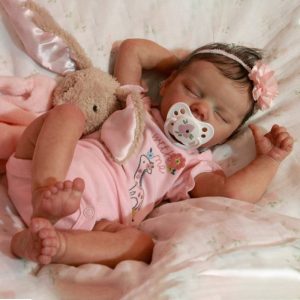
Wholesale Sourcing Checklist
Run through this before placing any order:
- Material matched to your customer segment (silicone / vinyl / cloth)
- ASTM F963, EN71, and CPC documentation reviewed
- Phthalate and lead-free lab reports verified
- Finish level confirmed (factory-painted vs. hand-rooted)
- QC benchmark agreed in writing
- Production capacity and lead times confirmed in writing
- OEM / ODM / private label options discussed
- Production sample ordered and inspected
- Wholesale pricing checked against MOQ tiers
Häufig gestellte Fragen
Is full silicone always better than vinyl for wholesale reborn dolls? No — they serve different buyers. Full silicone offers the most realistic, skin-like feel and suits premium collector and therapeutic markets, but it costs more and needs careful handling. Vinyl is more durable, easier to clean, and the better surface for detailed painting, which makes it the standard choice for general retail and gifts. Choose by your customer, not by a quality ranking.
How do I confirm a supplier’s dolls are safe and legal to import? Request material safety data sheets and test reports for ASTM F963 (US) and EN71 (EU). For US retail, a CPC is required. A legitimate manufacturer provides these as standard; a vendor who cannot should be dropped from your shortlist.
Why do two nearly identical dolls have such different wholesale prices? They often share a base mold. The price difference comes from the finishing work — painting, hair rooting, and overall assembly. A hand-rooted, collector-grade doll and a factory-painted doll can look similar in a thumbnail and diverge sharply in person.[^5]
What should a new brand source first? Start with soft vinyl for general retail and a weighted cloth entry SKU to test demand with a controlled, consistent product. Add full silicone once you have a confirmed collector or therapeutic customer base — that is also when OEM/ODM customization pays off most.
Does OEM/ODM matter if I am only buying a small first order? It matters if you intend to build a brand rather than resell. Even a small first order can be produced under your own private label, and starting that way avoids a costly rebrand later once your product line grows.
Bottom Line
Choosing wholesale reborn dolls is a sourcing discipline: match the material to your market, verify compliance before you talk price, pick the finish level your retail price supports, and build with a manufacturer that can carry your brand. Demand for reborn dolls in this category is climbing, and the market is consolidating around suppliers who can prove quality and consistency — which means brands that complete proper due diligence up front are best positioned to grow within this space.
If you are a brand, wholesaler, or distributor looking for an OEM/ODM reborn doll manufacturer, our team can walk you through material options, send a production sample, and discuss private‑label terms for your target market. Visit our contact page to start the conversation.
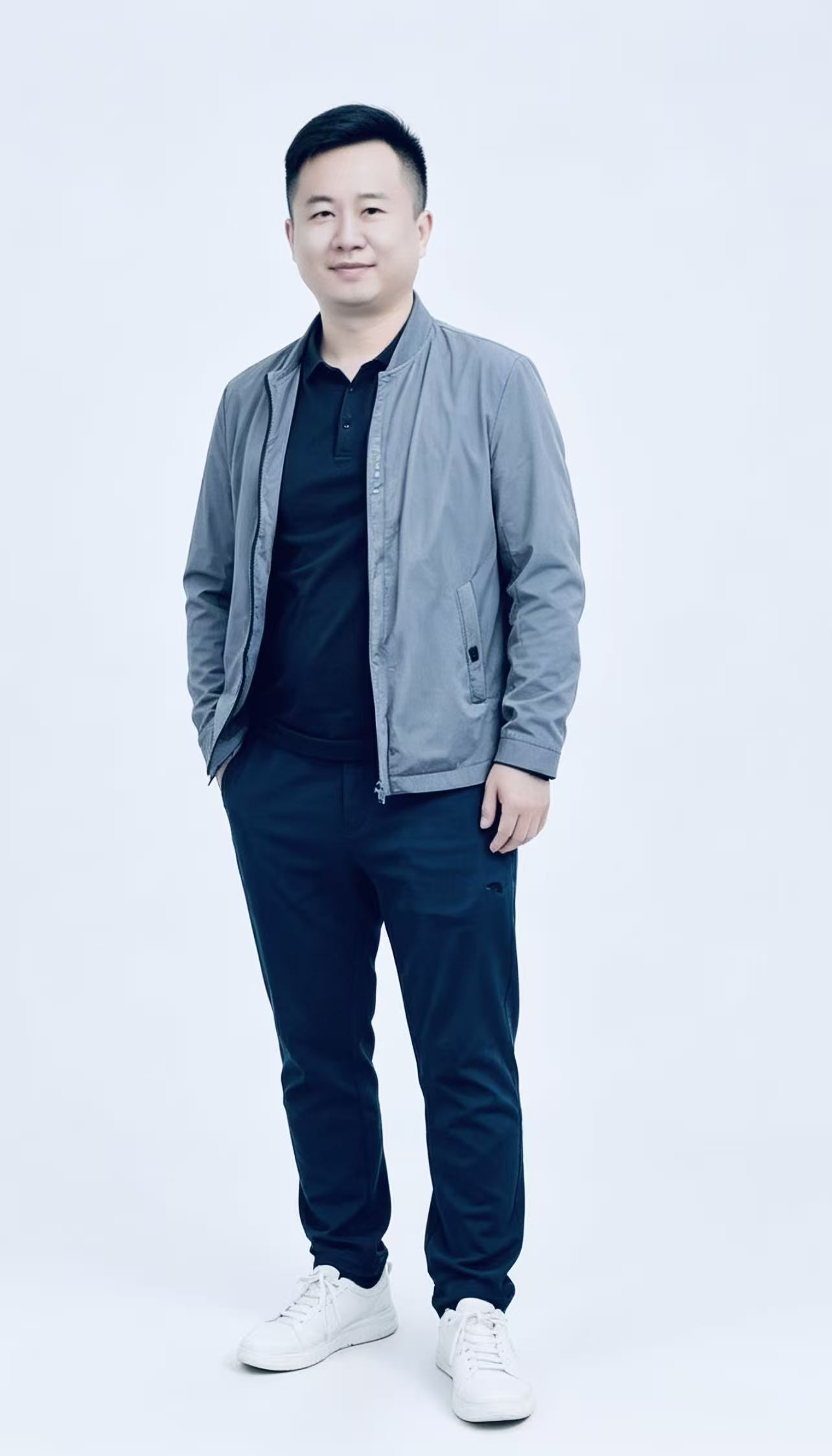
Owen ist der Gründer der Sueban Group in zweiter Generation, einem Hersteller von Reborn-Puppen mit Sitz in Guangdong, China. Mit über 20 Jahren familiärer Fertigungstradition leitet Owen die B2B-Geschäfte des Unternehmens, die Großhändler, Marken und institutionelle Käufer in über 20 Ländern beliefern.
Triff Owen
 English
  Deutsch
  Français
  Español
  Italiano
  Nederlands