
If you’ve ever compared silicone reborn dolls from different suppliers, you’ve probably noticed something confusing.
Two dolls may look similar in photos, yet one costs a few hundred dollars while another costs several times more.
Many buyers assume the difference comes down to profit margins. In reality, the biggest cost differences are usually hidden inside the production process itself.
From silicone material selection and mold development to painting, hair rooting, quality control, and shipping, every stage affects the final price.
At Sueban Group, we’ve worked with wholesalers, retailers, and private-label brands sourcing reborn dolls for different markets. One thing we’ve learned is that understanding production costs helps buyers make better purchasing decisions—and avoid paying for features they don’t actually need.
In this guide, we’ll break down the factors that have the biggest impact on silicone reborn doll production costs and explain where the money really goes during manufacturing.
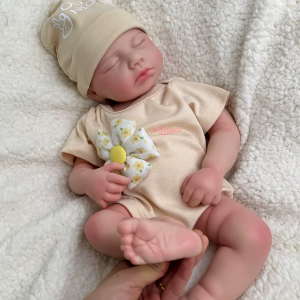
Silicone Material Quality Has the Biggest Impact on Cost
When people hear “silicone reborn doll,” they often assume all silicone is the same.
It isn’t.
The quality of silicone used in production can significantly affect both manufacturing costs and the finished product.
Higher-grade silicone generally offers:
- Better softness and flexibility
- Improved tear resistance
- More realistic skin texture
- Better long-term durability
- More consistent coloring
Lower-cost silicone blends may reduce production expenses, but they can also create issues such as tearing, discoloration, surface stickiness, or a shorter product lifespan.
For manufacturers, premium silicone is one of the largest material expenses, but it also plays a major role in customer satisfaction and product reliability.
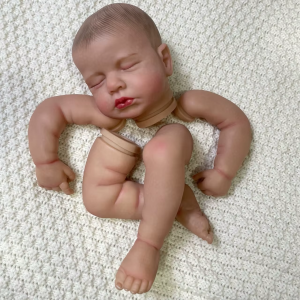
Mold Development Is a Major Upfront Investment
One cost many buyers never see is mold creation.
Before a single doll can be produced, a detailed sculpt must be transformed into a production mold capable of reproducing fine facial features, skin texture, fingers, toes, and body details.
For OEM and custom projects, mold development can require:
- Sculpt preparation
- Prototype testing
- Mold production
- Multiple revisions
- Sample approval
This investment is usually spread across future production runs.
That is why custom silicone reborn dolls almost always cost more than standard catalog models.
The smaller the production quantity, the higher the mold cost contribution per doll.
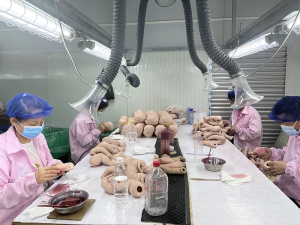
Labor and Craftsmanship Drive Premium Pricing
One of the biggest misconceptions in the industry is that silicone doll manufacturing is highly automated.
In reality, many of the most important steps are still completed by hand.
These include:
- Trimming and seam finishing
- Surface preparation
- Hand painting
- Eyelash application
- Hair rooting
- Final assembly
- Quality inspection
The more realistic the doll, the more labor hours are required.
This is often where the largest price difference exists between entry-level products and premium reborn dolls.
A highly detailed doll may require substantially more manual work than a basic production model, even when both use similar silicone materials.
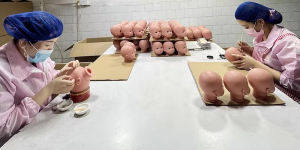
Realistic Painting Adds Significant Production Time
Painting is one of the most labor-intensive stages of reborn doll manufacturing.
A realistic appearance cannot be achieved with a single layer of color.
Instead, artists build depth through multiple layers that may include:
- Skin tones
- Blushing
- Veining
- Mottling
- Creases
- Matte finishing
The goal is to create natural-looking skin rather than a uniform painted surface.
Buyers often focus on material quality, but painting quality is usually what determines whether a doll looks lifelike or factory-made.
This is also why premium dolls command higher prices.
You’re paying for artistic labor, not simply paint.
Hair Rooting Can Dramatically Increase Costs
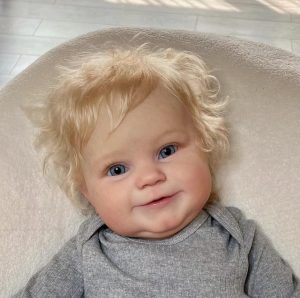
Hair is another major cost factor.
Many lower-cost dolls use wigs because they are faster and less expensive to install.
Hand-rooted hair is different.
Each strand is inserted individually into the head using specialized needles, making the process extremely time-consuming.
Cost differences often depend on:
- Hair type
- Hair density
- Rooting method
- Hairline realism
- Styling requirements
The more realistic the rooting, the higher the labor cost.
This is one reason two dolls with similar faces can have very different prices.
Quality Control Is More Expensive Than Many Buyers Realize
Quality control doesn’t generate revenue, but it prevents problems.
Factories with stronger quality systems typically invest more in:
- Material inspections
- Surface checks
- Paint verification
- Hair rooting inspections
- Assembly reviews
- Packaging inspections
This increases production costs, but it also reduces:
- Product defects
- Customer complaints
- Returns
- Replacement shipments
For wholesalers and retailers, consistent quality often saves more money than choosing the lowest-priced supplier.
Why Some Silicone Reborn Dolls Are Surprisingly Cheap
This is one of the questions buyers ask most often.
The answer is usually a combination of factors rather than a single reason.
Lower-priced silicone dolls may use:
- Lower-grade silicone
- Simpler painting techniques
- Wigged hair instead of rooted hair
- Less detailed finishing
- Reduced quality inspections
- Generic packaging
- Existing molds with no customization
None of these automatically make a doll “bad.”
However, buyers should understand what is being removed from the production process in order to reach a lower price point.
When comparing quotes, it’s important to evaluate what is included—not just the final number.
Silicone vs Vinyl: Understanding the Cost Difference
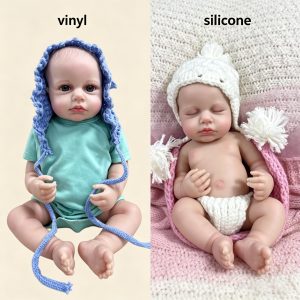
Many buyers compare silicone reborn dolls with vinyl reborn dolls when planning inventory.
While both categories have strong demand, silicone typically costs more to manufacture.
Key reasons include:
| Factor | Silicone | Vinyl |
|---|---|---|
| Material Cost | Higher | Lower |
| Production Complexity | Higher | Lower |
| Weight | Heavier | Lighter |
| Shipping Cost | Higher | Lower |
| Realism Potential | Higher | Moderate to High |
| Durability Requirements | Higher | Lower |
For businesses entering the reborn doll market, vinyl models often provide a lower-risk entry point, while silicone dolls are typically positioned as premium products.
Packaging and Shipping Also Affect Final Pricing
Production costs don’t stop once the doll leaves the factory floor.
Silicone dolls require protective packaging to prevent:
- Paint damage
- Hair flattening
- Surface marking
- Pressure deformation during transit
International shipping costs can also vary significantly depending on:
- Product size
- Product weight
- Shipping method
- Destination market
- Seasonal freight rates
In some cases, logistics costs have a greater impact on final pricing than accessory upgrades.
How Buyers Should Evaluate Production Costs
One mistake we often see is buyers focusing exclusively on unit price.
A lower quote doesn’t always represent better value.
Instead, evaluate:
- Material quality
- Painting standards
- Hair rooting quality
- Quality control procedures
- Packaging protection
- Supplier consistency
- Production lead times
The goal isn’t to find the cheapest doll.
The goal is to find the right balance between cost, quality, and market positioning.
Final Thoughts
Silicone reborn doll production costs are influenced by far more than raw materials alone.
Material quality, mold investment, labor, painting, hair rooting, quality control, packaging, and logistics all contribute to the final price.
Understanding these cost drivers helps buyers compare suppliers more effectively and make sourcing decisions based on long-term value rather than short-term savings.
At Sueban Group, we believe transparency is one of the most important parts of manufacturing partnerships. The more buyers understand how production works, the easier it becomes to select the right product, set realistic budgets, and build a sustainable business in the reborn doll market.

Owen is the second-generation founder of Sueban Group, a reborn doll manufacturer based in Guangdong, China. With over 20 years of family manufacturing heritage, Owen leads the company's B2B operations serving wholesalers, brands, and institutional buyers across 20+ countries.
Meet Owen →
 English
  Deutsch
  Français
  Español
  Italiano
  Nederlands