Understanding CE Marking and EN71 Standards
For any brand looking to scale in the European market, safety compliance isn’t just paperwork—it is the passport for your inventory. As an ISO-certified doll manufacturer, we see firsthand how strict adherence to safety protocols determines whether a shipment clears customs or gets seized. When we manufacture OEM reborn baby dolls at our Shenzhen facility, meeting the “Big Three” standards is non-negotiable.
Decoding the CE Mark for Dolls
The CE marking for dolls is mandatory for sales within the European Economic Area (EEA). It is not a quality certification, but a declaration that the product complies with all relevant EU health, safety, and environmental protection legislation. For our clients, this means every platinum silicone reborn doll or vinyl model we produce must carry this mark to prove it meets the essential requirements of the Toy Safety Directive. Without it, your products cannot legally enter the EU market.
EN71-1: Mechanical and Physical Properties
This section of the standard focuses on the structural integrity of the doll. Since we produce sizes ranging from 10-inch mini dolls to 22-inch newborn sizes, ensuring physical safety is critical.
- Tension and Torque Tests: We verify that limbs and heads do not detach under force.
- Small Parts: We ensure that eyes, eyelashes, and accessories do not become choking hazards.
- Edges and Points: Our one-piece “soft touch” designs are inspected to guarantee there are no sharp edges that could injure a child.
EN71-2: Flammability Standards for Hair and Clothes
Reborn dolls often feature custom outfits (rompers, dresses) and soft cloth bodies. EN71 toy certification requires rigorous flammability testing to ensure these materials do not burn rapidly if exposed to a flame.
- Rooted Hair: Synthetic mohair or hand-painted details are tested to ensure they are self-extinguishing or have a low rate of spread.
- Textiles: The fabrics used in our soft cloth bodies and clothing accessories undergo specific burn rate testing to protect the end-user.
EN71-3: Chemical Migration and Toxicity
This is arguably the most critical test for material safety for reborn dolls. EN71-3 restricts the migration of 19 heavy metals (such as lead, cadmium, and mercury) from the toy materials.
- Material Integrity: Our use of Premium Platinum Silicone and High-Quality Vinyl ensures we pass these strict toxicity limits.
- Surface Coatings: The paints used for our 3D hand-painted models and realistic skin tones are tested to ensure no toxic chemicals can be ingested or absorbed by touch.
Post-Brexit UKCA Considerations
Since the UK’s departure from the EU, the CE mark is being replaced by the UKCA (UK Conformity Assessed) marking for goods placed on the market in Great Britain. While the technical requirements currently mirror the EU’s EN71 standards, brands targeting the UK must ensure their documentation reflects this specific conformity assessment to avoid distribution bottlenecks.
ASTM F963 Compliance for US Markets
For any business targeting the United States, adhering to ASTM F963 reborn dolls standards is mandatory, not optional. This specification, often called the “gold standard” of toy safety, is federally mandated under the Consumer Product Safety Improvement Act (CPSIA). As a manufacturer, we ensure every batch meets these rigorous requirements so your products don’t get flagged at the border or removed from marketplaces like Amazon.
ASTM F963-23 Overview
The latest version, ASTM F963-23, covers a wide range of safety parameters. It isn’t just about the materials; it evaluates the mechanical integrity and chemical composition of the doll. Our production process aligns strictly with these protocols to guarantee that our OEM reborn dolls certifications are valid and up to date.
Key Areas of Assessment:
- Mechanical Hazards: Testing for small parts that could cause choking.
- Chemical Properties: Analyzing surface coatings and substrates.
- Flammability: Ensuring materials do not burn rapidly.
Lead and Phthalate Limits in Vinyl
One of the biggest hurdles for importers is ensuring Lead-free vinyl dolls. The US market has zero tolerance for heavy metals and toxic plasticizers in children’s products. We utilize high-grade raw materials to ensure our vinyl and Phthalate-free reborn dolls pass chemical migration tests with ease.
Understanding the specific limits is crucial for your compliance documentation:
| Substance | Limit Requirement |
|---|---|
| Total Lead (Substrate) | Maximum 100 ppm |
| Lead in Surface Coating | Maximum 90 ppm |
| Phthalates (DEHP, DBP, BBP, etc.) | Maximum 0.1% (1000 ppm) |
| Soluble Heavy Metals | Strict limits on Antimony, Arsenic, Barium, Cadmium, etc. |
For a deeper dive into how we control material safety during production, review our guide on Chinese reborn doll manufacturers and OEM processes.
Sharp Points and Edges Testing
Reborn dolls often feature intricate details, but realism cannot come at the cost of safety. We conduct rigorous physical testing to ensure there are no accessible sharp points or edges that could injure a child. This includes tension tests on limbs and accessories to prevent detachment. Whether it is a full silicone baby or a cloth-body vinyl doll, the construction must remain intact under normal abuse to maintain CPSIA compliance reborn.
Third-Party Lab Testing Requirements
You cannot simply declare your products are safe; you must prove it. To secure a Children’s Product Certificate (CPC), samples must be tested by a CPSC-accepted third-party laboratory. We coordinate with accredited labs to generate the necessary test reports for every production run. This third-party verification is the only way to validate that your inventory meets federal safety rules before it ever ships from our ISO-certified facility.

Securing the Children’s Product Certificate (CPC)
For any business importing or manufacturing toys for the United States market, the Children’s Product Certificate (CPC) is non-negotiable. This document serves as your written guarantee that your products comply with all applicable local safety rules. As a manufacturer, we ensure every batch meets federal requirements, specifically focusing on CPSIA compliance reborn standards. Without a valid CPC, your goods are essentially illegal to sell to children under 12 in the US.
CPC Document Requirements
A valid CPC must be based on passing test results from a CPSC-accepted third-party laboratory. It is not enough to simply claim safety; the documentation must be precise. When we produce OEM reborn dolls certifications, we ensure the CPC includes the following critical data points:
- Product Identification: Detailed description of the specific reborn doll (e.g., 18-inch silicone reborn doll realistic comfort baby toy).
- Citations: A list of each consumer product safety regulation to which the product is certified (such as ASTM F963-17 and CPSIA lead limits).
- Importer Information: Name, full mailing address, and telephone number of the US importer or domestic manufacturer.
- Contact Information: The person maintaining the records of test results.
- Manufacturing Data: Date and place (city/province) where the product was manufactured.
- Testing Data: Date and place where the product was tested for compliance.
Amazon and Walmart Compliance Rules
Major US marketplaces like Amazon and Walmart have automated systems that aggressively police toy safety. If you are selling ASTM F963 reborn dolls, these platforms will eventually trigger a compliance request.
- Amazon FBA: Requires you to upload the CPC and the corresponding lab test report within a short window. Failure to do so results in immediate listing suppression and stranded inventory.
- Walmart Marketplace: Demands strict adherence to the “Trust & Safety” standards, often requiring documentation before the listing even goes live.
We support our partners by providing the necessary lab reports and certificates derived from our ISO-certified production processes, ensuring your listings stay active and profitable.
Preventing Customs Delays with Proper Docs
US Customs and Border Protection (CBP) works closely with the CPSC to inspect incoming shipments. Reborn doll customs clearance can become a nightmare if paperwork is missing or formatted incorrectly. A missing CPC is the number one reason for shipment seizures at the port.
Risk Mitigation Table:
| Document Issue | Consequence | Solution |
|---|---|---|
| Missing CPC | Shipment detained or destroyed. | Ensure CPC accompanies every commercial invoice. |
| Invalid Lab | Test report rejected by CPSC. | Use only CPSC-accepted labs (standard for our production). |
| Vague Description | Customs exam hold (intensive exam). | Match CPC product ID exactly to the physical packaging. |
To avoid these costly interruptions, request a quote that includes a full compliance review for your private label order. We ensure that the paperwork traveling with your freight is as flawless as the dolls inside.

EN71 vs ASTM F963 Comparison
Navigating the alphabet soup of safety standards is part of the job when you manufacture premium dolls. While both EN71 and ASTM F963 aim to keep children safe, they operate under different jurisdictions and technical requirements. Understanding EN71 vs ASTM vs CE is critical for any brand owner looking to scale beyond a local market.
Key Regulatory Differences
The primary distinction lies in geography and enforcement. ASTM F963 is the gold standard for the United States, mandated by the CPSIA, while EN71 is the set of standards required to display the CE mark in Europe.
| Feature | ASTM F963 | EN71 (CE) |
|---|---|---|
| Region | United States | European Union |
| Enforcement | CPSC (Consumer Product Safety Commission) | EU Member State Authorities |
| Documentation | Children’s Product Certificate (CPC) | EC Declaration of Conformity |
| Key Focus | Physical use, lead, phthalates, tracking labels | Mechanical properties, flammability, chemical migration |
Testing Method Variations
Even if a doll is safe, the lab methods used to prove it differ. For instance, reborn doll safety standards regarding heavy metals are stricter in Europe under EN71-3, which tests for the migration of 19 different elements. The US ASTM standard focuses heavily on total lead content and soluble heavy metals but uses different extraction methods.
When we produce collectible silicone reborn dolls, we have to ensure the platinum silicone material passes the specific chemical stress tests for both regions. You cannot simply submit an ASTM test report to European customs; it will likely be rejected because the testing methodology doesn’t align with EU protocols.
Age Grading Nuances
Age grading dictates which tests your product must pass. This is particularly tricky for realistic dolls.
- Under 3 Years: If a doll is marketed for toddlers, it cannot have small parts (choking hazards) or long cords.
- 14+ Collectibles: Many high-end reborns are labeled as adult collectibles. However, if the doll has “play value” and looks like a toy, regulators may still demand ASTM F963 reborn dolls compliance regardless of your label.
Dual Compliance Strategy for Global Sales
For brands targeting a worldwide audience, a dual compliance strategy is the most efficient route. Instead of creating separate inventory for the US and EU, we recommend manufacturing a single product line that meets the strictest criteria of both standards.
- Unified Materials: We use raw materials (like platinum silicone and vinyl) pre-validated for both EN71 toy certification and ASTM limits.
- Universal Design: Designing 23 inch silicone reborn dolls with secure components that pass the tension tests of both standards.
- Streamlined Logistics: One compliant SKU can be shipped to Amazon FBA warehouses in the US and distribution centers in Europe without modification.
By securing both the CPC (for the US) and CE technical files (for Europe) during the initial production run, you avoid costly re-testing and ensure your inventory never gets stuck at the border.
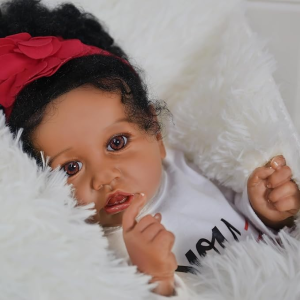
Material Safety for Reborn Dolls
Ensuring the chemical and physical safety of raw materials is the foundation of any reputable doll business. As a manufacturer operating an ISO-certified facility, we know that realistic aesthetics mean nothing if the underlying materials trigger a recall or fail customs inspection. Compliance starts at the molecular level, ensuring every component—from the skin to the internal weighting—meets strict international safety criteria.
Platinum Silicone Compliance
For high-end collectibles, platinum silicone reborn compliance is the gold standard. Unlike cheaper tin-cured silicones that can degrade or release byproducts, platinum silicone is medical-grade, stable, and completely non-toxic. This material is essential for achieving the “soft touch” infant feel and lifelike skin texture that defines premium models. We utilize premium platinum silicone in our production to ensure products are safe for handling and meet the rigorous demands of both collectors and regulatory bodies like the CPSC.
Vinyl Safety Standards
When manufacturing vinyl dolls, the primary concern is chemical migration. To pass ASTM F963 and EN71-3 testing, the vinyl must be strictly regulated.
- Phthalate-Free: We ensure our vinyl is free from banned plasticizers (phthalates) often used to soften plastics but restricted in children’s products.
- Lead-Free: Surface paints and the vinyl substrate itself are tested to ensure they are lead-free vinyl dolls, preventing toxicity risks.
Sourcing verified, safe materials is a critical step in our guide to starting a private label reborn brand, as it protects your business from liability down the road.
Rooted Hair and Flammability Risks
The realism of a reborn doll often comes from hand-rooted mohair or high-quality synthetic fibers. However, these materials introduce flammability concerns. Under safety standards like EN71-2, we conduct a flammability test on reborn hair and clothing to ensure the burn rate is slow enough to allow for safe handling. Whether it is a custom outfit or the doll’s hair, the materials must self-extinguish or burn slowly to be deemed compliant for the US and EU markets.
Magnet and Eye Safety Protocols
Physical features pose mechanical hazards that are scrutinized during safety testing.
- Magnets: High-strength magnets used for pacifiers must be securely enclosed inside the doll’s head to prevent detachment. Loose magnets are a severe ingestion hazard.
- Eyes and Lashes: 3D hand-painted details and inserted eyes must withstand tension tests to ensure they do not detach and become reborn doll choking hazards.
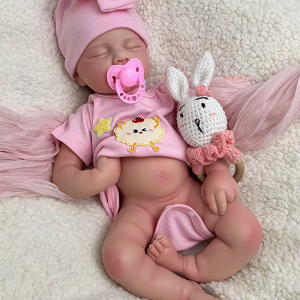
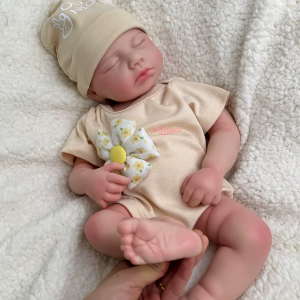
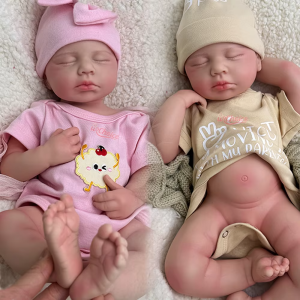
Our production process integrates these safety checks into the assembly line, ensuring that the final product is not only a work of art but a compliant, export-ready commodity.
Sourcing from Certified Manufacturers
Finding a partner who understands the stakes is just as important as the product itself. As a professional manufacturer, we know that safety compliance isn’t an afterthought—it is the foundation of the production line. When you source from us, you aren’t just buying inventory; you are securing your brand’s reputation against recalls and customs seizures.
Verifying Factory Certifications
Trust is good, but documentation is better. Before you commit to a bulk order, you must verify that the factory holds valid certificates for the specific markets you are targeting. A legitimate supplier should readily provide current test reports for CE, CPC, and ASTM standards upon request.
If you are currently evaluating partners, reviewing the capabilities of top silicone doll manufacturers can give you a benchmark for what professional compliance looks like. We ensure every batch of our platinum silicone and vinyl dolls meets strict global safety requirements before leaving our warehouse.
ISO Quality Standards in Production
Certificates for the final product are only half the battle; the manufacturing environment matters too. We operate a 3,500㎡ ISO-certified facility in Shenzhen. This certification proves that our management systems ensure consistency across our entire 50,000-piece annual capacity.
An ISO certified doll manufacturer guarantees that the safety protocols aren’t a one-time event for a sample, but a continuous standard applied to every single unit on the assembly line. This consistency is vital for maintaining reborn doll safety standards over long-term partnerships.
Red Flags in Supplier Documentation
Not all documents are created equal. When vetting suppliers, keep an eye out for these common warning signs that suggest a factory might be cutting corners.
| Red Flag | What It Means |
|---|---|
| Mismatched Names | The company name on the certificate doesn’t match the supplier you are paying. |
| Expired Dates | Safety standards (like ASTM F963) update regularly; old docs are useless. |
| Blurry/Altered PDFs | Indicates the document may have been photoshopped or stolen from another brand. |
| Generic Descriptions | The report lists “Toy Doll” instead of specific materials like “Platinum Silicone” or “Vinyl.” |
Benefits of OEM/ODM Compliance
Working with a compliant OEM/ODM partner streamlines your entire business model. Because our production cycle—typically around 45 days for custom orders—integrates compliance testing from the start, you avoid costly delays.
Key advantages of our OEM reborn dolls certifications:
- Faster Market Entry: Pre-certified materials mean you don’t wait months for new lab tests.
- Risk Reduction: We handle the technical specs for lead-free vinyl dolls and phthalate limits, protecting you from lawsuits.
- Platform Approval: Our documentation is ready for Amazon and Walmart verification algorithms immediately.
- Scalability: With low MOQs starting at 100 pieces, you can test compliant products without massive upfront risk.



FAQ: Reborn Doll Certifications
Navigating the maze of reborn doll safety standards can be tricky for new sellers. As a manufacturer handling global exports daily, we often field questions about compliance to ensure our partners’ shipments clear customs without issues. Here are the answers to the most common questions we receive.
Do adult collectibles need EN71 testing?
Technically, products strictly intended for adults (labeled 14+) are exempt from some toy regulations. However, this is a risky strategy for reborn dolls. Customs officials and marketplaces like Amazon often classify realistic baby dolls as toys regardless of your labeling. If your product looks like a toy, regulators expect it to meet EN71 toy certification standards. We recommend ensuring all ASTM F963 reborn dolls meet safety limits to avoid seizure at the border or listing removal.
Is CE marking mandatory for US sales?
No, the CE marking for dolls is a European Union requirement. It has no legal standing in the United States. For the US market, your primary focus must be CPSIA compliance reborn protocols, specifically meeting ASTM F963 standards and possessing a valid CPC. While our products carry both certifications to allow global sales, a CE mark alone will not satisfy US customs or Amazon US verification requests.
How to verify a fake CPC?
A Children’s Product Certificate CPC is only valid if the testing was conducted by a CPSC-accepted third-party laboratory. To spot a fake:
- Check the Lab ID: Verify the laboratory listed on the certificate against the CPSC’s online database of accredited labs.
- Review the Date: Ensure the testing date matches your current production batch.
- Match the Product: The description must specifically match your 11 inch silicone bath baby doll or specific vinyl model, not a generic “toy” category.
What is the cost of compliance testing?
Testing costs vary significantly based on materials and the number of colors used. A full battery of tests for phthalate-free reborn dolls and lead content can range from hundreds to thousands of dollars per SKU if you arrange it yourself. This is why partnering with an established OEM like us is cost-effective; we maintain active test reports for our core materials, including our platinum silicone and vinyl, significantly reducing the compliance burden for our wholesale partners.

Owen is the second-generation founder of Sueban Group, a reborn doll manufacturer based in Guangdong, China. With over 20 years of family manufacturing heritage, Owen leads the company's B2B operations serving wholesalers, brands, and institutional buyers across 20+ countries.
Meet Owen →
 English
  Deutsch
  Français
  Español
  Italiano
  Nederlands