
Full-body silicone resurrected dolls are incredibly lifelike, soft to the touch, and exquisitely realistic. Producing such dolls requires meticulous preparation, precise material selection, and skilled craftsmanship. Below is a complete guide from preparation to final production.
Preparation: Materials, Tools, and Equipment
Before production begins, manufacturers need to prepare all necessary materials and tools:
- Materials
- Medical-grade platinum vulcanized silicone
- Silicone pigments
- Additives
- Weighting materials: glass beads, steel balls, or silicone granules
- Implantable wigs
- Glass or acrylic eyes


Tools and Equipment
Sculpting tools or 3D modeling software for prototyping.
Silicone or plaster molds.
Vacuum degassing machine for removing air bubbles from silicone.
Summarizing and injection molding machines (manual or automatic).
Precision cutting and trimming tools.
Brushes and silicone-specific pigments for detail work.
Curing oven or temperature-controlled environment.
Protective Equipment: Gloves, masks, and a well-ventilated work area.
Once the materials and tools are ready, the factory can begin the process of producing lifelike silicone resurrected dolls.
Step 1: Design and Prototype Development
Appearance: Reborn Doll size, gender, race, skin tone, hair, eyes, and articulation.
Sculpting: A detailed prototype is created using clay or digital 3D modeling. Facial features, wrinkles, nails, and body proportions are meticulously sculpted.
Customer Confirmation (OEM/ODM): Before mold making, we will send samples or renderings to the customer for confirmation.

Step 2: Silicone Reborn Doll Mold Making
High-Quality Molds: Head, limb, and torso molds are made of silicone or plaster.
Multi-Cavity Mold Options: Large factories may use molds that can produce multiple parts simultaneously.
Inspection: We will check the mold for air bubbles, seams, or other defects to ensure perfect silicone casting.
Step 3: Silicone Preparation and Casting
Silicone Mixing: Silicone is mixed with pigments and additives to achieve the desired color and softness.
Vacuum Degassing: Air bubbles are removed, resulting in a smooth casting surface.
Layered Casting: First, pour the surface layer to achieve realistic color, then pour the core layer for support.
Inserting Features: Add eyes, joint supports, or magnets before curing.
Curing: Silicone requires 12-24 hours to cure, sometimes with controlled heating.
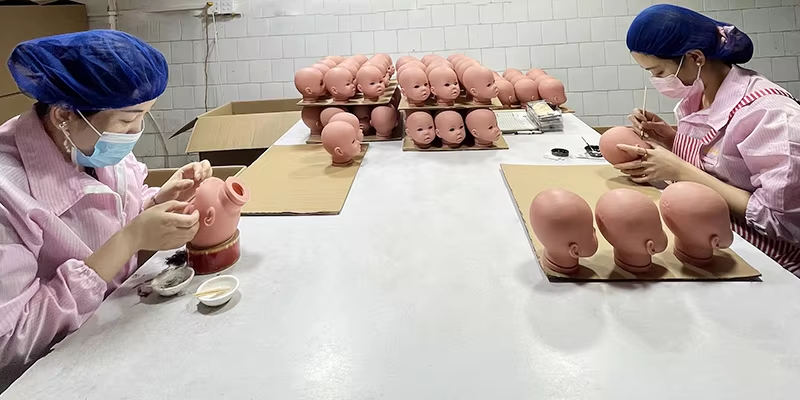
Step 4: Demolding and Detail Finishing
Demolding: Carefully remove the cured silicone doll from the mold.
Trimming and Polishing: Remove excess silicone and polish the surface to achieve realistic skin texture.
Coloring and Hair: Add blood vessels, blush, wrinkles, lips, and nails. Implant hair or wigs and install eyes.
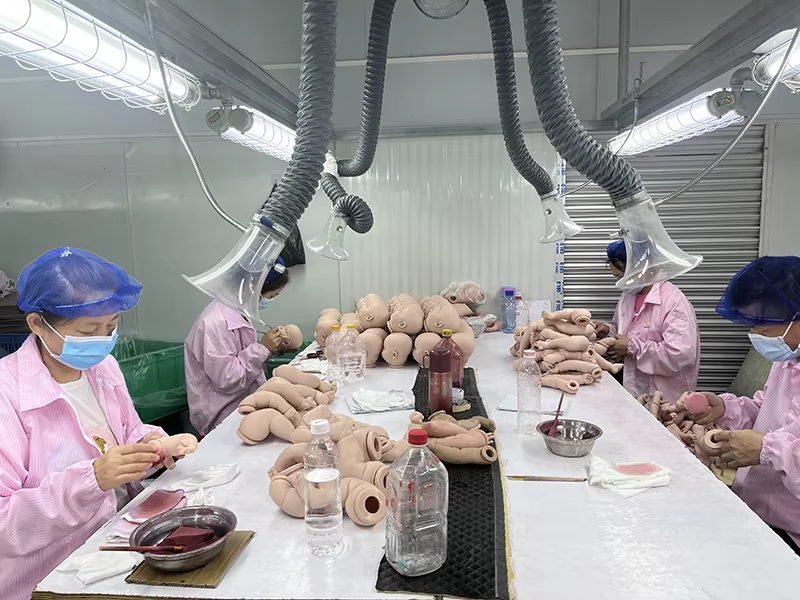
Step 5: Assembly and Weighting
Weighting: Add glass beads, steel balls, or silicone pellets to increase the sense of weight.
Limb and Head Assembly: Securely attach arms, legs, and head; some doll limbs are movable.
Sealing: Apply a protective silicone sealant to protect details and achieve a realistic skin texture.
Step 6: Quality Control and Packaging
Inspection: Check size, weight, limb mobility, surface details, and hair placement.
Packaging: Each silicon Reborn doll is wrapped in a protective lining and placed in a custom-made box with branding and instructions before shipping.
Conclusion
Making full-body silicone lifelike dolls requires meticulous preparation and precise control at every stage. From sourcing high-quality materials to design, mold making, detail sculpting, and quality inspection, the manufacturer strives to ensure that each doll is lifelike, durable, and can be customized to the needs of collectors, retailers, and OEM clients

Owen is the second-generation founder of Sueban Group, a reborn doll manufacturer based in Guangdong, China. With over 20 years of family manufacturing heritage, Owen leads the company's B2B operations serving wholesalers, brands, and institutional buyers across 20+ countries.
Meet Owen →
 English
  Deutsch
  Français
  Español
  Italiano
  Nederlands