
In the reborn doll industry, realism does not start with paint, hair, or finishing details. It starts much earlier—at the master mold stage. For brands, studios, and institutional buyers sourcing reborn dolls through OEM or ODM, the quality of the master mold directly determines facial realism, consistency, and long-term scalability. This is why professional factories treat master molds as the most critical asset in the entire production chain. This article explains what master molds are, how they affect reborn doll realism, and why choosing a factory with true mold-making expertise is essential for serious B2B buyers.
What Is a Master Mold in Reborn Doll Manufacturing?
A master mold is the original, high-precision mold created from a professionally sculpted prototype. All production molds—whether for silicone or vinyl reborn dolls—are derived from this master.
Unlike mass-market molds designed for speed and volume, reborn doll master molds are built to capture micro-level anatomical detail, especially in the face.
A professional master mold controls:
- Facial proportions and symmetry
- Depth of eye sockets and eyelids
- Lip curvature and mouth thickness
- Nose shape, nostril depth, and bridge angle
- Subtle muscle tension and expression flow
Once a master mold is finalized, every future unit is locked into its quality level.
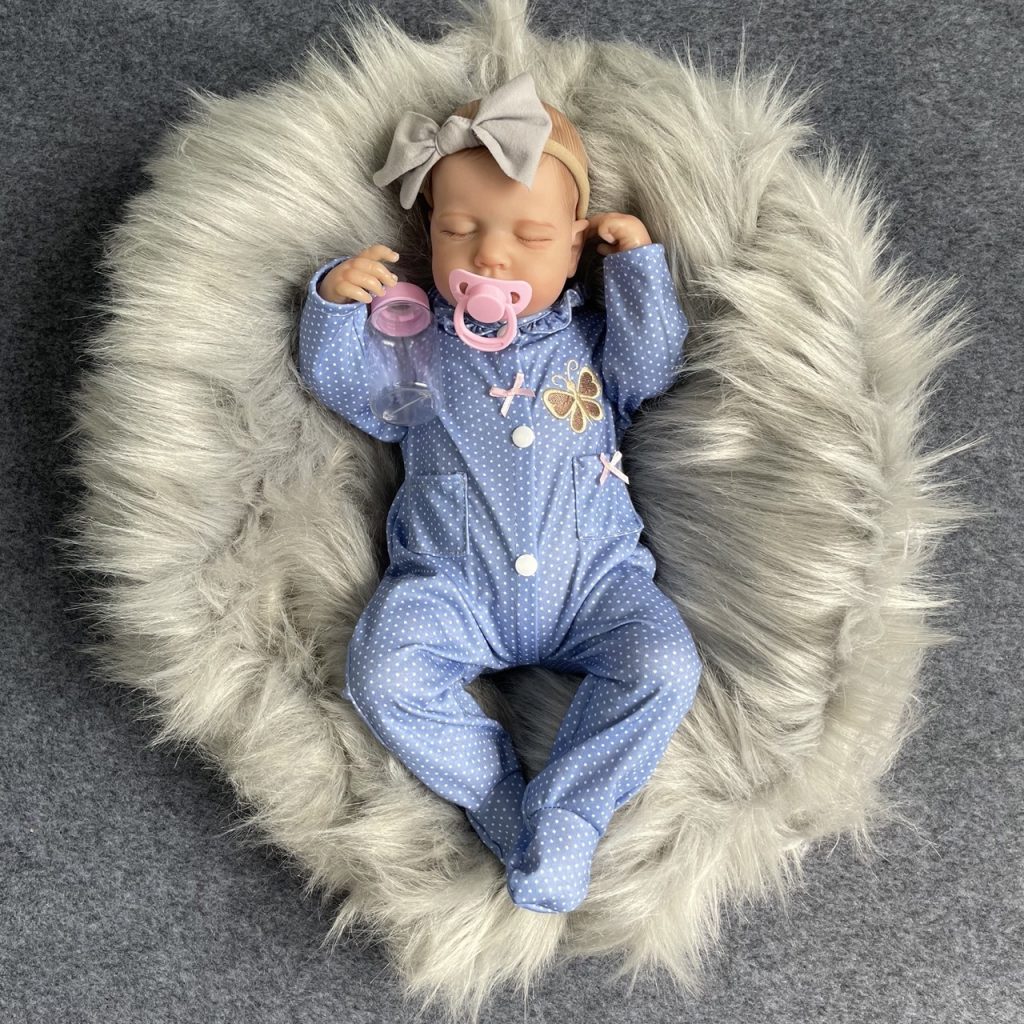
Why Facial Realism Depends on Mold Precision
Most buyers focus on painting or rooting when evaluating realism.
In reality, paint can only enhance what the mold already provides.
If facial planes are shallow or simplified at the mold level:
- Skin mottling looks flat
- Blushing appears artificial
- Micro-expressions disappear
- Open-eye designs lack depth
High-precision master molds allow painters to work with natural contours, which results in:
- Softer transitions between facial zones
- More lifelike light reflection
- Natural emotional presence instead of “doll-like” stiffness
This is especially critical for platinum silicone reborn dolls, where translucency exposes every sculpting detail.
Hard Molds vs Soft Molds: What’s the Difference?
Professional factories use different mold systems depending on material and purpose.
1. Hard Molds (Rigid Master Molds)
Used primarily for:
- Vinyl reborn dolls
- Silicone production mold replication
Advantages:
- Extremely high dimensional accuracy
- Long service life
- Stable facial geometry
Hard molds preserve sharp edges, crisp eyelids, and defined lip lines. They are often CNC-assisted or reinforced for long-term use.
2. Soft Molds (Flexible Silicone Molds)
Used for:
- Platinum silicone casting
- Full-body silicone dolls
Advantages:
- Allows undercuts (nostrils, lips, ears)
- Reduces surface stress during demolding
- Preserves micro skin textures
However, soft molds are only as good as the master mold they come from. Poor masters lead to distortion, even with premium silicone.

The Sculpting Process Behind a True Master Mold
Professional reborn doll factories do not skip steps.
A proper master mold workflow includes:
- Original sculpt creation
– Hand-sculpted by experienced artists
– Based on newborn anatomy references
– Designed for silicone flow and durability
- Prototype refinement
– Facial balance adjustments
– Eye and mouth depth calibration
– Expression neutrality or micro-emotion tuning
- Master mold engineering
– Shrinkage compensation
– Parting line planning
– Venting and air-release design
This process can take weeks or months, but it ensures that the final product looks natural—not manufactured.
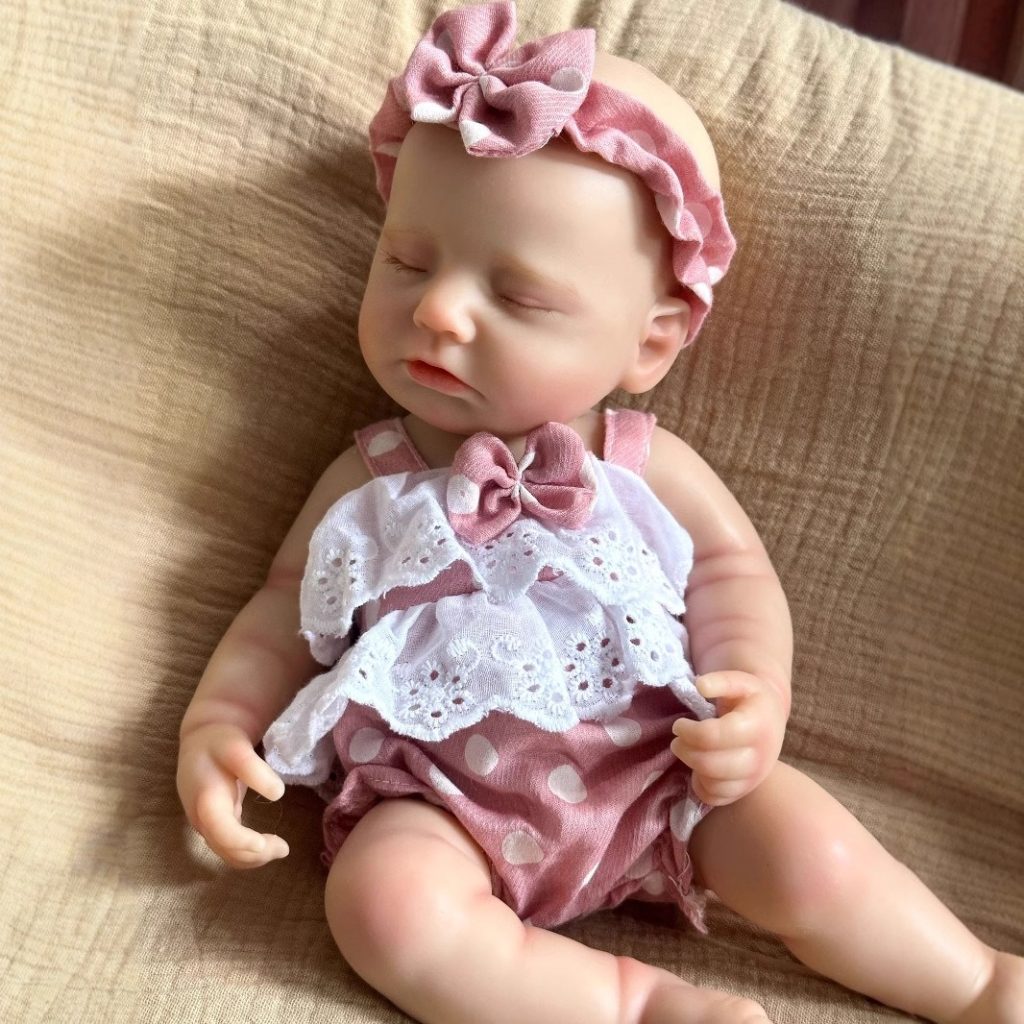
Why Master Molds Matter for Open-Eye & Micro-Expression Dolls
Open-eye reborn dolls are one of the fastest-growing segments in the market.
They are also the easiest to get wrong.
Without a precision master mold:
- Eyes appear flat or staring
- Eyelids look thick or unnatural
- Eye corners lack depth
- Expressions feel frozen
Factories with advanced master mold capabilities can sculpt:
- Natural eyelid curvatur
- Eye socket depth for glass or acrylic eyes
- Subtle smiling or resting expressions
- Emotional neutrality suitable for therapy use
This is why brands pursuing emotion-based or therapy-focused dolls must prioritize mold quality first.
Mold Ownership, Exclusivity, and IP Protection
For private-label brands, the master mold is not just a tool—it is intellectual property.
Working directly with a factory allows for:
- Exclusive mold ownership
- Secure sculpt storage
- NDA and mold-use agreements
- Controlled production access
Resellers cannot guarantee mold exclusivity.
Only factories with in-house mold management can protect long-term brand assets.
This is especially important for buyers planning:
- Signature product lines
- Long-term OEM scaling
- Market differentiation
- How Professional Factories Manage Mold Consistency
High-end reborn doll factories implement strict mold controls:
- Limited casting cycles per mold
- Surface wear inspections
- Scheduled mold replacement
- Test pours for new batches
This ensures facial consistency across production runs—something resellers cannot control.

What SUEBAN Provides at the Master Mold Level
As a factory-level reborn doll manufacturer, SUEBAN supports buyers with:
- Original master sculpt development
- Platinum silicone-optimized mold design
- Open-eye and micro-expression sculpting
- Private mold ownership for OEM/ODM clients
- Long-term mold maintenance and scaling
This allows brands, studios, and institutions to build product lines that remain consistent and protected as they grow.
Final Thoughts: Realism Starts Before Production
Ultra-realistic reborn dolls are not created on the painting table.
They are engineered at the master mold stage.
For B2B buyers serious about quality, brand value, and scalability, understanding mold craftsmanship is essential. Choosing a factory with true master mold expertise is the difference between selling a product—and building a lasting brand.
