
A reborn doll is a manufactured vinyl or silicone kit that a single artist transforms by hand — painted in dozens of translucent layers, individually rooted with fine hair, weighted, and assembled to mimic a real infant. The craft, called “reborning,” turns a factory blank into a one-of-a-kind art piece. Finished dolls routinely sell for $150 to $3,000 and beyond, which is why understanding how reborn dolls are made matters to anyone entering the field as an artist, collector, or seller.
This guide walks the full pipeline: materials, the layered painting method, rooting, weighting, and the honest economics that separate hobby output from collectible-grade work.
What Is a Reborn Doll? (Quick Answer)
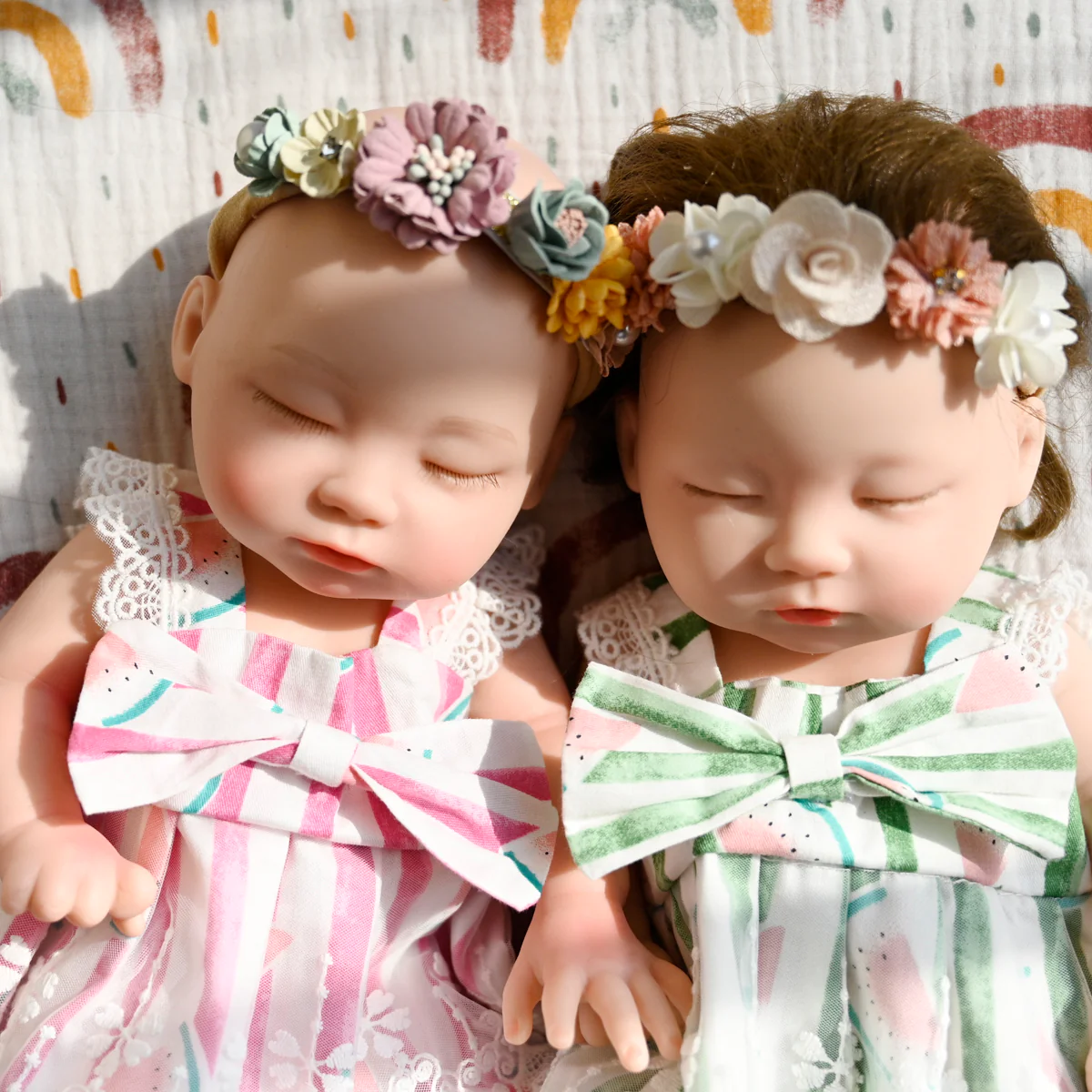
A reborn doll is a hyper-realistic art doll created by taking a commercially produced doll kit and “reborning” it — stripping any factory color, then rebuilding the skin, features, hair, and weight to imitate a newborn. The term emerged in the mid-1990s within the US and UK doll-collecting community, where hobbyists began repainting existing play dolls to look more lifelike.
The key distinction is between a raw manufacturer kit — a blank, unpainted vinyl body released by a sculptor — and the finished art piece that an artist produces after 20 to 60 hours of hand labor. The kit is the canvas; the reborn is the painting.
Reborn Doll vs. Standard Vinyl Doll: Key Differences
Merkmal | Standard Vinyl Doll | Wiedergeborene Puppe |
Skin color | Single molded/sprayed factory tone | 20–40+ hand-painted translucent layers |
Hair | Molded or machine-wefted | Micro-rooted mohair or human hair, strand by strand |
Weight | Light, hollow | Weighted with beads to a newborn-plausible 4–8 lbs |
Realism details | Minimal | Capillaries, milia, nail tips, wet-look lips |
Production | Mass factory output | Single-artist handcraft (mostly) |
Why Reborning Matters Now
Reborning has grown from a niche hobby into a small but genuine creative economy. Industry estimates put the global reborn doll market in the low hundreds of millions of dollars annually, with steady growth driven by online marketplaces and social platforms that let artists reach collectors directly.
The pipeline runs from hobbyist to professional: many artists start with a single beginner kit and, within a few years, sell commissioned pieces at professional tiers. Demand comes from collectors, but also from therapeutic and companion use — reborns are used in some dementia care settings and by people processing grief or bereavement, though practitioners should describe these uses carefully and avoid overclaiming clinical benefit.
Sales concentrate on Etsy, dedicated reborn marketplaces, artist Facebook groups, and PayPal-based direct sales. For sellers, knowing the craft’s real cost structure is the difference between pricing sustainably and working at a loss.
Materials Used in Reborn Dolls
The materials used in reborn dolls fall into four groups: the blank kit, the paints and mediums, the hair, and the weighting and assembly hardware. Each choice affects realism, durability, and final price.
The Reborn Doll Kit (Vinyl vs. Silicone)
The foundation is a sculptor-released blank. Most kits are soft reborn doll kit vinyl (a PVC blend) supplied as separate head and limbs, ready for painting. The premium alternative is platinum-cure silicone, which offers translucency closer to real skin but costs far more and is harder to work with.
Kits come as open editions (produced continuously) or limited editions (a numbered run, often 500–1,500 pieces). Recognized sculptors release kits with a certificate of authenticity, and artists typically pay the sculptor’s set price — royalties are built into the kit cost rather than paid per finished doll. Using a genuine, authorized kit is both an ethical and legal baseline; counterfeit “prototype” copies are a real problem in the market.
Paints, Mediums, and Thinners
Professional work is dominated by Genesis Heat Set paints — oil-based pigments that stay workable until cured with heat, allowing artists to build controlled translucency. Air-dry acrylics exist and are cheaper, but they cure fast, can look chalky, and are more prone to lifting over time.
Alongside pigments, artists use matte and gloss mediums, odorless thinning agents, and a small toolkit of pouncing sponges and fine brushes. Heat-set paints dominate professional reborn work precisely because the “paint, then cure” rhythm gives repeatable, layerable results.
Hair: Mohair vs. Human Hair vs. Micro-Rooted Fibers
Hair is one of the most labor-intensive materials. Fine angora or alpaca mohair is the standard because its softness and scale match newborn hair. Human hair and premium baby-fine mohair are used for the highest realism, at higher cost.
Root density expectations vary: a light “peach fuzz” newborn look needs far less hair than a full head, and material for a quality full-head rooting can run $30–$80 in mohair alone before a single strand is placed.
Weighting, Filling, and Assembly Hardware
Bodies are usually cloth torsos with vinyl or full-limb attachments. Artists fill them with glass or steel beads for weight, poly-fil for softness, and secure everything with cable ties. Glass beads should be sealed in fabric or plastic pouches so the doll is safe to handle, and small parts must be secured — a real concern if a doll may be handled by anyone treating it as a play item rather than a collectible.
The Reborn Doll Making Process, Step by Step
The reborn doll making process is an ordered workflow. Skipping or rushing a stage shows in the finished piece. Here is how to make reborn dolls from a raw kit, stage by stage.
Step 1: Cleaning and Prepping the Vinyl Kit
Every kit arrives with mold-release residue. Artists wash each part in mild soap and water, then degrease thoroughly so paint will bond. Mold seams along the limbs and scalp are lightly sanded or trimmed. Prep failures are the number-one cause of paint lift — pigment applied over a greasy surface simply peels or wipes away later.
Step 2: Layering Skin Tones (Vinyl Doll Painting)
Vinyl doll painting is the heart of reborning. Rather than one opaque coat, the artist builds skin from many thin, translucent layers — mottling for uneven newborn tone, veining for depth, and blushing for warmth in the cheeks, knees, and knuckles. Each layer is heat-set before the next goes down.
Layer counts are high: 20 to 40 or more passes is typical, and highly detailed pieces go further. The translucency comes from stacking sheer color, not from mixing a single “skin” shade.
Heat-Setting Between Layers
Genesis paints cure with heat, applied either in a dedicated oven or with a heat gun. Typical protocols run around 265–275°F (about 130°C) for roughly 8–10 minutes per cycle, though artists follow the paint manufacturer’s guidance. The main risk is warping or scorching thin vinyl — too hot or too long and a limb can deform or discolor, so a separate oven (never one used for food) and careful timing are standard practice.
Step 3: Detailing — Capillaries, Nails, Lips, and Creases
With base tones set, the artist adds fine realism. Blue undertone veining suggests capillaries beneath the skin; tiny off-white dots imitate milia on the nose. Nails get subtle tipping and a faint half-moon, and lips and nostrils receive a wet-look gloss so the mouth reads as moist rather than painted. Creases in the wrists, ankles, and neck are deepened with careful shading.
Step 4: Rooting the Hair
Rooting inserts hair one small cluster at a time using a fine felting needle — a technique called single-needle micro-rooting. The artist controls root direction and crown pattern so the hair falls naturally, then seals the roots from the inside of the head with a glue or sealant so they won’t pull out.
This is the slowest stage. A full head of realistic, correctly directed hair often takes 20 to 60 hours, and rushing it produces the tell-tale “doll hair” look that undermines the whole piece.
Step 5: Setting Eyes, Assembly, and Weighting
Acrylic or glass eyes are set into the head from behind and secured at the correct depth and angle so the gaze looks alive. Limbs are attached to the cloth body with cable ties, and the body is filled with beads and poly-fil until the doll reaches a newborn-plausible feel — commonly 4 to 8 lbs for a full-body piece, distributed so it flops and settles like a sleeping infant.
Step 6: Sealing, Final Blushing, and Finishing
A matte varnish seals the painted surface and gives skin its soft sheen. The artist adds final blushing to cheeks, hands, and feet, then inspects for missed seams, uneven roots, or paint flaws before the doll is photographed and listed. Good finishing is what makes the difference between “convincing at a glance” and “convincing in your arms.”

Reborn Doll Manufacturing Techniques: Artisan vs. Production
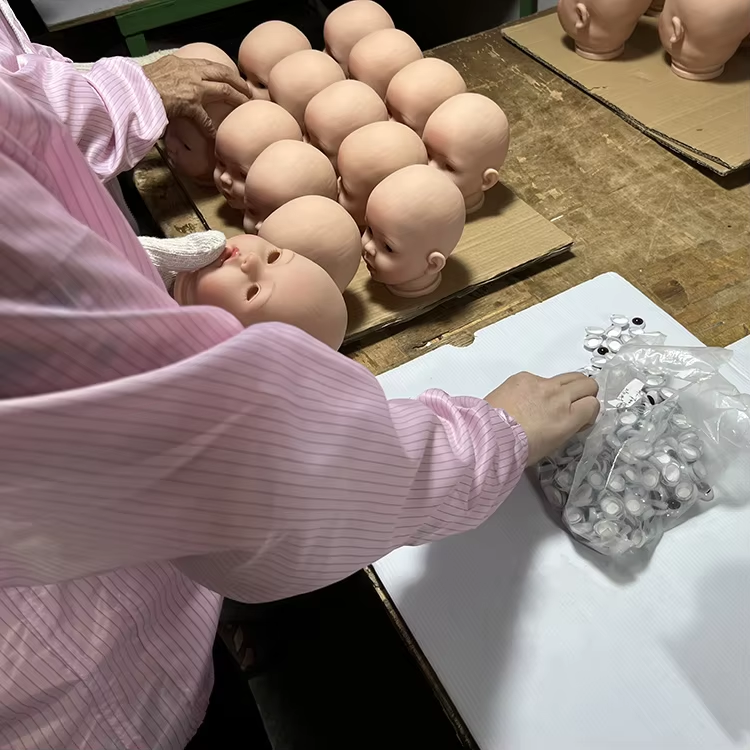
Not every reborn is made the same way. Reborn doll manufacturing techniques range from single-artist handcraft to small-batch studios to overseas mass-reborn operations that assemble dolls on a light production line.
A solo artist may spend a week or more on one doll, controlling every layer. Mass-reborn producers standardize a small number of paint passes and machine-assisted or wefted hair to hit a low price point. The result is a spread in price, consistency, and authenticity: a $180 factory-reborned doll and a $1,200 artist piece are genuinely different products, even when they share the same underlying kit.
Time and Cost Breakdown per Doll
Stage | Typical time | Notes |
Prep & cleaning | 1–2 hrs | Critical for paint adhesion |
Skin layering & curing | 10–20 hrs | 20–40+ heat-set layers |
Detailing | 3–6 hrs | Veins, nails, lips, milia |
Rooting | 20–60 hrs | Full head, single-needle |
Assembly & weighting | 2–4 hrs | Eyes, limbs, beads |
Sealing & finishing | 2–3 hrs | Varnish, final blush, QC |
Supplies for a single quality doll typically run $60 to $200 — kit, paints, mohair, eyes, and body — before the artist’s time. That labor is why realistic pricing tiers exist: beginner and factory pieces at $150–$300, competent independent artists at $400–$900, and sought-after artists or limited-edition kits well above $1,500.
How to Choose a Kit and Approach as a New Artist
If you’re learning how to make reborn dolls, start with a beginner-friendly, open-edition vinyl kit rather than an expensive limited edition you’ll be afraid to practice on. Sculpts with smooth features and shallow creases are more forgiving for a first paint.
A sensible starter supply list: one open-edition kit, a small set of Genesis Heat Set paints, matte and gloss medium, thinning agent, pouncing sponges, a couple of fine brushes, a rooting needle and holder, mohair, a pair of eyes, and a cloth body with glass beads. A heat gun works before you invest in a dedicated toaster oven.
For learning, the International Reborn Doll Artists (IRDA) community, established artist tutorials, and structured online courses shorten the curve considerably. Reborning is far easier to learn by following a full guided doll than by improvising from photos.
Common Mistakes to Avoid
- Paint layers too thick.One heavy coat looks flat and opaque; realism lives in many sheer layers.
- Skipping or shortcutting the heat-set cure.Undercured paint stays tacky, lifts, and can transfer.
- Unrealistic hair density.Overrooting a newborn sculpt reads as a wig; most real newborns have sparse, fine hair.
- Poor weighting balance.A doll that’s rigid or lumpy breaks the illusion the moment it’s held.
- Undisclosed non-original kits.Selling a counterfeit or “prototype” copy as genuine is both unethical and a legal risk. Always source authorized kits and disclose the sculptor and edition.
Häufig gestellte Fragen
How long does it take to make a reborn doll?
A complete artist reborn typically takes 30 to 80 hours of hands-on work spread over several days or weeks, since paint layers must cure between sessions and rooting a full head alone can take 20 to 60 hours.
Are reborn dolls made from real baby molds?
No. Reborn dolls are sculpted by artists from imagination and reference, then produced as vinyl or silicone kits. They are not cast from actual infants — the realism comes entirely from the sculpting and hand-finishing process.
What makes reborn dolls so expensive?
The price reflects labor and materials: dozens of hand-painted layers, hours of single-strand rooting, quality mohair and eyes, an authorized artist kit, and the skill of the reborner. A single doll can represent a full week of specialized work.
Can you make a reborn doll at home?
Yes. Most reborn artists work from home with a starter kit, Genesis paints, a rooting needle, and a heat source. The barrier is skill and patience, not a factory — the core techniques are learnable through practice and guided tutorials.
Final Takeaways for Practitioners
Reborning is a labor-intensive fine-art discipline, not a quick craft. The dolls that command collectible prices come from disciplined layering, honest rooting hours, careful weighting, and — just as important — ethically sourced, properly disclosed kits.
Master the fundamentals in order, respect the cure times, and price your work for the real hours it takes. That discipline is what separates hobby output from work that sells, holds value, and earns a place in a serious collection.

Owen ist der Gründer der Sueban Group in zweiter Generation, einem Hersteller von Reborn-Puppen mit Sitz in Guangdong, China. Mit über 20 Jahren familiärer Fertigungstradition leitet Owen die B2B-Geschäfte des Unternehmens, die Großhändler, Marken und institutionelle Käufer in über 20 Ländern beliefern.
Triff Owen
 English
  Deutsch
  Français
  Español
  Italiano
  Nederlands