
Reborn dolls are hand-finished, hyper-realistic reborn baby dolls built from a small set of base materials — vinyl, silicone, or resin — each manipulated through different casting, painting, and assembly processes. The material determines everything downstream: how the skin takes paint, how the body weights and balances, how the doll ages, and what it costs to produce. For reborn doll manufacturers and suppliers, choosing the right material is also essential when developing high-quality custom reborn dolls for different markets.
Material selection is the single highest-leverage decision in a reborn build. It fixes your price ceiling, your production time, your failure modes, and which buyers you can serve. This guide covers the full material landscape from a maker’s and reseller’s perspective — curing chemistry, paint adhesion, durability trade-offs, and the commercial math behind each option. Whether you are developing silicone reborn dolls, sourcing reborn baby dolls, or working with a reborn doll manufacturer on a custom collection, understanding these material differences can help you make better product decisions.
The short answer: vinyl dominates the mid-market kit category for cost and paintability; platinum-cure silicone dominates the high-end collector market for realism and feel, making it a popular choice for silicone reborn baby dolls; resin is a niche tool for prototypes and miniatures. Most professionals work in two of the three, depending on the needs of their reborn dolls, target buyers, and product positioning.
The Core Material Families at a Glance
Material | Typical Kit Cost Band | Feel & Realism | Paint System | Durability | Best For |
Heat-set vinyl (soft PVC) | $40–$150 | Firm, warm, good | Genesis heat-set oils | Excellent | Beginner-to-mid kits, high volume |
Air-dry vinyl | Same as above | Same base, different paint | Acrylic air-dry | Good; more rub risk | Hobbyists without ovens |
Platinum-cure silicone (tin-free) | $250–$1,200+ | Softest, most lifelike | Silicone pigment, intrinsic or layered | Very good if cured correctly | High-end collector dolls, full-body |
Tin-cure silicone | $80–$300 | Softer than vinyl, tacky | Silicone pigment | Degrades over years | Budget silicone, practice pours |
Resin | $60–$400 | Hard, cold, sculptural | Acrylic or enamel | Brittle under stress | Prototypes, OOAKs, mini babies |
Treat those price bands as market-typical rather than fixed — kit pricing swings with sculpt popularity, edition size, and whether limbs are included. A sold-out edition from a sought-after sculptor can trade at double its original release price on the secondary market, while an over-produced open edition kit may sit unsold at half its list.
Vinyl: The Industry Workhorse
What Vinyl Actually Is
Reborn dolls are hand-finished, hyper-realistic reborn baby dolls built from a small set of base materials — vinyl, silicone, or resin — each manipulated through different casting, painting, and assembly processes. The material determines everything downstream: how the skin takes paint, how the body weights and balances, how the doll ages, and what it costs to produce. For reborn doll manufacturers and suppliers, choosing the right material is also essential when developing high-quality custom reborn dolls for different markets.
Material selection is the single highest-leverage decision in a reborn build. It fixes your price ceiling, your production time, your failure modes, and which buyers you can serve. This guide covers the full material landscape from a maker’s and reseller’s perspective — curing chemistry, paint adhesion, durability trade-offs, and the commercial math behind each option. Whether you are developing silicone reborn dolls, sourcing reborn baby dolls, or working with a reborn doll manufacturer on a custom collection, understanding these material differences can help you make better product decisions.
The short answer: vinyl dominates the mid-market kit category for cost and paintability; platinum-cure silicone dominates the high-end collector market for realism and feel, making it a popular choice for silicone reborn baby dolls; resin is a niche tool for prototypes and miniatures. Most professionals work in two of the three, depending on the needs of their reborn dolls, target buyers, and product positioning.
Why Vinyl Took Over the Kit Market
- Vinyl holds heat-set oil paint in a way silicone does not, allowing the layered mottling, veining, and blushing that define modern reborn realism.
- Cost structure.Injection-molded kits scale cheaply. A sculpt can run thousands of units at a fraction of a silicone pour’s unit cost.
- Vinyl tolerates handling, dressing, and shipping far better than soft silicone. For beginners and for dolls that will be actively cuddled, this matters.
- Supply depth.Because tooling is amortized across large runs, vinyl kits stay in circulation longer, which keeps replacement limbs and matching heads available for repairs.
Vinyl’s Real Weaknesses
Vinyl is not a premium tactile experience. It reads firm and slightly cool, though weighting with glass beads and polyfil mitigates this considerably. More seriously:
- Plasticizer migration.Over years, plasticizer can leach, causing tackiness or surface shine. Storage conditions accelerate this — heat and UV are the two biggest culprits.
- Vinyl “greening.”Some older or lower-grade kits develop a green cast, a known degradation issue that painters try to pre-empt with neutralizing layers.
- Melting risk.Vinyl softens at relatively low temperatures. Heat-set painting requires careful oven control, and leaving a vinyl doll in a hot car can deform it permanently.
- Seam and flash cleanup.Mold lines at limb joints must be trimmed and sanded before painting. Skipping this step shows through even the best paint job as a shadow line under raking light.
Heat-Set vs. Air-Dry Vinyl Painting
Heat-set (Genesis-style oils): Cure between 265°F and 275°F in short intervals. Superior adhesion, permanent once cured, but requires an oven, a thermometer you trust, and strict timing to avoid scorching. Most practitioners cure in 8-minute increments and rotate limbs between passes rather than attempting one long bake.
Air-dry acrylics: No oven, more forgiving of a beginner’s workspace, but more prone to rub-off at high-contact points — noses, fingertips, knees. Always seal properly. If you sell air-dry work, tell the buyer plainly that the doll is a display piece, not a play item.
A practical compromise many artists use: build the base layers in heat-set oils for adhesion, then apply final detail and seal with a compatible matte varnish. Never layer incompatible chemistries without testing on a spare limb first.
Silicone: The Premium Tier
Platinum-Cure vs. Tin-Cure
This distinction is where most buying mistakes happen.
Platinum-cure silicone uses a platinum catalyst. It cures cleanly, has minimal shrinkage, stays soft and skin-like indefinitely, and accepts pigment for intrinsic (through-the-material) coloring. It is the only silicone appropriate for a high-end collector doll. It is also expensive, sensitive to cure inhibition from contaminants — sulfur in latex gloves, certain clays, some 3D-print resins — and unforgiving of sloppy mixing ratios.
Tin-cure silicone is cheaper and easier to pour but has real liabilities: it can remain tacky, yellows over time, and its cure byproducts make long-term stability worse. It belongs in practice pours, not in a doll you intend to sell as archival.
The practical test before any platinum pour: mix a small cup, let it cure in contact with your mold material and any glove or tool you plan to use, and check for inhibition. A five-dollar test saves a four-hundred-dollar kit.
Why Silicone Feels Different in Hand
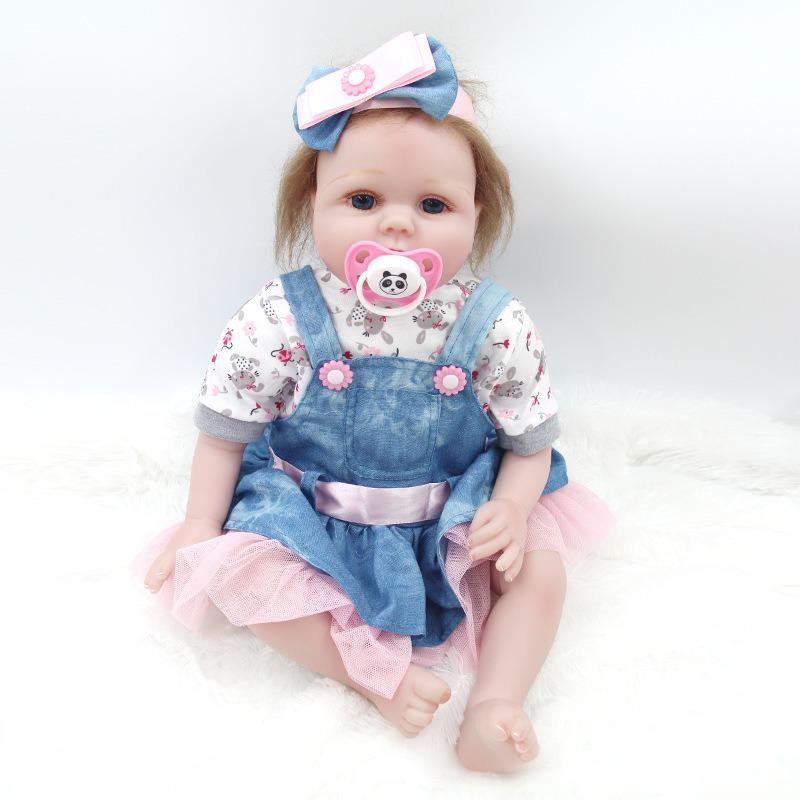
Silicone’s advantage is not cosmetic realism alone — it’s behavioral realism. A platinum-cure full-body silicone doll squishes, wrinkles, and rebounds like flesh. Vinyl cannot replicate that. For “reborn as companion” buyers and for photographers, this is decisive.
Shore hardness matters here. Collector-grade silicone typically pours in the 10–20 Shore A range for the body, with softer pours for the head. Going too soft feels clammy and tears easily; going too firm loses the illusion entirely.
Silicone Trade-Offs You Must Price In
- Weight and fragility.Soft silicone tears at thin points — armpits, innere — becomes easier. Get it wrong, and no amount of finishing skill will fix it.
That last point deserves emphasis, because soft silicone fails structurally rather than cosmetically. A scorched vinyl limb can be stripped and repainted; a torn silicone armpit cannot be sanded away. Every tear, bubble, or thin spot in a pour is a permanent defect in a material you have already spent hundreds of dollars and many hours on. The failure modes below are the ones that most often turn a profitable build into a write-off.
- Cure inhibition.Platinum silicone will simply refuse to set when it touches sulfur, tin, latex, amines, or certain UV-cure 3D-print resins. The result is a sticky, uncured skin that cannot be salvaged. Contamination usually comes from three places: modeling clay with sulfur content (common in traditional plastilina), latex or vinyl gloves, and molds previously used for tin-cure silicone.
- Lint magnetism.Platinum silicone is a static and oil magnet. It collects dust, hair, and fiber from the moment it leaves the mold, and it will fuse to itself if two surfaces sit in contact under pressure. Dolls must be stored powdered and separated by fabric.
- Repair difficulty.Small tears can be closed with a silicone adhesive matched to the base material, but the repair is visible under raking light and never restores original elasticity. Large tears generally require a re-pour.
- Material cost.Collector-grade platinum silicone typically prices in the mid double digits per pound, and a full-body doll consumes many pounds once you account for sprues, flash, and failed pours. Add pigment, mold material, release agent, and the mold itself, and your material spend can exceed the retail price of a complete vinyl kit.
- Weight and stiffness testing.Silicone is dense. A weighted full-body doll can reach twelve to eighteen pounds and needs a cloth body cavity designed to hold that mass without bulging through the skin. Plan the armature and weight bags before the pour, not after.
Silicone Curing: A Pre-Pour Checklist
Most silicone disasters are preventable with a twenty-minute preparation routine. Work through it every time, not just on the first pour of a new mold.
- Verify your mold.Confirm it was made from a platinum-compatible rubber, and that any release agent you used is silicone-safe. Tin-cure molds will contaminate platinum pours permanently.
- Swap your gloves.Nitrile only. Latex carries sulfur and will inhibit cure on contact.
- Run a small inhibition test cup.Mix a few grams, pour it against each material it will touch, and cure it overnight. If the test cup stays tacky in contact with your clay, resin, or mold, the whole build will too.
- Weigh, don’t eyeball.Platinum systems demand accurate mix ratios, typically 1A:1B by weight. A kitchen scale with one-gram resolution is adequate; guessing is not.
- Control the room.Platinum cure slows in cold shops and accelerates in heat. Follow the manufacturer’s temperature window and keep humidity stable — moisture accelerates cure in some systems and interferes with pigment dispersion in others.
- Degas or pressure-cast.Without vacuum degassing or a pressure pot, expect internal bubbles that only reveal themselves as pinholes once the skin is painted.
Resin: Prototypes, OOAKs, and Miniatures
Resin sits outside the mainstream reborn market for a reason, but it has legitimate specialist uses. It cures hard — usually in the Shore D range — with a cool, dense, almost ceramic hand feel. That reads as sculpture rather than as a baby, which is precisely why it suits certain buyers and repels others.
When Resin Is the Right Choice
- Sculpt-to-production prototyping.Before committing a sculpt to expensive silicone tooling, casting it in resin produces a durable master you can handle, photograph, and revise without risking the original.
- One-of-a-kind art dolls.Artists working in a fine-art register often cast resin editions of twenty-five or fewer, hand-finish each one, and sell them as gallery objects rather than as nursery dolls.
- Miniature babies.Small-scale and micro-preemie dolls benefit from resin’s ability to hold fine detail — nail beds, eyelid creases, lip texture — at sizes where vinyl tooling loses resolution.
- Intrinsic color experiments.Resin accepts pigment throughout the material, so a cast can emerge already tinted, with mottling and veining worked into the pour rather than painted on top.
Resin’s Practical Costs
Resin is brittle. A dropped resin head chips or shatters, and there is no repair that hides the break. It is also unforgiving of bubbles, which means vacuum or pressure equipment is effectively mandatory rather than optional. Aromatic polyurethane formulations yellow under UV exposure, so anything intended for display near a window needs a UV-stable aliphatic system or a protective clear coat. And resin dust from sanding is a respiratory hazard: wet-sand where possible, wear a fitted respirator, and never dry-sand in an occupied room.
Because in-house casting carries that equipment burden, many artists who use resin buy finished castings rather than pour their own. Budget for a niche premium — resin editions are small, so per-unit tooling and labor costs stay high and prices reflect it.
“Silicone Vinyl” and Other Labels That Mislead
Marketplace listings are riddled with material vocabulary that does not mean what buyers assume. A few translations worth knowing before you both buy and sell:
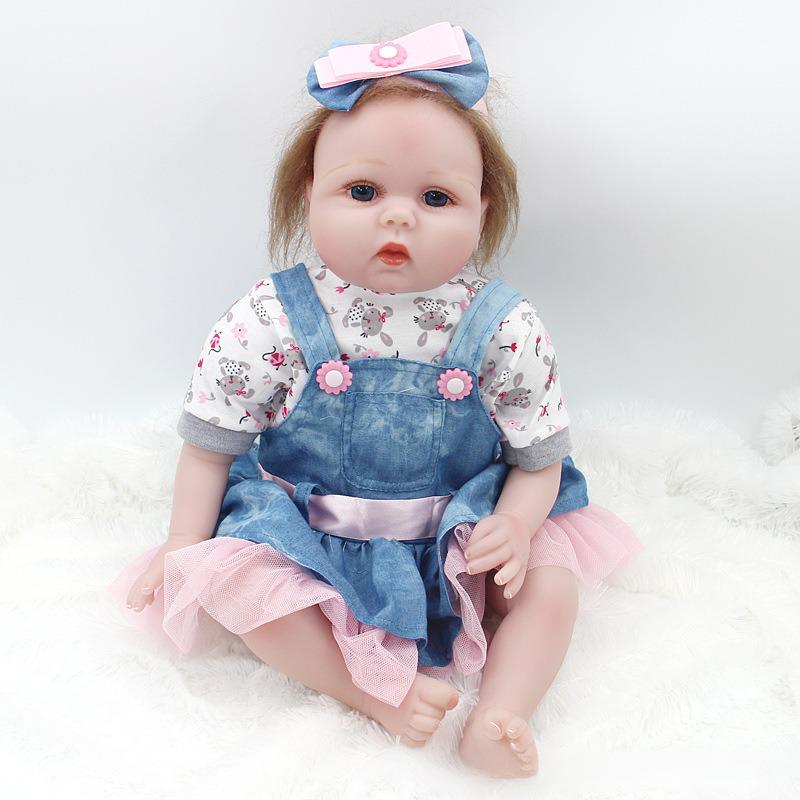
- “Silicone vinyl”almost always describes a soft-blend vinyl — plasticized PVC with a plush hand feel. It contains no silicone and behaves like vinyl for painting, aging, and repair.
- “Full body silicone”should mean a doll with no cloth body at all, head to toes in silicone. Some listings apply the phrase to a silicone head and limbs on a stuffed cloth torso, which is a different product with a different price.
- “Cuddle baby”is a genuine and useful category: a vinyl head mounted on a weighted cloth body, with no vinyl limbs. It is softer to hold, cheaper to build, and explicitly designed for cuddling rather than photographic accuracy. It is not a defect in a listing — it is a specification.
- “Solid platinum silicone”should not appear in any listing. Platinum is a catalyst, present in trace amounts. The phrase is a marketing construction.
If you sell, state the material precisely: resin, vinyl, tin-cure silicone, or platinum-cure silicone, plus whether the body is cloth, vinyl, or full silicone. Vague material language is the fastest way to earn a return request.
Matching Material to Buyer
Buyer Profile | Primary Need | Best Material | Why |
First-time collector | Low risk, easy care | Heat-set vinyl, cloth body | Durable, repairable, widely documented |
Parent buying for a child | Handling tolerance | Vinyl with a secure cloth body | Silicone tears and resin chips under play |
Serious collector | Tactile realism | Full-body platinum silicone | Only material that squishes and rebounds like flesh |
Portrait or newborn photographer | Pose and lie naturally | Soft platinum silicone | Weight distribution and skin behavior photograph authentically |
How to Choose the Right Material for Your Reborn Doll
There is no single material that is perfect for every reborn doll. The right choice depends on the intended use, target buyer, desired realism, weight, budget, and production requirements.
For children and everyday cuddling, vinyl or vinyl with a cloth body is often the most practical option. These dolls are generally lighter, easier to handle, and more resistant to everyday use than soft full-body silicone.
For collectors who prioritize tactile realism, platinum-cure silicone is the stronger choice. Its softness, flexibility, and ability to mimic the movement of newborn skin make it especially suitable for premium silicone reborn dolls.
For artists developing a new sculpt, resin can be useful during the prototype stage because it provides a hard, durable surface for evaluating sculptural details before moving into more complex production.
For retailers and brands developing a product range, using more than one material can also make sense. A reborn doll manufacturer or supplier may offer an entry-level vinyl range, a mid-range vinyl and cloth-body range, and a premium silicone collection. This allows different customers to enjoy the reborn experience at different price points.
Consider Weight Before Realism Alone
Weight is often overlooked when choosing a material. A highly realistic doll is not necessarily the best choice for every customer.
A full-body silicone doll can be substantially heavier than a vinyl doll of a similar size. For young children, this can affect how comfortably they can carry, dress, cuddle, and play with the doll.
If the target customer is a child, consider the finished weight alongside the doll’s size and material. For adult collectors and photographers, heavier silicone may be acceptable because tactile realism and posing are often more important than portability.
Material Choice Also Affects Product Positioning
Material is not only a technical decision. It also influences how a reborn baby doll is positioned in the market.
A lightweight vinyl doll can work well for an accessible children’s range. A vinyl-and-cloth-body doll can provide a softer cuddling experience while keeping weight manageable. A full-body platinum silicone doll can sit at the premium end of a collection where realism and tactile quality are the main selling points.
For brands developing custom reborn dolls, choosing the material early can therefore help determine the product’s target customer, packaging requirements, shipping considerations, and overall market position.
Reborn Doll Material FAQ
Is silicone better than vinyl for reborn dolls?
Not necessarily. Silicone provides a softer and more lifelike tactile experience, while vinyl is generally lighter, more affordable, and easier to work with. The better material depends on the intended use and target buyer.
Are vinyl reborn dolls suitable for children?
Vinyl can be a practical choice for children because it is lightweight compared with full-body silicone and can handle normal dressing and handling well. However, the finished doll’s construction, accessories, paint system, and intended age range should always be considered.
Why are silicone reborn dolls more expensive?
Full-body silicone dolls usually require more specialized materials, molds, production processes, and finishing techniques. The material itself is also more expensive, and production can involve a higher risk of defects.
What is the difference between vinyl and full-body silicone?
A typical vinyl reborn doll has a hollow vinyl head and limbs, often attached to a cloth body. A full-body silicone doll is made entirely from silicone, including the torso and limbs. This gives silicone dolls a softer and more flexible feel but also increases their weight and production complexity.
What material is best for a reborn doll business?
There is no universal answer. Many businesses benefit from offering several material options. Vinyl can serve customers looking for affordability and lighter weight, while platinum silicone can serve premium collectors seeking maximum realism.
Final Thoughts
Material is one of the most important decisions in the entire reborn doll production process. It affects not only the finished doll’s appearance and feel, but also its weight, durability, production process, maintenance, and market position.
For artists, understanding the differences between vinyl, silicone, and resin makes it easier to choose the right foundation for each project. For collectors and retailers, understanding the material helps set realistic expectations about quality, handling, longevity, and price.
Whether you are developing custom reborn dolls, sourcing products from a reborn doll manufacturer, or simply choosing your next kit, start with the material rather than the marketing label. Once you understand what is underneath the paint and finishing, it becomes much easier to judge what a reborn doll is actually worth.

Owen is the second-generation founder of Sueban Group, a reborn doll manufacturer based in Guangdong, China. With over 20 years of family manufacturing heritage, Owen leads the company's B2B operations serving wholesalers, brands, and institutional buyers across 20+ countries.
Meet Owen →
 English
  Deutsch
  Français
  Español
  Italiano
  Nederlands