
When buyers compare reborn dolls, they often focus on paintwork, hair rooting, or silicone softness. But experienced manufacturers know the truth: the realism of a reborn doll begins long before painting or assembly—it begins with the master mold.
For B2B buyers planning OEM or ODM reborn doll projects, understanding master molds is critical. The quality of a mold directly determines facial expression accuracy, micro-detail reproduction, production consistency, and even long-term brand protection.
This article breaks down why master molds matter, how professional factories approach mold development, and what serious buyers should look for before placing an order.
1. What Is a Master Mold in Reborn Doll Manufacturing?
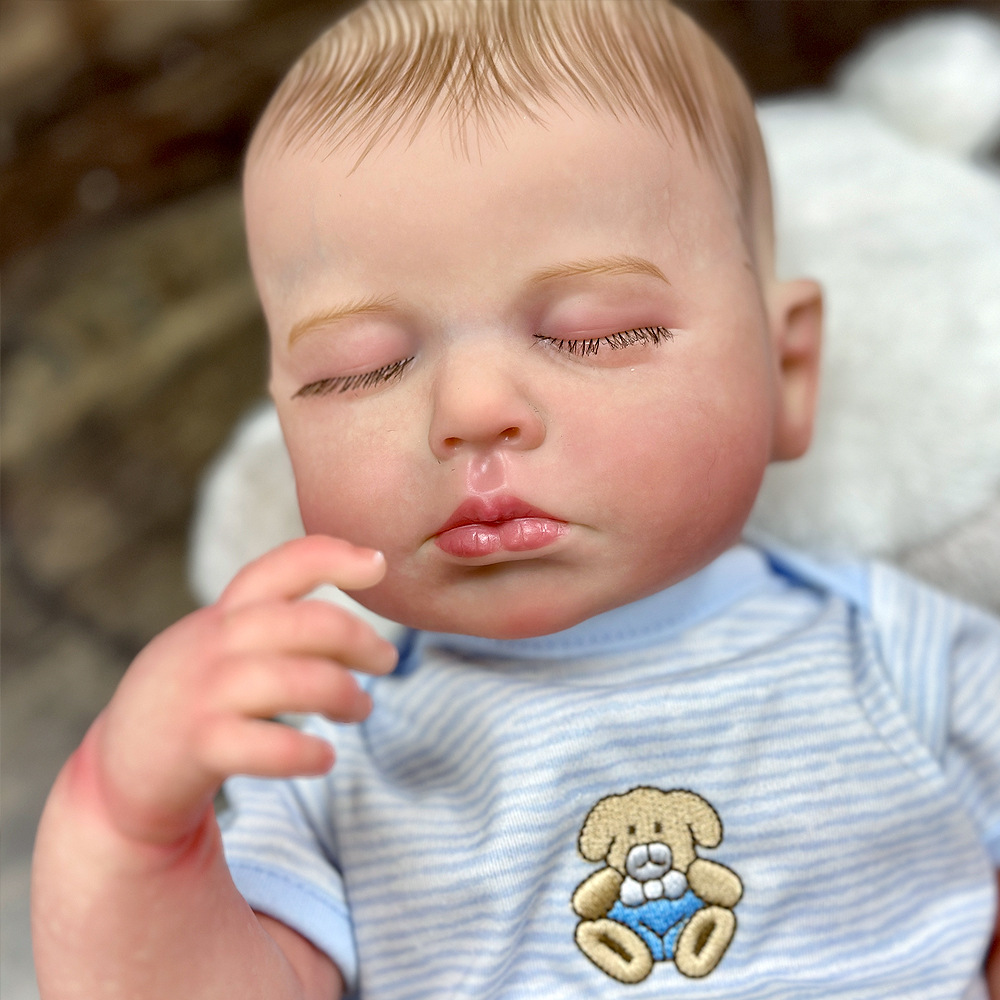
A master mold is the original, high-precision mold created from an artist’s sculpt. It serves as the foundation for all future production molds and defines every facial contour, crease, pore, and expression.
In reborn doll manufacturing, the master mold controls:
- Facial symmetry and proportions
- Eyelid depth and eye socket structure
- Lip curvature and mouth tension
- Nose shape, nostrils, and airflow realism
- Fine surface textures such as wrinkles and skin folds
Once a master mold is finalized, all downstream molds depend on its accuracy. If the master mold lacks realism, no amount of painting can fix it.
2. Hard Molds vs Soft Molds: What’s the Difference?
Professional factories typically work with two main mold systems.
Hard Molds (Rigid Master Molds)
Hard molds are usually made from reinforced resin, fiberglass, or metal-based materials.
Advantages:
- Extremely high dimensional accuracy
- Stable shape over long production cycles
- Ideal for capturing sharp facial details
- Long service life for repeated mold transfers
Limitations:
- Higher upfront cost
- Longer development time
- Requires skilled handling during demolding
Hard molds are essential for ultra-realistic reborn faces, especially for platinum silicone dolls.
Soft Molds (Silicone Production Molds)
Soft molds are created from the master mold and used directly in casting.
Advantages:
- Flexible and easier demolding
- Suitable for complex undercuts
- Faster production cycles
Limitations:
- Wear out over time
- Gradual loss of micro-detail
- Not suitable as original masters
Key rule:
Serious manufacturers always protect the hard master mold and use soft molds only for production.
3. How Mold Precision Affects Facial Realism
Micro-Expressions Are Mold-Dependent
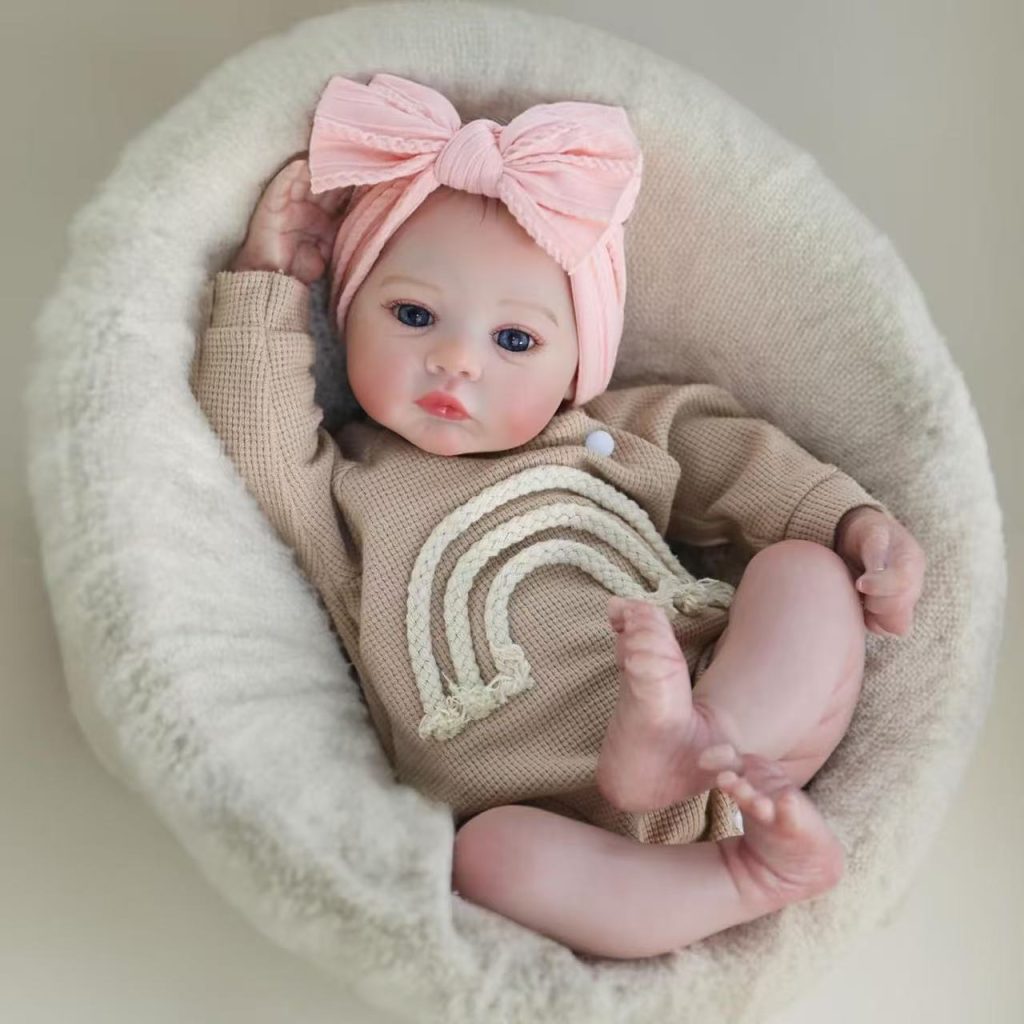
Subtle expressions—slight smiles, relaxed eyelids, or gentle lip tension—are impossible without high-precision sculpting and mold transfer.
Low-quality molds often result in:
- Flat facial planes
- Over-smoothed cheeks
- Shallow eye sockets
- Artificial-looking mouths
Professional master molds preserve:
- Micro muscle tension
- Natural asymmetry
- Infant-specific facial softness
This is why premium reborn dolls feel “alive” even before painting.
4. Why Factories Outperform Traders in Mold Development
Resellers and trading companies typically do not own molds. They rely on upstream factories and have no control over sculpt ownership, mold maintenance, or version updates.
Working directly with a factory like SUEBAN Group ensures:
- In-house mold engineering teams
- Secure master mold storage
- Controlled access and duplication prevention
- Consistent mold revision tracking
For B2B buyers, this means your design stays yours.
5. Mold Accuracy and Production Consistency
Inconsistent molds lead to inconsistent products.
Common issues caused by poor mold systems:
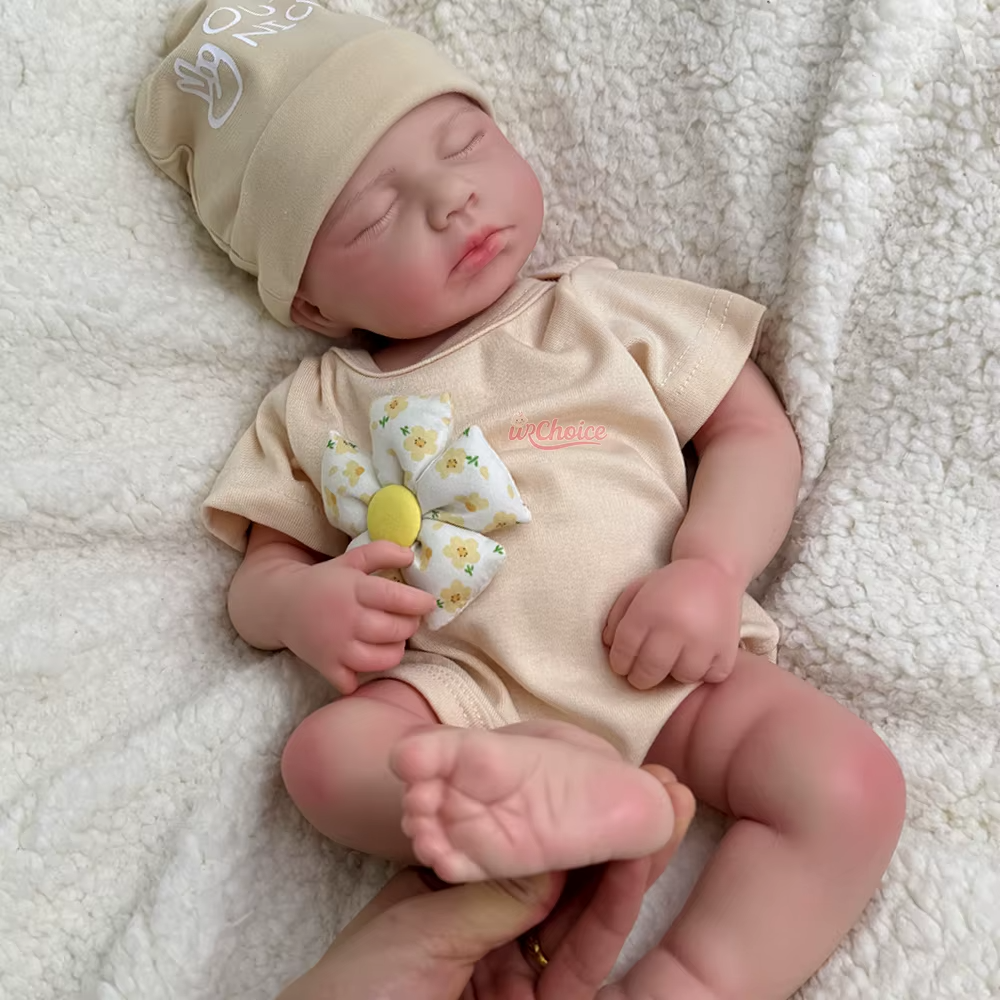
- Batch-to-batch facial variation
- Uneven eye alignment
- Changes in nose width or lip shape
- Difficulties matching replacement parts
At factory level, precision master molds allow:
- Stable long-term production
- Reliable repeat orders
- Scalable brand growth
This is especially important for therapy institutions and international distributors that require uniform products.
6. Master Molds and Custom Brand Exclusivity
One of the biggest risks in the reborn doll market is design duplication.
Without factory-controlled master molds:
- Your doll face may appear under another brand
- Sculpt details can be copied or modified
- Legal protection becomes difficult
At SUEBAN, private molds include:
- Exclusive mold ownership agreements
- Locked sculpt files and mold IDs
- Optional regional exclusivity
- Long-term production guarantees
This is why private mold requests have increased sharply among serious B2B buyers.
7. How Professional Factories Test Mold Quality
Before approving a master mold, professional factories conduct:
- Dimensional accuracy tests
- Surface texture verification
- Silicone flow simulation
- Demolding stress checks
- Trial casting reviews
Only after passing these steps is a mold approved for production.
This process protects:
- Facial realism
- Structural integrity
- Long-term production quality
8. Why Master Molds Matter Even More for Platinum Silicone
Platinum silicone is unforgiving.
Its fluidity captures detail perfectly—but also exposes every flaw.
If the mold is inaccurate, platinum silicone will amplify the problem.
That’s why platinum silicone reborn dolls require higher mold standards than vinyl or partial silicone dolls.
Factories without advanced mold systems simply cannot meet this requirement.
9. Choosing the Right Manufacturing Partner
When selecting a reborn doll manufacturer, ask:
- Who owns the master mold?
- How is the mold protected and stored?
- Can the mold be upgraded or revised?
- Are private molds contractually protected?
If these questions cannot be clearly answered, the risk is high.
Conclusion: The Face Starts with the Mold
Ultra-realistic reborn dolls are not created by chance. They are the result of sculpting expertise, precision mold engineering, and strict factory control.
For brands, distributors, and institutions planning long-term growth, choosing a manufacturer with professional master mold capability is not optional—it is essential.
At SUEBAN Group, master molds are treated as the core asset of every reborn doll project, ensuring realism, consistency, and brand security for global B2B buyers.

Owen is the second-generation founder of Sueban Group, a reborn doll manufacturer based in Guangdong, China. With over 20 years of family manufacturing heritage, Owen leads the company's B2B operations serving wholesalers, brands, and institutional buyers across 20+ countries.
Meet Owen →
 English
  Deutsch
  Français
  Español
  Italiano
  Nederlands